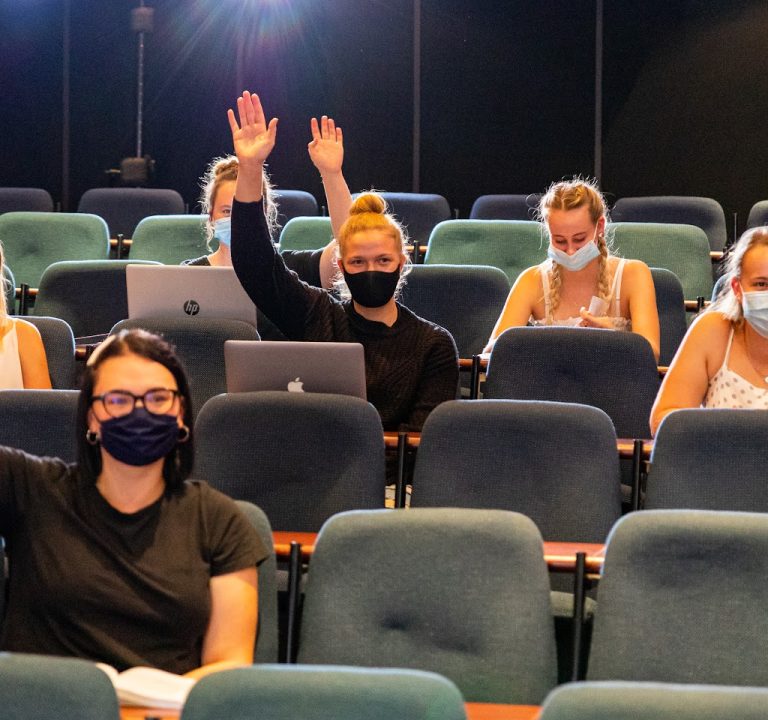
Akademia | Bloemfontein-sentrum is a Education centers establishment in Bloemfontein, Free State, South Africa
Bloemfontein
Free State
9330
South Africa
Curriculum
Akademia | Bloemfontein-sentrum in Bloemfontein, Free State, South Africa presents a distinctive curriculum framework shaped by Afrikaanse taal- en kultuurgemeenskappe. The institution operates with two interlinked teaching models that guide its programme delivery: a nursing distance model facilitated through a network of sentrums across South Africa, and a full‑time campus model hosted at select urban campuses. This dual approach enables students to choose a pathway that aligns with their personal, professional and logistical circumstances while maintaining a shared emphasis on rigorous enquiry and character formation.
Within the curriculum, programmes are organised across five faculties, offering a range of study directions designed to prepare graduates for professional practice and further study. While specific course lists and degree structures vary by faculty, the emphasis remains on combining solid disciplinary knowledge with an integrative understanding of related disciplines. The offerings include postgraduate options, undergraduate degrees and professional qualifications that are targeted to contemporary business and public‑sector needs, as well as broader cultural and intellectual pursuits that reflect Akademia’s classic and Christian‑influenced ethos.
The institution signals particular strength in areas housed within the Faculty of Economic and Administrative Sciences, which encompasses programmes such as postgraduate diplomas and professional bachelor qualifications. Degree pathways highlighted include BCom variants with specialisations in management accounting, economics and law, financial planning and entrepreneurship, alongside related honours and postgraduate diplomas. A consistent thread across these qualifications is the aim to equip learners with both theoretical foundations and practical capabilities relevant to real‑world contexts, promoting analytical thinking, decision‑making and ethical practice in competitive environments.
Distinctive aspects of the curriculum are reinforced by Akademia’s broader academic‑cultural ecosystem. The NP van Wyk Louw Centre functions as a core feature of the learning landscape, anchoring a classical university idea that blends theoretical rigour with practical formation. The centre supports faculty development and student life in alignment with the formational ideal, ensuring that intellectual work is connected to cultural and ethical insight. Activities emanating from the centre include lecturing series, discussions, and collaborations that position the curriculum within a wider dialogue about truth, goodness and beauty as guiding principles of higher education.
In addition to traditional degree and diploma programmes, the curriculum framework accommodates short courses and professional training opportunities. The site points to short‑course offerings and external educational activities under the Akademia umbrella, including online or blended formats where indicated. This emphasis on short courses complements the core qualifications by providing modular, career‑oriented learning that addresses contemporary needs and skills gaps, enabling working professionals and recent school leavers to upskill in targeted areas.
Support structures and resources are integrated into the curriculum to promote student success and engagement. The campus network offers access to learning centres and centre‑based delivery for distance students, ensuring that learners can participate in programme activities through a mix of on‑site and remote settings. While the precise support services are not exhaustively listed in the available content, the university‑level emphasis on character formation, academic integrity and holistic development suggests that pastoral care, academic advising and opportunities for intellectual engagement are targeted to Fonties—the Akademia‑community of students—throughout their study journey.
For prospective students seeking clarity on study pathways, Akademia communicates that there are options to explore potential fields of study and to view specific campus locations. The University encourages engagement with its online resources and campus information pages to understand how the curriculum modules map onto individual career goals, while avoiding prescriptive lists that may be out of date. This approach emphasises flexibility and alignment with the institution’s distinctive values and scholarly traditions.
Further information about curriculum design, learning resources and programme availability can be accessed through Akademia’s main site and related pages, including sections outlining faculty offerings and the NP van Wyk Louw Centre’s contributions to culture studies. For those considering the Bloemfontein‑based centre, these elements collectively describe a curriculum that blends classical formation with modern professional preparation, underpinned by a distinctly Afrikaans academic culture.
Additional details and current offerings are available at Akademia’s website.
- Two teaching models: distance nursing network and full‑time campus study
- Five faculties guiding diverse study directions
- Postgraduate diplomas and professional bachelor degrees within the Faculty of Economic and Administrative Sciences
- NP van Wyk Louw Centre advancing the formational and cultural dimensions of the curriculum
- Short courses and professional training options in addition to degree programmes
Faculties and Branches
Akademia | Bloemfontein-sentrum forms part of a larger national framework that centres its offerings around Afrikaans language and culture. An observer notes a clear structure designed to support students through two delivery models and a network of campuses and study centres. The institution emphasises a cohesive academic home for Afrikaans-speaking communities, with programmes aligned to the needs of both local and international contexts.
Across its five faculties, Akademia provides a diverse range of higher education study directions. The available degrees and postgraduate qualifications cover areas such as financial administration, business studies, economics, accounting, taxation, and management. The university notes the inclusion of specialised postgraduate diplomas and professional qualifications, all designed to equip graduates with the knowledge and practical skills relevant to contemporary workplaces. While specific department names are presented in programme pages, the overarching view is that each faculty combines theoretical coursework with professional application to prepare graduates for responsible roles in their chosen fields.
The institution operates within two main teaching models. One is a campus-based mode that situates learning at a physical site, while the other is a distance-oriented model delivered through a nationwide network of study centres. This dual approach enables students to choose an undertakement path that suits personal circumstances, balancing access to on-site academic life with remote study options. The presence of study networks across South Africa expands access to the Akademia curriculum beyond Bloemfontein, linking learners to core services, libraries, and contact with academic staff through a structured framework.
Locations and branches are referenced in material describing where programmes can be pursued. Prospective students may enrol in the full-time campus option at one of Akademia’s campuses in Pretoria or the Paarl, or opt for the nauurse distance study route that operates via a network of study centres. This arrangement positions the campuses as hubs for face-to-face teaching, events, and student life, while the centres function as accessible points for distance learners to engage with lectures, assessments, and scholarly support.
Beyond classroom delivery, the NP van Wyk Louw Centre is highlighted as a dedicated centre within Akademia’s framework. This centre embodies cultural and intellectual commitments, acting as a locus for formational ideals and scholarly exploration that complements the five-faculty structure. The centre’s mandate includes supporting staff development, integrating the formational ideals into student life, and providing an ideational forum for research and cultural discourse. This aligns with the institution’s aim to cultivate not only technical competence but also critical, culturally-informed thinking across disciplines.
In terms of programmes and student services, the given material indicates close coupling between faculties and the offered qualifications. The structure supports pathway progression—from undergraduate to postgraduate study—within the same overarching framework. Students are encouraged to explore potential avenues for learning across the faculties and to consider how various programmes interlink with professional opportunities, including accounting, economics, finance, and enterprise management. The featured pages also direct prospective students to more detailed programme descriptions, thereby clarifying how each faculty contributes to career readiness and broader personal development.
For more information on specific faculties, campuses and centres, the official Akademia website provides detailed programme routes and campus locations. Interested readers can visit the site to review the current faculty offerings, campus accessibility, and the full range of study centres that support distance learners. This approach underscores Akademia’s commitment to an inclusive, culturally grounded higher education experience that is accessible to a wide student body.
Further information: Akademia official site
Registration Details
Registration at Akademia | Bloemfontein-sentrum in Bloemfontein, Free State, South Africa is framed by the institution’s distinctive educational model and campus network. Prospective Fonties can begin their pathway by reviewing the available study options and the entry routes associated with Akademia’s two teaching models: a nurse distance model operating via a network of centres nationwide, and a full-time campus model hosted at designated campuses in Pretoria or the Paarl. This dual-structure approach allows applicants to choose a mode of study that best fits their circumstances while aligning with Akademia’s overarching aim of preparing students for international relevance and local community contribution.
For those ready to initiate the journey, the key action is to apply. The website provides a direct avenue to commence an application. Interested individuals should use the “Doen Aansoek” (Apply) link to start the registration process and to access further guidance on programme entry and study possibilities. Where available, applicants are advised to consult the linked pages for precise guidance on the programme they wish to pursue, as well as campus-specific information.
Overview of the application process and avenues to apply:
- Application gateway: Start the process via the official Apply link provided on Akademia’s site. This gateway directs prospects to the appropriate registration pathway for either the distance model or the full-time campus model, depending on chosen study direction.
- Campus choices: Prospective students can select between studying at one of Akademia’s campus locations (Pretoria or the Paarl) or engaging in naure distance study through a network of regional centres. The site signposts the location options and provides directions to campus-specific information.
- Programme exploration: The institution offers a range of programmes across multiple faculties. Applicants should review the available fields of study to determine alignment with career goals and academic interests. Links are provided to additional programme details for deeper understanding.
- Follow-up and support: After submitting an initial application, prospective Fonties can seek further assistance through the general contact options listed on the site to clarify entry requirements, progression paths, and any institution-specific expectations.
Where to apply and related resources:
Eligibility and entry requirements are not explicitly enumerated in the available content. The site indicates a broad pathway for prospective students, emphasising the institutional model options and the emphasis on Afrikaanse taal- en kultuurgemeenskappe. Applicants should consult the specific programme pages or contact Akademia for definitive entry criteria relevant to the selected qualification.
Documents typically required for registration are not detailed in the provided content. When available, prospective Fonties are encouraged to reference the programme pages and the Apply portal for guidance on supporting documentation, deadlines, and submission formats. In the absence of stated requirements, general practice would involve submitting standard academic records and identification as guided by the application system at the time of application.
Support channels and further assistance are accessible through the site’s contact options. The “Kontak Ons” page provides a direct route for enquiries, while related sections offer links to information about finances, bursaries, and student life. These channels enable prospective students to obtain clarification on registration steps, campus facilities, and study opportunities.
For ongoing updates, applicants may also explore the site’s newsletters and overview pages, which provide context on Akademia’s mission, campuses, and programme offerings. Links to related information and resources are visible within the institution’s broader navigation and can guide prospective registrants to additional registration-related details as they become available.
Note: All content reflects the information provided on Akademia’s website and refrains from introducing deadlines, fees, or forms not explicitly stated in the source material. For definitive, up-to-date registration requirements, applicants should refer to the official Apply page and contact Akademia directly through the site’s contact options.
Links to apply and explore programmes:
Apply now | What can I study? | Centres and campuses | Contact Akademia
Sorry, no records were found. Please adjust your search criteria and try again.
Sorry, unable to load the Maps API.
Education and Resources in Bloemfontein, Free State
Bloemfontein, a central city in the Free State, is home to a diverse range of educational options that cater to learners at different stages. The city hosts a mix of public and private schools, higher education institutions, and technical and vocational training centres, all positioned to support lifelong learning and career development within a Southern African context.
For school-age learners, Bloemfontein offers primary and secondary education through government-supported schools as well as independent institutions. Local high schools typically provide programmes aligned with national curricula, preparing students for matriculation and further studies. Throughout the city, families can expect access to language choices, after-school support programmes, and guidance services that assist with subject selection, career planning, and transition to post-school study or the workforce.
At higher education level, Bloemfontein is linked to several institutions that present a broad spectrum of study areas. The University of the Free State offers undergraduate and postgraduate programmes across faculties such as humanities, sciences, health sciences, and business studies, often complemented by research centres, libraries, and study facilities. The Central University of Technology focuses on engineering, applied sciences, information technology, and related fields, with a practical emphasis on applied learning and industry links. Motheo TVET College provides more occupationally oriented courses, trade qualifications, and practical training designed to equip learners with workplace-ready skills.
Beyond degree programmes, Bloemfontein supports a range of short courses, certificates, and diplomas designed to respond to local and regional employment opportunities. These options are typically offered through universities’ continuing education divisions, TVET colleges, and private training providers. Many programmes accommodate part-time study, enabling learners to balance education with work or family commitments.
Learning support and student services form a vital part of the educational landscape. The universities and colleges maintain libraries with lending services, study spaces, and information literacy support. Academic tutoring, writing centres, and disability support services are often available to assist with coursework, exam preparation, and accessibility. Counselling and student welfare provisions help address personal and financial concerns, while career guidance offices assist with internships, graduate destinations, and further study planning.
Facilities commonly found in Bloemfontein’s educational settings include laboratories for science and engineering disciplines, computer labs with up-to-date software, multimedia classrooms, and dedicated spaces for collaborative work. Sporting facilities, gyms, cricket and football fields, swimming pools, and fitness programmes are frequently available to support health and recreation. Student accommodation may be offered on campus or at nearby residences and private rental options, with support services to assist with housing, safety, and budgeting.
Typical pathways for learners proceed from school through higher education or vocational training. Registration and admission processes are generally guided by the respective institutions, with standard documentation such as proof of prior studies, identity documents, and language proficiency where required. Open days, campus tours, and guidance counsellors provide opportunities to explore programmes, campus life, and financing options. While fees and entry requirements vary, many institutions offer scholarships, bursaries, or flexible payment arrangements to assist students in accessing study opportunities locally.
For families and learners seeking information, institutional websites provide current details on programmes, timelines, and support services. Local education offices and guidance services can help navigate admissions calendars, campus visits, and course planning. The Bloemfontein education ecosystem emphasises a blend of academic rigour and practical training, with resources designed to support successful progression from school to higher education and skilled employment.
- Types of institutions: state schools, independent schools, universities, technical and vocational colleges, private training providers.
- Programmes: undergraduate and postgraduate degrees, diplomas, certificates, trades and applied sciences.
- Facilities: libraries, laboratories, computer rooms, sports facilities, student accommodation, study spaces.
- Student services: learning support, academic tutoring, disability services, counselling, career guidance.
- Pathways: admission and registration processes, guidance on courses, financial aid options, timelines for progression.
More information can be found through official university and college websites, as well as regional education portals that provide updates on courses, enrolment periods, and student support services.