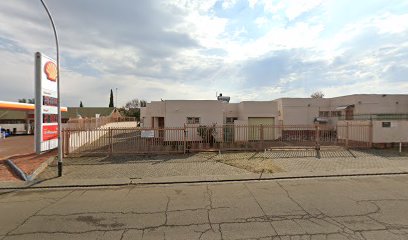
African Educational Research and Development Foundation is a Education establishment in Bloemfontein, Free State, South Africa
Bloemfontein
Free State
9301
South Africa
Curriculum
The African Educational Research and Development Foundation (AERDF), based in Bloemfontein, Free State, is presented in its online materials as an organisation focused on advancing educational research and facilitating scholarly exchange. While specific undergraduate or postgraduate curricula are not published on the foundation’s public pages, the organisation’s activities signal a broader commitment to the development of knowledge resources, professional discourse, and evidence-informed practice within education across Africa.
From an external vantage point, the core emphasis appears to lie in scholarly publishing, dissemination, and professional networking rather than a conventional in-house curricular programme. The flagship publication managed under the foundation’s umbrella is the Journal of Educational Research on Children, Parents & Teachers (JERCPT). This journal operates as a platform for theoretical and empirical studies across varied methodological approaches, including quantitative, qualitative, and mixed-methods research. Although the journal’s content is not a direct course catalogue, it functions as an important curricular support for researchers, practitioners, and students seeking to understand and engage with current debates in curriculum development, assessment, and the welfare of learners, families, and educators.
In terms of levels or programme possibilities, the online materials do not outline degree or diploma offerings, entry requirements, or formal accreditation tied to AERDF. Instead, the foundation’s visible activities suggest a professional development arc rooted in scholarly engagement: attending, presenting at, or publishing through conferences and journals; participating in networks that span Africa and beyond; and contributing to knowledge production that can influence policy and practice. For prospective students or researchers looking for structured study, the organisation’s public-facing materials imply collaboration opportunities rather than a singular, institution-led curriculum.
Curriculum approach, as inferred from public resources, centres on fostering critical inquiry and evidence-informed practice. The journal’s editorial emphasis highlights interdisciplinary work related to curriculum, primary and secondary education, higher education, and teacher development. This signals an orientation toward learning communities that explore classroom realities, assessment, pedagogy, parental engagement, and the professional responsibilities of teachers. The emphasis on diverse research methodologies reinforces an inclusive approach to inquiry, inviting contributions from a range of theoretical traditions and empirical perspectives.
Short courses or professional training opportunities are not detailed in the accessible pages. However, the foundation’s role in publishing and association-building suggests potential pathways for short-form learning through reading lists, research seminars, manuscript preparation guidance, and peer feedback mechanisms inherent to journal publication and scholarly networks. Those seeking practical training in educational research methods, data analysis, or academic writing could reasonably anticipate informal or university-linked activities facilitated by the foundation’s partners and editorial officers, even if explicit course descriptions are not published on the site.
Online or blended options are not explicitly described as part of AERDF’s curriculum offerings on the public site. The presence of an active online journal and a global network indicates that digital access to content and asynchronous engagement are central to the organisation’s work. Prospective participants might expect to interact with materials and opportunities via the journal platform and associated social and professional networks, with potential for online discussions, virtual presentations, and remote collaboration in research projects.
Extracurricular or student support services are likewise not itemised in the visible public content. Nevertheless, the journal’s community-oriented model and the association’s stated aims point to a support ecosystem geared toward scholars and practitioners: mentorship through editorial processes, peer review, access to research discourse, and avenues for collaboration across institutions. Such elements can be valuable complements to formal study, offering exposure to contemporary topics, feedback-rich environments, and opportunities to contribute to Africa-wide educational developments.
Distinctive learning resources attributed to the foundation include its scholarly journal and the associated conference and networking activities described in general terms. The materials emphasise a commitment to dissemination, policy-relevant inquiry, and the exchange of ideas among researchers, teachers, and parents. While precise course offerings or study pathways are not enumerated, the framework provided by JERCPT and the association’s mission suggests a distinctive emphasis on producing and shaping knowledge that can inform educational practice and policy—not merely within Bloemfontein but across the African continent.
For more information about the foundation’s activities, potential collaborators, or publication opportunities, interested readers are encouraged to explore the official website and related sections detailing the Journal of Educational Research on Children, Parents & Teachers and the association’s activities. These resources collectively illustrate a curriculum-like ecosystem rooted in research, scholarly dialogue, and capacity development for education professionals.
External links: JERCPT Journal | About the Journal | Association
Faculties and Branches
The African Educational Research and Development Foundation (AERDF), based in Bloemfontein, Free State, operates primarily through its publishing arm, the Journal of Educational Research on Children, Parents & Teachers (JERCPT). The organisation does not publicly list faculties or individual schools in the same way that a traditional university might; instead, it functions as a scholarly foundation that hosts and supports a specialised journal and related academic activities.
Key structural components include the JERCPT, described as an interdisciplinary outlet for research that informs policy and practice in the educational development of children, parents, and teachers. The journal is presented as a publication of AERDF and is supported by an editorial team comprising elected editors and editors with affiliations to multiple higher education institutions across Africa. Notably, executive editors and contributors are connected to universities in South Africa, the United Kingdom, Ghana, Nigeria, and other countries, illustrating a distributed network of academic collaboration rather than a single campus-based faculty structure.
The foundation’s physical presence is anchored at Unit 10 Eindhoven Complex, 66 Boersma Street, Universitas, Bloemfontein 9301, Free State Province. This address is listed for the Journal of Educational Research on Children, Parents & Teachers (JERCPT) and related communications. The site emphasises contact and engagement through online channels and social media, alongside direct publication-related correspondence. While a specific roster of faculties or departments is not provided, the organisation’s activities relate closely to educational research, teacher education, and parental engagement as reflected in the journal’s scope.
Within the journal’s governance, several roles are highlighted, including an Editor-in-Chief and associate editors drawn from diverse academic backgrounds, as well as executive editors affiliated with institutions such as the University of the Free State and other South African and international universities. This composition signals a broad, networked approach to scholarly leadership rather than a conventional, campus-based faculty model.
In terms of programmes or student-facing services, the content on the site centres on publishing opportunities and manuscript submission for researchers, educators, and students at advanced levels. Prospective contributors are invited to submit manuscripts for publication, with registration and login options provided for authors. Subscriptions to updates and journals are also offered, positioned as a resource for those with academic or professional interest in educational development, rather than as a traditional on-campus student enrolment pathway.
For more information about the foundation’s activities, the JERCPT journal, and opportunities for collaboration, interested readers may consult the main site sections, including the association pages and the board, which outline the leadership and editorial affiliations. Links to related resources and external partners are available through the site, with the Bloemfontein address serving as the principal physical point of contact.
- Facilities or departments as traditionally defined are not listed; emphasis rests on the journal and associated scholarly activities.
- Campuses or branches are not described as separate academic units; the network operates through a distributed editorial and institutional affiliations.
- Student and researcher engagement occurs via manuscript submission, registration for authors, and the subscription services offered by the journal.
Website resources: Contact page, About the journal, Editorial board.
Registration Details
The African Educational Research and Development Foundation (AERDF) operates a formal registration process for individuals seeking to join its journal and association activities, based in Bloemfontein, Free State, South Africa. Registration is positioned as a gateway to participate in the Journal of Educational Research on Children, Parents & Teachers (JERCPT) and related association initiatives.
Registration is overseen through the association’s online platforms. Prospective members are invited to access registration elements via the JERCPT site, including the dedicated user registration page. The primary entry point for new applicants is the site’s registration function, which enables interested researchers, scholars, teachers, administrators, specialists and advanced postgraduate students to create an account and initiate the submission or membership process. See the Register page for the JERCPT system: Register.
Eligibility for membership is stated as inclusive of academics within higher education institutions. The association describes its aim as providing a formal platform for Africans and other researchers to engage with scholarly work and to disseminate research findings in a professional and coherent manner. Members may come from a range of educational disciplines and research traditions, with a focus on advancing knowledge related to the welfare of children, teachers and parents in education. This broad eligibility framework is reflected in the association’s public materials and journal publishing activities.
Registration and joining the association are complemented by accessible information and contact channels. For those seeking more information or wishing to engage with the organisation prior to or during registration, the site provides a dedicated “Contact” section. That channel offers general inquiries and guidance on accessing additional information, and directs visitors to further engagement avenues such as social media and the association’s online forms. The main contact page can be found at: Contact Us.
Where to apply and how to proceed are illustrated through linked pages on the site. In addition to the primary registration portal, potential applicants may encounter supplementary registration and information pathways connected with JERCPT and its publishing activities. The association also publishes related materials and background information on its governance, constitutions, and certificates, accessible via the main site navigation or via linked documents on the association pages. Links to these resources help provide context for the registration process and the scope of participation offered by AERDF and JERCPT.
For those who wish to explore the broader activities supported by the foundation, including its educational research publication programme, the site offers access to the journal’s current and past issues, licensing and copyright information, and calls for manuscripts. While these pages are not direct registration documents, they form part of the environment in which registered members operate. Relevant materials and calls can be accessed through the journal’s main pages: ERCPT Journal and About the Journal.
Support and further assistance are available through the foundation’s social channels, including Facebook, WhatsApp, Twitter and LinkedIn, and through the site’s Subscribe feature for updates on contributors’ articles. Visitors are encouraged to utilise these channels for guidance, updates and peer networking as part of the registration experience.
- Register to join: Register
- Contact the organisation: Contact Us
- Journal home: ERCPT Journal
- About the journal: About the Journal
Physical presence is noted at the Bloemfontein address associated with the foundation’s operations. Prospective registrants may use the site to initiate contact and begin the registration process, after which ongoing guidance and support are available through the stated channels.
Sorry, no records were found. Please adjust your search criteria and try again.
Sorry, unable to load the Maps API.
Education and Learning Resources in Bloemfontein
Bloemfontein, the capital of the Free State, offers a broad spectrum of educational opportunities that cater to learners at every stage. The city is home to a mix of primary and secondary schools, higher education institutions, and vocational training centres, all connected by a network of libraries, study spaces, and specialised facilities. This combination supports a culture of lifelong learning that extends beyond the classroom.
Public and private schools in Bloemfontein commonly provide education from Foundation Phase through to the Senior Certificate, with a range of curricula and syllabi to suit differing learner needs. Families often choose schools based on academic results, hospitality and discipline policies, extracurricular offerings, and transport arrangements. Collaboration between schools and community organisations can introduce learners to tutoring programmes, enrichment activities, and career-focused guidance that helps shape post-school options.
Higher education in Bloemfontein centres on both traditional university study and applied, career-oriented learning. The city hosts universities and technical colleges that offer undergraduate degrees, diplomas, certificates, and short courses across disciplines such as sciences, humanities, engineering, health sciences, business, and information technology. Many programmes incorporate practical components, including laboratory work, studio sessions, field placements, and project-based learning, to reflect real-world applications.
In addition to degree-level study, Bloemfontein features training centres and campuses that provide apprenticeships, diploma pathways, and vocational programmes designed to develop practical skills. These institutions often partner with industry to keep curricula aligned with current workplaces, enabling learners to progress smoothly into employment or further study. Higher education pathways are commonly supplemented by articulation options, enabling transfer between programmes if interests or goals evolve.
Learning support and student services are an important feature of Bloemfontein’s educational landscape. Libraries and information hubs offer access to books, journals, digital resources, study space, quiet rooms, and research assistance. Many institutions provide tutoring services, writing centres, and language support to help students master course material and complete assignments. Career guidance offices, mentoring schemes, and mental health and wellbeing services are frequently available to assist learners in navigating academic and personal transitions.
Facilities and resources commonly found across Bloemfontein’s education sector create a comprehensive learning environment. Modern libraries with computer workstations and high-speed connectivity support independent study and collaborative projects. Science, technology, engineering and mathematics laboratories, as well as arts and media production spaces, are typically equipped to support practical learning. Sports and recreation facilities, student accommodation, cafeterias, and study lounges contribute to a balanced student experience, while on-campus amenities and safe commuter options help learners manage daily life.
Typical pathways for admission and registration at a high level involve gathering the necessary documentation, verification of prior qualifications, and meeting programme-specific entry requirements. The process generally includes the submission of an application through official portals, a consideration of eligibility criteria, and, where applicable, a period of programme selection and offer communication. International or non-native learners may encounter additional steps related to visas, language proficiency, or academic credential assessment. Early planning and consultation of official guidance can assist families and learners in navigating timelines, funding options, and support services.
Representative resources in Bloemfontein
- Universities offering undergraduate and postgraduate programmes with a range of faculties and research centres
- Technical and vocational training centres delivering diplomas, certificates, and apprenticeships
- Public and private schools with diverse curricula and progression pathways
- Libraries and learning commons providing study spaces, digital resources, and research support
- Student services units offering career guidance, counselling, and wellbeing support