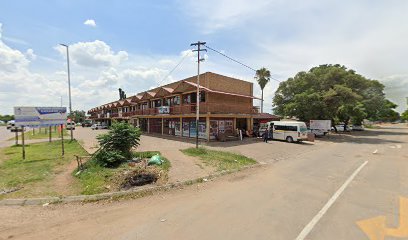
MTech Mega College is a Colleges establishment in Polokwane, Limpopo, South Africa
Polokwane
Limpopo
Polokwane Ext 40 (S), Polokwane
South Africa
Sorry, no records were found. Please adjust your search criteria and try again.
Sorry, unable to load the Maps API.
Education and Resources in Polokwane, Limpopo
Polokwane, the provincial capital of Limpopo, presents a diverse landscape of educational opportunities and supportive resources for learners and families. The city serves as a hub where primary and secondary schools, further education and training (FET) institutions, higher education campuses, and specialised training centres are interconnected through a network of public and private provision. This mix supports a range of aspirations, from foundational schooling to national qualifications and professional development.
Across Polokwane and its surrounds, learners can expect a spectrum of school types, from well-established public primary and secondary schools to independent and faith-based institutions. These schools typically focus on core subjects, bilingual or multilingual curricula, and extracurricular activities that foster well‑rounded development. For learners seeking post‑school pathways, a number of colleges and training centres offer courses in career-focused fields such as business studies, information technology, engineering basics, hospitality, and health sciences, often aligned with national qualifications frameworks.
Higher education opportunities are anchored by local university campuses and affiliated faculties that offer undergraduate and postgraduate programmes. In the broader Limpopo region, universities and affiliated teaching facilities provide programmes across arts, sciences, education, health, and agriculture, supported by research libraries, computer laboratories, and student services. Prospective students commonly navigate admissions and registrations through institutional portals or centralised application systems, with entry requirements typically depending on the chosen programme and level of study.
Learning support and student services form an essential feature of the educational landscape. Academic guidance, tutoring schemes, and study skills workshops help learners develop essential study habits and readiness for exams. Support services frequently include welfare and counselling, disability support where applicable, financial guidance, and information on scholarships or bursaries. These services aim to promote access and success for a diverse student body, including returning learners and part‑time students balancing study with other commitments.
Facilities across the area are designed to enable practical and experiential learning. Public and university libraries offer access to reference materials, journals, digital databases, and quiet study spaces. Scientific and technical labs support practical experimentation, while ICT laboratories enable computer literacy and software familiarisation. Sports facilities and recreational spaces provide opportunities for physical education and team activities, contributing to overall wellbeing. Accommodation options near campuses — such as student residences or housing near training centres — help learners who travel from surrounding towns or rural areas.
Typical pathways in Polokwane involve a sequence of educational stages, from completing compulsory schooling with the matric or an equivalent qualification to applying for further study or authorised training programmes. Registration processes are normally managed by the institution offering the programme, with deadlines and documentation varying by level and field of study. Guidance is often available through student services, school counsellors, and career information resources to assist with subject choices, prerequisite subjects, and progression routes.
- Public and private schools spanning primary to secondary levels with a focus on core curricula and local language provision.
- Colleges and training centres offering vocational and professional courses, including ICT, business studies, engineering basics, and health sciences.
- Higher education campuses and faculties providing undergraduate and postgraduate programmes across a range of disciplines.
- Libraries, laboratories, ICT facilities, sports and recreation complexes, and accommodation options linked to educational institutions.
- Student support services covering academic guidance, welfare, disability support, and financial information.
For further information on tertiary education opportunities, the University of Limpopo and similar institutions can be explored through their official portals. Prospective learners and families are advised to consult current institution websites for the most up-to-date admissions guidance, programme details, and support services.
Website resources may include general education portals and university sites, which offer detailed descriptions of available programmes, entry requirements, and application timelines. Where appropriate, regional education offices provide overarching guidance on schooling options, student support, and pathways within Limpopo.