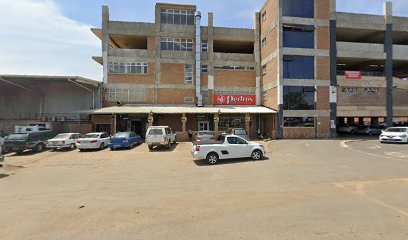
Kumon Maths and English Phoenix, Verulam is a Tutoring services establishment in Ethekwini, KwaZulu-Natal, South Africa
Ethekwini
KwaZulu-Natal
Grangetown, Ethekwini
South Africa
Curriculum
Kumon Phoenix, Verulam presents a bilingual, globally aligned learning pathway designed to cultivate independent, advanced learners. The curriculum emphasises life skills and self-directed study rather than merely preparing for examinations. After a free diagnostic assessment, each child begins on a programme at an individually set starting point. This personalised entry point establishes a solid foundation for consistent progress, with ongoing adjustments made to match the learner’s pace and needs. The long‑term aim is for students to become confident, self-reliant learners who can transfer study skills to schoolwork and daily life.
The centre centres its approach on two core subjects—Mathematics and English. The Kumon Maths Programme focuses on developing fluency with numbers, progressing through carefully ordered, daily worksheets that build from fundamental concepts to more advanced topics. Students are encouraged to master each key skill before advancing, ensuring a reliable sense of accomplishment and a clear sense of progression. In parallel, the Kumon English Programme develops reading, comprehension, writing, and language mechanics through similar daily worksheet work, reinforcing consistent practice and self-correction. Together, these strands aim to enhance numerical literacy and language proficiency, supporting school achievement and lifelong learning.
Curriculum progression is standards-based rather than curriculum-bound. The programme is designed to be universal and adaptive, operating at exactly the right level for each student regardless of age or starting point. This means learners progress when ready, not by age or grade, and are encouraged to push beyond initial expectations as confidence and capability grow. The emphasis is on building sound learning habits—daily study, concentration, and the ability to apply strategies to new problems—rather than short-term test performance.
Centre staff describe Kumon as a self‑learning programme complemented by instructor support. Each learner works independently through a bespoke set of worksheets while an instructor observes and provides guidance to ensure work remains appropriately challenging and paced to match development. This structure supports repeated practice, error analysis, and gradual autonomy in problem solving. Students frequently attend the study centre up to twice weekly while continuing daily at-home worksheets designed for both home and in-centre learning. The blended model accommodates families who prefer or require online participation, widening access to practice and instructor feedback beyond a traditional in-person setting.
Entry into the programme is followed by a personalised study plan that targets the development of self‑discipline, critical thinking, and the capacity to take ownership of learning. The approach is described as complementary to school curricula rather than a replacement, with the overarching goal of extending and deepening a pupil’s capability across mathematics and English, and ultimately enabling them to study above the international standard for their age.
In addition to core maths and English content, the centre highlights distinctive learning resources in the form of daily worksheets that are designed for both home and centre use. These materials are central to Kumon’s method, providing structured but flexible practice that supports steady, measurable growth. The programme emphasises incremental mastery, with progress markers aligned to the learner’s starting point and pace, rather than a fixed timetable for everyone.
Student support is framed around regular instructor interaction. Instructors monitor each learner’s performance, ensuring the work level remains appropriate and that progress is steady. This guided self‑learning approach helps students become more autonomous, resilient learners who can approach new topics with confidence. Parents and guardians are kept informed about progress and can access information about the programme, enabling a collaborative approach to the child’s education.
For those seeking additional options, the centre notes that students may engage in online classes in addition to or in place of in-centre sessions, reflecting Kumon’s blended approach. This flexibility supports continuity of learning in varying circumstances and aligns with the programme’s emphasis on daily practice and long‑term skill development.
Overall, Kumon Phoenix, Verulam’s curriculum is characterised by personalised placement, daily independent practice, supportive instructor guidance, and a long-term focus on independent learning and confidence. The programme positions itself as a preparatory framework that equips learners with robust maths and English capabilities, ready to meet school demands and to apply critical skills across their educational journey.
Faculties and Branches
Kumon Phoenix, Verulam operates as a dedicated study centre within the Gaterite Complex on Russom Street in Verulam, near Durban, KwaZulu-Natal. The centre presents a focused Kumon experience for maths and English, delivered through a structured programme designed to foster independent learning and long‑term academic confidence. The location functions as a single, dedicated learning centre serving the local community, with provisions for both in-centre and online participation as appropriate to a student’s needs.
The centre follows the Kumon model of self‑paced study complemented by instructor guidance. Students begin on individually set starting points after an initial assessment, ensuring tasks align with each child’s current abilities. Daily worksheets form the core of both at‑home and in‑centre learning, supporting consistent progress across subjects. Regular progress is tracked by the Instructor, who observes performance and adjusts the workload to maintain an appropriate pace for development. This structure is designed to cultivate not only subject mastery in maths and English but also essential study skills and independence that extend beyond the classroom.
The Phoenix, Verulam branch offers clear scheduling within its study programme. Class sessions are held during designated hours, with mid‑week sessions on Wednesdays from 15:00 to 17:00 and Saturday morning sessions from 09:00 to 12:00. Each subject typically requires around 30 minutes of focused study per session, reflecting Kumon’s emphasis on steady, daily practice rather than episodic tutoring. The timetable is designed to accommodate working families and school timetables, promoting regular attendance without overwhelming students.
Pricing at the centre is straightforward, with a one‑off registration fee and a monthly fee per subject studied. The listed costs are R500 as the registration/one‑off fee and R780 per month per subject, with the understanding that students may participate at the study centre or online, depending on individual circumstances and preferences. This pricing structure aligns with Kumon’s broader model of providing accessible, consistent learning support across multiple modes of delivery.
Within the centre’s framework, the programmes cover Kumon’s maths and English offerings, aiming to build not merely examination readiness but a durable love of learning and reliable independent work habits. The centre’s description emphasises the long‑term benefits of daily engagement with Kumon worksheets, the development of self‑confidence, and the gradual realisation of potential through consistent practice. Parents are provided with the option to book a free assessment, which marks the starting point for tailoring the programme to each child’s needs and goals.
For those seeking further information or wishing to explore enrolment, the Phoenix, Verulam centre participates in Kumon’s nationwide network of over 200 centres in South Africa. External links on the centre page direct readers to the assessment booking and helpdesk resources, facilitating easy access to the broader Kumon framework and support services while emphasising the local branch’s role within that system.
- Centre location: Gaterite Complex, 22-24 Russom Street, Verulam, Durban 4339, South Africa
- Programmes: Maths and English Kumon study, self‑paced with instructor guidance
- Delivery options: In‑centre and online study
- Class times: Wednesday 15:00–17:00; Saturday 09:00–12:00
- Fees: Registration R500 (one‑off); R780 per month per subject
- Assessment: Free initial assessment available
Further details and booking options are available via the centre’s page on the Kumon South Africa website: Kumon Phoenix, Verulam.
Registration Details
This entry provides an external overview of the registration process for Kumon Phoenix, Verulam, located in the Gaterite Complex, 22-24 Russom Street, Verulam, Durban 4339, South Africa. The centre follows Kumon’s standard approach to starting a student, beginning with a complimentary assessment to determine an appropriate starting point within the programme. No information is provided that would suggest post-enrolment deadlines or time-limited offers beyond the stated fees.
Registration and assessment are aligned with Kumon’s aim to cultivate independent, self-directed learners. After a free assessment, a personalised study plan is set so that the child begins at an individually suitable starting point. This allows progression to be paced to the learner’s needs, with ongoing support from the centre’s instructors as required during in-centre and online study.
To initiate the process, prospective families can book a free assessment. The centre encourages interested parties to take advantage of this initial step to understand how Kumon Maths and English might support the child’s development. The website provides direct links to request a free assessment, making the process straightforward for new enquiries.
- Apply / Book the assessment: The site offers a clear pathway to book a free assessment, including a dedicated link labelled “Book your FREE assessment.” This link is visible on the Kumon Phoenix, Verulam page and directs applicants to the assessment booking page. Book your FREE assessment
- Next steps after assessment: Following the diagnostic or starting-point determination, the engagement proceeds with Kumon Study Programmes designed for independent learning and daily worksheets, both at the centre and online. The content emphasises an individualised starting point and regular worksheets to support progress.
- Centre options: Attendance is described as taking place within designated hours, with classes available in-centre or online, depending on arrangements. Regular attendance is complemented by home study through daily Kumon worksheets.
Regarding costs, the Kumon Phoenix, Verulam centre specifies a one-off registration fee and ongoing monthly fees per subject. The published figures are as follows: a one-off registration fee of R500.00 and a monthly charge of R780.00 per subject studied. These fees are presented in the centre’s pricing section and are described as applicable after registration, with students attending classes either at the study centre or online. There is no indication of additional or variable charges beyond these amounts in the available content.
Potential applicants are directed to additional resources for further information. The centre provides a “Read More” link for those seeking more detail about Kumon Phoenix, Verulam, and a Helpdesk link for general assistance. Practical details, such as the precise timetable for Wednesday and Saturday sessions, are provided on the centre’s page to aid planning for family arrangements. For ongoing communication or specific questions, the “Ask me a question” option is also offered on the site.
Key links for applying or finding more information include the following:
For those seeking more practical information, the centre notes that students attend classes within designated hours, with typical session times shown on the site. The Phoenix, Verulam page references specific weekday and weekend timings, illustrating a structured, regular pattern of study alongside the home workbook component.
Sorry, no records were found. Please adjust your search criteria and try again.
Sorry, unable to load the Maps API.
Education and Resources in Ethekwini, KwaZulu-Natal
Located along the eastern coast of South Africa, the metropolitan area of Ethekwini offers a wide range of educational opportunities for learners of all ages. The spectrum of institutions includes public and independent schools, further education and training (FET) colleges, universities, and specialised training centres. These institutions collectively support primary and secondary education, Tertiary studies, and career-focused programmes across many sectors.
Typical pathways begin with formal schooling at primary and secondary level. Public schools commonly follow national and provincial curricula, preparing learners for the National Senior Certificate examinations. Independent schools may provide alternative curricula or enhanced pathways alongside the standard syllabus. In both settings, learners can expect a blend of core subjects, languages, and elective options aligned with future goals, whether school qualifications, job readiness, or further study.
Beyond compulsory schooling, the area accommodates numerous post-school options. Technical and vocational routes are well represented through local colleges and training centres, offering programmes in trades, information technology, health sciences, business studies, hospitality, and creative subjects. These programmes typically culminate in diplomas, certificates, or credit-bearing qualifications that align with the South African Qualifications Authority (SAQA) framework. Higher education opportunities are provided by universities and campus-based colleges, with programmes ranging from undergraduate degrees to honours and postgraduate study in fields such as science, engineering, humanities, social sciences, and education.
Learning support and student services are a notable feature of the educational landscape. Libraries and information resources are common across institutions, providing access to study spaces, reference materials, and digital databases. Language support, tutoring services, academic advising, and skills development centres assist learners in navigating different curricula and improving study techniques. For those with additional needs, disability services and adaptive learning options are often available, subject to the policies of individual institutions.
Facilities generally reflect the diverse programmes offered. Modern campuses tend to include specialised laboratories for science and engineering, computer laboratories with up-to-date software, and dedicated workshops for practical trades training. Sports facilities—ranging from fields and courts to indoor centres—support physical education and competitive teams. On-campus accommodation or residential options are provided at many universities and larger colleges, while smaller campuses may offer information about nearby student housing or approved lodgings.
Access to technology and Internet resources is common, enabling both on-site and remote learning. Libraries frequently host study halls, quiet reading rooms, group workspaces, and access to online journals or e-books. Some institutions provide virtual learning environments, enabling learners to access course materials, assessments, and communications outside traditional timetables.
Typical admission and registration processes emphasise timely applications, the submission of required documentation, and compliance with local regulations. Prospective students should monitor official channels for application windows, prerequisite qualifications, and any articulated selection criteria. Registration often involves course enrolment, fee assessments, and confirmation of accommodation or support services as appropriate. Guidance counsellors, student advisors, and careers services can help families and learners map a realistic progression plan, whether entering the workforce, pursuing further studies, or undertaking retraining.
Overall, Ethekwini presents a layered ecosystem of educational provision, with a broad mix of institutions and services designed to support diverse learner needs. The combination of strong academic options, practical training pathways, extensive learning resources, and supportive student services helps to realise accessible pathways for lifelong learning within KwaZulu-Natal.
Key elements at a glance
- Schools at primary and secondary levels, including public and independent options
- FET colleges and specialised training centres offering diplomas and certificates
- Universities and campus-based institutes delivering undergraduate and postgraduate programmes
- Libraries, study spaces, digital resources, and language or academic support
- Lab facilities, ICT suites, science and engineering laboratories, and workshops
- Sports facilities and potential accommodation for students
- General guidance on admissions, registrations, and progression paths