
GREEN Solar Academy Ballito | Solar training is a Training centres establishment in Dolphin Coast, KwaZulu-Natal, South Africa
Dolphin Coast
KwaZulu-Natal
Acacia Park, Dolphin Coast
South Africa
Curriculum
GREEN Solar Academy Ballito delivers a structured programme portfolio designed to support learners at every stage of a solar installation career. The curriculum combines practical, hands‑on training with foundational theory to equip graduates with industry‑standard skills recognised across South Africa’s solar sector. Courses are positioned to facilitate progression from entry‑level understanding to specialised design and commissioning competencies, with pathways that align to SAPVIA’s PV GreenCard framework where applicable.
Core programmes cover the essentials of solar technology, installation, design and business practice. An emphasis is placed on safety, code compliance, and real‑world applicability, ensuring learners can contribute confidently to teams or pursue independent contracting. The range includes introductory units suitable for non‑technical entrants, as well as more advanced modules for those seeking practical mastery and professional accreditation.
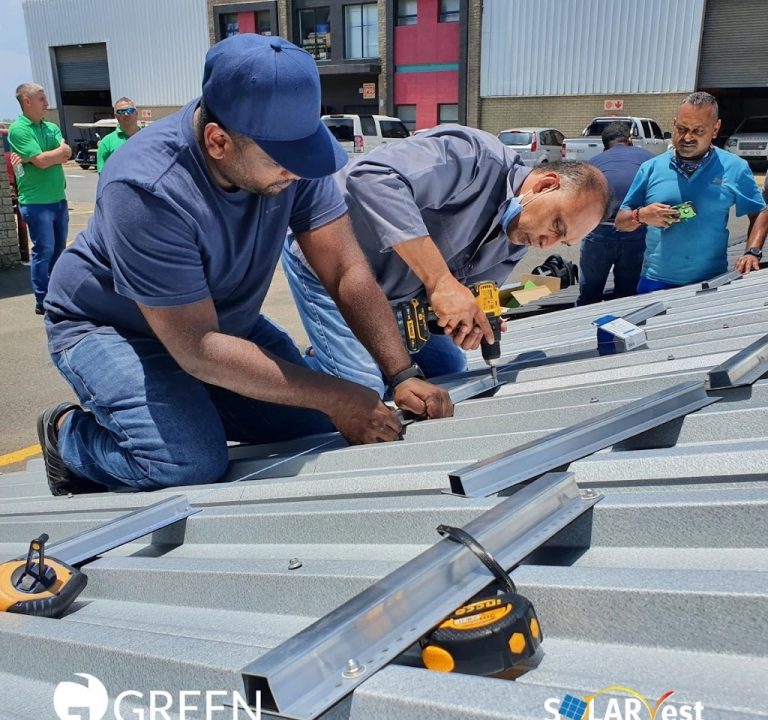
Among the highlighted offerings are short, intensive courses focused on rapid skill development—for example introductory solar basics, hands‑on mounting and fast‑track installation training. Several programmes emphasise industry practicality and team readiness, enabling participants to return to workplaces with tangible competencies. The curriculum also features masterclass‑style design instruction for commercial PV systems, incorporating considerations for higher‑voltage configurations and larger‑scale projects.
In addition to technical training, the academy provides modules focused on the commercial and operational aspects of running a solar business. Learners can access insights into registration, investment decision‑making, project management and client relations. These business‑focussed units are designed to complement technical expertise, helping graduates translate skills into sustainable enterprise growth.
Learning resources and delivery methods reflect the programme’s emphasis on practical readiness. Training venues include hands‑on facilities and real‑world installation environments to simulate field conditions. An important feature across several courses is the alignment with industry standards and recognised assessment pathways, including the SAPVIA PV GreenCard process. This enables successful participants to qualify as GREEN PV Installers or Designers upon completion of required assessments or examinations.
The curriculum also encompasses recent developments in the broader solar sector, such as eMobility and modern energy infrastructure. By integrating emerging topics with foundational solar knowledge, the academy helps learners stay current with evolving technologies and market needs. This approach supports continued professional growth and helps graduates remain competitive within a dynamic industry.
Delivery options associated with the curriculum include on‑site training at GREEN Solar Academy Ballito and adjacent locations, with potential online assessment components where stated. The programme structure is designed to support a range of learners—from those seeking a rapid entry into solar installation to professionals pursuing formal accreditation and continued professional development.
Distinctive learning resources cited by the academy include access to a network of installers, suppliers and local solar experts, effectively positioning graduates to engage with industry partners from day one. The curriculum emphasises practical application, with lecturers and instructors bringing real‑world experience to each module. This combination of hands‑on practice, industry endorsement and structured progression helps to explain the programme’s reputation as a stepping stone into South Africa’s largest installer network.
- Solar 101: introductory solar basics with emphasis on non‑technical learning, widely used to establish foundational knowledge.
- PV Mounter: practical, hands‑on installation training designed for immediate field deployment.
- SuperSolarSchool: a five‑day course for beginner to intermediate learners, SAPVIA‑endorsed under the PV GreenCard programme.
- Commercial PV Design: masterclass on the design and construction of commercial‑size PV systems, including considerations for high voltage.
- Solar Installer Turbo!: a focused package for experienced installers preparing for the SAPVIA PV GreenCard Assessment.
- Solar Business Management: a crash course covering business registration, investment decisions and project management for solar enterprises.
- Compliance for PV Systems: a one‑day intensive course on testing, compliance and reporting requirements.
- PV GreenCard & Exams: pathway to official SAPVIA‑certified status following online and/or onsite assessments.
- Solar Sales Expert and Financing for PV Systems: short courses addressing client relations, financing options and tax considerations relevant to South Africa.
Upcoming courses and assessments are listed with planned delivery windows, reflecting a proactive commitment to maintaining current content and alignment with industry needs. The curriculum is designed to support ongoing professional development, with opportunities to revisit modules, undertake assessments and gain recognised qualifications as the programme evolves.
Faculties and Branches
GREEN Solar Academy Ballito operates within a broader network of solar training centres across South Africa, delivering a structured suite of courses designed for different levels of experience. While specific faculty names are not detailed on the public pages, the organisation presents distinct training streams and programmes that function as the core academic offerings. These streams are designed to progress learners from foundational knowledge to specialised, professional credentials within the solar industry.
Within Ballito and the wider GREEN Solar Academy footprint, learners can access courses that emphasise practical hands-on installation, design, project management, and industry compliance. Programmes are aligned with national standards and SAPVIA accreditation processes, notably including the PV GreenCard pathway. This arrangement situates the academy as a hub where theory, hands-on practice, and industry recognition converge to support individual career development and enterprise growth.
The curriculum spans entry-level introductions to advanced, practitioner-focused tracks. Highlights include short, intensive training blocks that cater to non-technical learners, tradespersons, and teams seeking rapid upskilling, as well as more comprehensive programmes for solar installers and designers preparing for official assessments. Participants gain access to an ecosystem of installers, suppliers, and local solar experts, facilitating professional networks from day one and helping to accelerate entry into South Africa’s expansive installer network.
Courses advertised for the broader network cover several topical areas, including solar basics, practical installation, high‑level design for commercial PV systems, and compliance, with additional modules oriented toward business development and customer engagement. The presence of an online examination component for PV GreenCard qualification further integrates assessments into the learning journey, enabling learners to formalise their credentials upon completion.
Campuses and branches are indicated across major South African cities, with Ballito mentioned among the regional locations. The programme structure is designed to support both individual learners and organisations seeking staff development, rehabilitation of skill gaps, or formal certification for installation and design roles. The multi-branch approach ensures accessible pathways to the same core training standards, while enabling local tailoring of delivery to meet regional industry demands.
Student services linked to these offerings typically focus on professional accreditation, access to industry networks, and guidance on certificates and qualifications. The overarching aim is to provide a credible route to recognised installer status and to equip participants with the knowledge and practical capability needed to pursue PV GreenCard assessments or related SAPVIA-endorsed credentials.
- Core training streams (installation, design, compliance and business capability)
- Branch network including Ballito and other major South African locations
- Pathways to SAPVIA PV GreenCard certification and related assessments
- Industry networking and access to installer and supplier ecosystems
- Support for staff development within solar enterprises and SME owners
Registration Details
GREEN Solar Academy Ballito provides a range of solar installation courses designed to accommodate various levels of experience, from beginner to professional installer. An outside observer notes that prospective learners will find the Ballito offering within the broader portfolio of Solar Installation Training Courses presented across multiple South African locations, including Ballito, Johannesburg, Pretoria, Cape Town and Port Elizabeth.
Overview of the registration process is presented in general terms on the provider’s site. Interested individuals are encouraged to explore the available courses and the corresponding dates to identify the most suitable option. The programme range includes introductory and specialised courses, designed to align with industry demand and SAPVIA-endorsed pathways under the PV GreenCard framework. Potential applicants can gain an understanding of the progression from foundational modules to more advanced design and assessment subjects, which helps applicants gauge where to begin based on their current knowledge and career goals.
Where to apply or register is clearly linked through the site’s course navigation. The provider maintains an online hub for course information, with a consolidated entry point to view upcoming offerings and access registration details. A dedicated pathway to “Find Your Course” directs users to the regional course listings, enabling interested learners to locate Ballito options alongside other locations. The visible link for this resource reads as follows: Find Your Course. Through this portal, prospective registrants can assess course dates, content, and the scope of each programme before initiating formal registration.
The training portfolio emphasises practical hands-on training and theory combined with industry accreditation. While specific application steps, deadlines, fees or required forms are not stated in a general overview, the site makes plain that successful outcomes include formal certification and access to an established installer network post-completion. This aligns with the organisation’s aim of equipping participants with certified PV training and potential accreditation aligned to national standards, including paths related to the PV GreenCard.
In addition to foundational courses, the collection features specialised tracks such as PV GreenCard assessment preparation and related examinations. This breadth suggests that registration is typically structured around course cohorts with a defined sequence, allowing attendees to progress from introductory modules to more advanced topics as appropriate to their development plan. Prospective registrants should refer to the course hub for the latest offerings, ensuring they review the most current information on course content and regional availability before committing to a registration.
For further information about the range of courses and their positioning within the broader solar training landscape, the site’s content emphasises the integration of training with industry networks, culminating in practical competencies and recognised qualifications. Learners seeking to embed themselves in South Africa’s largest installer network can anticipate a registration pathway that is clearly linked from the main course pages and regional search results.
Sorry, no records were found. Please adjust your search criteria and try again.
Sorry, unable to load the Maps API.
Education and Resources on the Dolphin Coast
The Dolphin Coast in KwaZulu-Natal offers a diverse landscape of educational opportunities set against a coastal environment that supports both study and personal development. Learners and families alike can expect access to a range of institutions designed to accommodate different ages, abilities and learning goals, from early schooling through to higher education and specialised training.
Across the region, educational provision typically includes primary and secondary schools that emphasise core academic curricula alongside practical subjects such as science, technology, engineering, arts and physical education. Many schools prioritise inclusive education, offering additional learner support programmes, enrichment activities and opportunities for learners to participate in assessment-supported progress. In addition to mainstream schools, there are specialised facilities and programmes aimed at learners with diverse learning needs, with pathways designed to foster confidence, resilience and independent study habits.
Colleges and vocational training centres form a practical complement to traditional schooling. These institutions commonly provide a mix of certificate and diploma programmes aligned with local workforce requirements, including business administration, information technology, hospitality, tourism, construction and health-related courses. Learners may have access to part-time or full-time study options, enabling a smoother transition from schooling to employment, apprenticeships or further study. Short courses and bite-sized credentials are frequently offered to support upskilling in specific trades or industries.
Higher education on the Dolphin Coast is supported by nearby universities and satellite campuses that offer degree programmes, professional qualifications and research opportunities. Prospective students often encounter a straightforward admissions framework that generally requires prior academic achievement, completion of relevant pre-requisites and adherence to application timelines. Guidance on course selection, credit transfer, and progression routes is typically available through student services or centralised admissions offices, helping applicants navigate prerequisites and timelines with clarity.
Learning support and student services are notable features in the area. Many institutions provide libraries with access to fiction and non-fiction collections, study spaces, computer facilities and quiet rooms for focused work. Academic support services such as tutoring, writing centres, and study-skills workshops assist learners in developing effective study habits, research techniques and exam strategies. Counselling, career guidance and financial literacy sessions are commonly available to help students manage personal wellbeing, plan career trajectories and navigate funding opportunities.
Facilities surrounding learning environments often include well-equipped laboratories, multimedia labs and dedicated spaces for science, engineering or creative disciplines. Sports facilities, fitness centres and outdoor spaces contribute to a balanced student experience, while on-campus accommodation or partner housing options may be available for those coming from other towns or provinces. Safety, accessibility and accessibility-related services are generally considered important, with campuses striving to offer inclusive facilities and support networks.
Typical pathways for learners imply a logical progression: enrolment in a suitable programme, attendance at introductory and advanced modules, and completion through assessments that validate qualification attainment. Registration or enrolment procedures usually involve submitting required documentation, selecting preferred courses or modules, and meeting established deadlines. After completion, learners are often directed towards further study opportunities, professional placements or entry into the local job market, supported by alumni networks and career services where offered.
In sum, the Dolphin Coast presents a broad spectrum of educational resources that cater to different learning needs and life stages. The combination of conventional schooling, vocational training, higher education access, and comprehensive learner support creates a cohesive ecosystem designed to help families plan effective educational journeys, with pathways that promote ongoing learning, personal growth and future opportunities.