
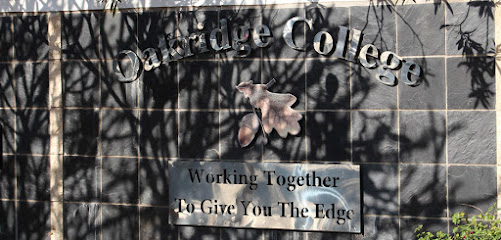
Oakridge College is a Private colleges establishment in Durban, KwaZulu-Natal, South Africa
Durban
KwaZulu-Natal
4051
South Africa
Curriculum
Oakridge College delivers a structured high school curriculum for Grade 8 to Grade 12, culminating in the National Senior Certificate examinations under the auspices of Umalusi. The school emphasises a learner‑centred approach within its small class sizes, designed to foster individual attention and personalised progression. The senior phase offers a comprehensive range of subjects that align with national standards, enabling pupils to tailor their study to future aspirations while maintaining a broad, well‑rounded education.
In the lower grades (Grade 8 and 9), the curriculum covers core academic disciplines alongside practical and cultural subjects. Learners study English, Afrikaans as a first additional language, isiZulu as a first additional language, Mathematics, Natural Science (including Biology), Social Science (Geography and History), Tourism, Technology, Economic and Management Sciences (EMS), and Life Orientation. This blend aims to build foundational knowledge, critical thinking, and real‑world application, while supporting the development of a curious and engaged learner body.
For the Senior Secondary Phase (Grade 10–12), the school offers a broad selection of compulsory and elective subjects to prepare pupils for the National Senior Certificate. The subject mix includes English, Afrikaans (First Additional Language), isiZulu (First Additional Language), Mathematics, Mathematical Literacy, and an option for Advanced Programme Mathematics as an elective. The science and humanities strands extend through Physical Science and Life Sciences (Biology), Geography, and History, with additional offerings such as Tourism, Engineering Graphics & Design (EG&D), Business Studies, Life Orientation, and Computer Applications Technology (CAT). This combination supports both rigorous quantitative study and broader analytical and creative competencies.
Oakridge College maintains the assurance of academic quality through Umalusi accreditation. The college is registered with the Department of Education as a full‑time centre and participates in the NSC examinations, subject to national timelines and examination formats. This external quality framework provides reassurance regarding standard and progression to post‑school opportunities.
In addition to the formal curriculum, the school implements a flexible teaching approach. Subject choices at Grades 10–12 are designed to suit individual learners where possible, recognising different interests and career paths. This adaptability helps ensure that learners remain engaged and able to pursue studies aligned with personal goals while meeting graduation requirements.
Oakridge also supports uninterrupted education through its early adoption of continuous, effective online teaching. At the outset of lockdown, the school introduced robust online teaching systems for all grades, with these provisions retained to address future needs. Extra tuition is available daily for remediation and extension, ensuring learners have ongoing access to support beyond standard timetabled hours.
In addition to the core academic programme, Oakridge provides dedicated resources and opportunities that enhance learning. A parallel English language programme supports foreign language learners, implemented alongside the main curriculum to promote linguistic confidence and integration within the wider school environment. The institution emphasises a safe, inviting, and stimulating setting that fosters the development of intellectual, physical, moral, social, and artistic capacities, equipping learners to navigate a dynamic world.
Short courses, professional training, and supplementary resources are integrated through targeted initiatives and partnerships. Notably, a collaboration with the Inspire Music Academy adds a cultural dimension by enabling interested learners to study musical instruments, enriching the school’s cultural life and supporting broader creative development.
While Oakridge College does not offer sport or extracurricular activities on campus as part of the school programme, opportunities exist for learners to pursue passions and talents in outside activities and sport. Support services and resources are designed to complement classroom learning, reinforcing a holistic approach to education and personal development.
For those seeking further information, learners and guardians can access the school’s notices and resources online, including Umalusi accreditation documentation and subject lists for different grades. The curriculum page also references textbook and stationery guidance, with notices updated periodically to reflect changes and supplier information. These online resources provide additional context for families preparing for the academic year ahead.
Overall, the Oakridge curriculum emphasises high academic standards, personalised learning trajectories, and supportive teaching practices, all aimed at equipping learners with the knowledge, skills, and resilience required to succeed in a rapidly changing society. Further details about specific subject offerings and resources can be accessed through the college’s official site.
Textbook and supplier information · Umalusi accreditation · Music School partnership
Faculties and Branches
Oakridge College operates as a small, co-educational high school based in Durban North. The institution emphasises a learner-centred approach within a dynamic academic framework, accommodating a broad range of subjects across the senior secondary phase and offering additional educational supports to ensure ongoing progress for all pupils.
In terms of academic structure, the college operates with a clearly defined curriculum divided into the Junior Secondary Phase (Grade 8 and Grade 9) and the Senior Secondary Phase (Grade 10 to Grade 12). The curriculum in Grade 8 and 9 encompasses core subjects such as English, Afrikaans (First Additional Language), isiZulu (First Additional Language), Mathematics, Natural Science and Technology, Social Science (Geography and History), Tourism, Economic and Management Sciences (EMS), Life Orientation, and additional opportunities for music engagement through a cultural partnership.
For the Senior Secondary Phase, the school offers a comprehensive range of subjects designed to prepare learners for National Senior Certificate examinations. Core offerings include English, Afrikaans (First Additional Language), isiZulu (First Additional Language), Mathematics and Mathematical Literacy, Physical Science, Life Sciences (Biology), Geography, History, Tourism, Engineering Graphics & Design (EG&D), Business Studies, Life Orientation, and Computer Applications Technology (CAT). An Advanced Programme in Mathematics is available as an elective option, subject to learners’ choices and needs.
Although the college focuses on a strong academic programme, Oakridge supports its students with flexible teaching approaches and targeted remediation or extension sessions. This includes uninterrupted online teaching capabilities, developed at the outset of lockdown and maintained to accommodate future needs, ensuring continuity of learning regardless of circumstances. Remedial and enrichment tutoring is available daily to assist learners who require additional support.
Oakridge is Umalusi-accredited and functions as a KwaZulu-Natal NSC Examination Centre, reinforcing its role as a dedicated secondary education provider within the region. The institution also maintains a learner-centred ethos that aims to cultivate not only academic achievement but also intellectual, physical, moral, social, and artistic development, thereby preparing pupils to navigate a changing world.
In terms of branches or campuses, the college is based in Durban North and operates as a single campus model to maintain the close, personalised environment referenced in its educational philosophy. The site notes collaboration with external programmes such as the Inspire Music Academy to offer musical instrument study alongside the regular academic timetable, enriching the cultural dimension of the learners’ experience.
For families and prospective students, Oakridge provides essential information through its notices and calendar, and facilitates additional services such as MySchool fundraising participation, which supports the college through partnerships with participating partners. More details about curriculum content and related resources can be found on the college’s website, including the curriculum page and linked external partners.
- Junior Secondary (Grade 8–9): English, Afrikaans, isiZulu, Mathematics, Natural Science, Social Science, Tourism, Technology, EMS, Life Orientation; cultural/music enrichment via Inspire Music Academy.
- Senior Secondary (Grade 10–12): English, Afrikaans, isiZulu, Mathematics, Mathematical Literacy, Advanced Programme Mathematics (Elective), Physical Science, Life Sciences, Geography, History, Tourism, EG&D, Business Studies, Computer Applications Technology, Life Orientation; some electives available.
- Branch/Campus: Durban North, with a single campus model and an emphasis on a supportive, intimate learning environment.
- Support and services: uninterrupted online learning capability, daily remediation/extension tuition, NSC examination centre status, and partnerships for cultural enrichment.
Registration Details
Oakridge College, located in Durban North, KwaZulu-Natal, welcomes prospective learners seeking admission to Grades 8 through 12. The school presents a personalised approach to education, emphasising small class sizes and individual attention within a private high school setting. As a Umalusi-accredited institution and a registered NSC examination centre, Oakridge College positions itself as a academically-focused option for families seeking continuity into the National Senior Certificate pathway.
For families considering enrolment, the initial step is to make contact through the school’s designated enquiry and application channels. The school provides a clear “Apply now” pathway via its contact page, which directs interested parties to the formal application route. The notices and enrolment materials available on the Oakridge College site indicate that applications for specific upcoming intakes (including the current and next enrolment cycles) are published as downloadable documents, ensuring applicants can access the appropriate forms and information in a timely manner.
Specific entry particulars (such as grade placement and subject options) are aligned with Oakridge College’s grade structure. The curriculum section outlines the subjects available across the Senior Secondary Phase (grades 10–12) and the foundational offerings in the lower grades, reflecting a structured progression aligned with the NSC framework. While general eligibility is understood through the school’s grade offerings, exact entry prerequisites, selection criteria, or timelines are not itemised in the public content provided. Prospective families are advised to consult the school’s official application materials for precise eligibility requirements and any school-specific considerations that may apply to the intake cycle.
The registration materials and forms are accessible via the school’s website. Notably, application forms for different years are published as downloadable PDFs on the site, and there is a dedicated download area for recent application documents. These resources ensure that applicants can complete and submit the required information through the prescribed channels. In addition, the school’s online presence links to the general contact page, where prospective families can initiate the process and locate the relevant form links or submission instructions.
Documentation commonly associated with school registrations is not exhaustively listed on the public pages. Therefore, while the site signals that application forms exist and provides access to those resources, it does not specify a definitive list of documents, deadlines, or fees within the visible sections. Interested applicants should rely on the official application form and the accompanying guidance provided in the downloadable materials to determine the exact documentation required for submission. It is advisable to review the forms carefully and prepare any supporting documentation as directed in the application instructions.
Support and contact channels are available through the school’s official online touchpoints. Applicants can navigate to the Contact page for application submissions and further guidance. The site frequently references related resources such as curriculum details, notices, and policy information, which can offer additional context during the registration process. For ongoing assistance, the school aggregates communications through its designated online portals, ensuring prospective families have a consistent point of contact.
- Apply link: Apply now
- Application forms: Application Form 2026, Application Form 2025
- General information: Oakridge College
- Curriculum overview: Curriculum
Sorry, no records were found. Please adjust your search criteria and try again.
Sorry, unable to load the Maps API.
Education and Learning Resources in Durban, KwaZulu-Natal
Durban, situated in KwaZulu-Natal, offers a diverse landscape of educational opportunities for learners and families. The city hosts a range of institutions that cater to different ages, interests, and career goals. From early schooling to higher education and specialised training, the educational ecosystem supports academic development, practical skills, and lifelong learning.
Types of institutions commonly found in Durban include schools at primary and secondary levels, further education and training centres, private schools, and public institutions. These settings provide a spectrum of curricula and learning approaches, with options for general education, technical subjects, and specialised programmes designed to prepare pupils for further study or employment. In addition, adult education classes and community-based centres offer opportunities for skills development, language support, and personal enrichment.
Higher education in the area encompasses universities and colleges that offer a range of undergraduate and postgraduate programmes. These institutions typically provide foundational courses, degrees in the sciences, humanities, business, and health disciplines, as well as professional and vocational options. Flexible study modes such as full-time, part-time, and online learning are increasingly accessible, alongside support services designed to help students navigate academic transitions and achieve their goals.
Learning support and student services are an important aspect of the Durban experience. Libraries and information centres frequently provide extensive lending collections, study spaces, research assistance, and digital resources. Many institutions offer tutoring, writing support, language assistance, and disability services to accommodate diverse learning needs. Career guidance, counselling, and welfare services help learners plan their pathways, manage workloads, and access financial aid or bursaries where available.
Facilities across Durban's education sector typically include modern classrooms and laboratories, science and computer labs, workshops for engineering and technical subjects, and specialised studios for arts and design. Sports facilities, recreational spaces, and student housing or accommodation options are commonly available, supporting a balanced campus life and opportunities for community engagement beyond the classroom.
For families and learners planning ahead, typical pathways involve a straightforward progression from registration or enrolment at the appropriate level, through mid-stage assessments, to the completion of the chosen programme. Admissions processes often require educational records, identification, and initial placement assessments, with some programmes offering bridging or preparation courses to support transition between different levels of study. Guidance may be provided by schools, higher education admissions offices, or recognised career guidance services, helping learners identify suitable options and application timelines.
Durban’s educational landscape also emphasises accessible resources for lifelong learning. Community centres, public libraries, online portals, and cultural organisations frequently collaborate to promote study skills, literacy, and community engagement. Visiting a local education hub or checking official city or provincial education pages can yield information about events, open days, and funding opportunities that support learners at every stage.
- General education: primary and secondary schooling with a range of curricular and enrichment activities
- Further education and training: vocational programmes, certificates, diplomas, and instructor-led courses
- Higher education: undergraduate and postgraduate degrees with interdisciplinary options
- Learning support: libraries, tutoring, language assistance, disability services, and career guidance
- Facilities: laboratories, studios, sports and recreation, accommodation, and study spaces
Potential learners and families are encouraged to explore official district, provincial, and institutional websites for up-to-date information on admissions windows, programme opportunities, and support services. Links to regional education portals and reputable providers can offer practical guidance on starting the educational journey in Durban.