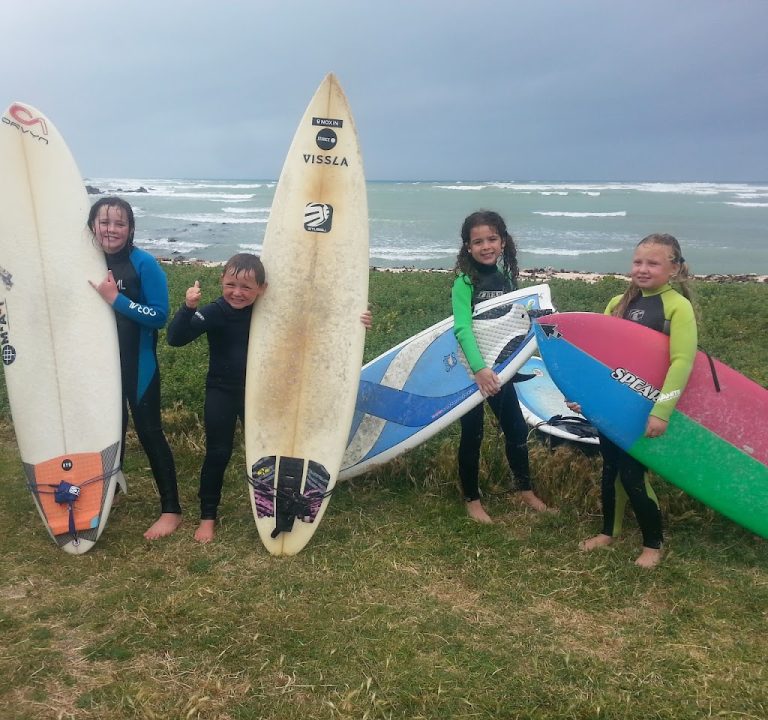
Robbie’s Surfing Lessons is a Surf school establishment in Struisbaai, Western Cape, South Africa
Struisbaai
Western Cape
7287
South Africa
Curriculum
Robbie’s Surfing Lessons in Struisbaai offers a clearly structured approach to learning that emphasises safety, technique and enjoyment of the sport. The curriculum is designed to welcome beginners in gentle, friendly conditions while providing a route for progression as skills develop. Instruction begins in the water at Struisbaai, where the environment is described as warm, with long, unspoilt white sands and a forgiving break that is well suited to first strides in surfing.
The programme for absolute beginners centres on foundational skills and confidence building. Pupils are taught on longboards, a choice that supports balance and stable learning as essential techniques are introduced. As competence increases, students may transition to mini-hals or shortboards, subject to mastery of core abilities such as paddling technique, body positioning, and the fundamental motion needed to stand up and ride a wave. This progressive approach helps learners move from basic handling of equipment to more dynamic surfing activities at a pace that suits individual development.
Across the curriculum, core areas of study include surf safety and ocean awareness. The lessons place a strong emphasis on understanding the water environment, identifying safe entry and exit points, recognising wave patterns, and learning how to read the swell. This environmental literacy underpins practical skills, enabling surfers to respond appropriately to changing conditions and to pursue the sport with greater confidence and self-reliance.
Paddling technique forms an essential component of the course, with instruction focused on improving efficiency and control in the water. Students learn how to position themselves on the board, generate speed, and paddle with purpose to reach the peak of a wave. The curriculum also covers the mechanics of standing up, including timing, stance, and weight distribution, cultivating a smooth transition from paddling to riding the wave. Repetition in controlled sessions supports muscle memory, while feedback from instructors helps refine technique and posture on the board.
Location plays a significant role in the curriculum, with beginner sessions conducted at Struisbaai Beach to take advantage of the location’s accommodating conditions. More advanced classes are offered at various surf spots around the Struisbaai area, providing opportunities to extend practice, explore different wave types, and challenge developing surfers with a broader range of scenarios. This approach enables learners to build adaptability and seamanship skills through exposure to a curated selection of local breaks.
The programme is designed to be inclusive and practical. All courses are designed to be accessible to individuals with varying levels of prior experience, and the instruction focuses on establishing a strong foundation that supports safe progression. In addition to structured lessons, equipment is provided or arranged as part of the package, with arrangements including surfboards, leashes, and wetsuits where appropriate. This inclusive model reduces barriers to participation and ensures that participants can focus on learning without concern for equipment logistics.
Extra resources associated with the curriculum include a photo gallery that provides visual references of lessons and practice sessions, offering prospective students an impression of the learning environment and the progression they can expect. While no formal online or blended learning components are described, the on-site programme is supported by clear, practical guidance and a physically immersive learning experience that aligns with best practices for beginner surf education.
In summary, Robbie’s Surfing Lessons presents a curriculum rooted in safety, skill development and enjoyment of the sport. The structured progression from longboard practice to more advanced equipment, combined with a strong emphasis on ocean literacy and correct technique, equips learners with the fundamentals needed to pursue surfing with confidence and care. The focus on local, child-friendly learning terrain, paired with accessible equipment and supportive instruction, helps ensure that beginners have a solid foundation for a lifetime of surfing in Struisbaai and the surrounding Cape Agulhas region.
Faculties and Branches
Robbie’s Surfing Lessons operates primarily from Struisbaai Beach in the Western Cape, South Africa, with a clearly defined instructional structure designed for different levels of practise. The on-site teaching team conducts beginner sessions directly in the water at Struisbaai, offering a friendly and gentle environment for newcomers to learn the fundamentals of surfing.
Beyond introductory tuition, the organisation coordinates more advanced classes at a range of surf spots around the Struisbaai area. This arrangement enables progression from foundational skills to more challenging terrain as proficiency grows, all within the same programme framework. The approach supports a continuum of learning that emphasises safety, ocean awareness, paddling technique, and the ability to stand up and ride waves.
Educational delivery emphasises practical skill development alongside theoretical awareness. Beginners start on longboards to establish a solid base, with the potential to graduate to mini-hals or shortboards once the basic skills are mastered. The instructional model integrates equipment provision (instructors, boards and wetsuits) as part of a single, all-inclusive lessons package, aligning with the aims of practical competence and confidence in the surf environment.
The operation is led by Robbie, whose extensive surfing background—ranging from childhood participation to national championships and notable international contests—underpins the programme’s emphasis on sport knowledge, technique and the lifestyle surrounding surfing. While specific branch locations other than Struisbaai Beach are not listed, the arrangement makes use of surrounding surf spots to broaden experience and challenge within a coordinated framework.
In addition to core lessons, the service offers a clear pricing structure linked to programme access, including options for single sessions and multi-person formats, as well as rental packages for boards, leashes and wetsuits. All offerings are designed to support a sustainable teaching environment where equipment use remains the responsibility of the participant, subject to stated terms and conditions.
Information resources available through the site provide visual context and programme details, including a photo gallery illustrating lessons and the coastal setting, as well as a rates page for prospective clients. Prospective participants are encouraged to review these resources to understand how the faculties and branch activities align with personal learning goals and scheduling preferences.
- Location: Struisbaai Beach, Cape Agulhas, Western Cape
- Learning focus: beginner water instruction; advanced sessions at local surf spots
- Programme elements: safety and ocean awareness; paddling technique; stand-up method
- Equipment: instructor, surfboard, wetsuit included in lessons
- Age guidance: minimum age five; swimming ability advised
- Resources: photo gallery and rates pages on the official site
For further context and visuals, visitors may explore the site’s photos page and the dedicated rates page via the official links provided on the homepage. These resources help illustrate how the faculties and branches function together to deliver a coherent surfing education experience.
Registration Details
Robbie’s Surfing Lessons operates from Struisbaai Beach in the Western Cape, offering a gentle, beginner‑friendly environment on the warm Indian Ocean. Registration for lessons is presented through the site as an overview of the available formats, with emphasis on safety, basic skills development, and progression from longboards to more advanced boards as mastery increases. The experience is designed to accommodate first‑timers as well as those looking to refine paddling technique, stance, and wave anticipation in a friendly coastal setting.
Overview of the application process and options for booking are described in general terms on the site. Prospective participants can learn about the various lesson formats, including one‑hour private sessions and group sessions, as well as longer practice hours that are available during certain periods. The content indicates that all beginner instruction takes place in the water at Struisbaai, with more advanced sessions conducted at additional surf spots around the area. This structure helps ensure a clear progression path from introductory skills to more confident wave riding, while emphasising surf safety and ocean awareness throughout the programme.
To understand the available lesson formats and pricing, visitors can view the rates and package information published on the site. The page outlines single lessons, private sessions for individuals or small groups, and optional longer lesson formats that include a combination of instruction and practice. All formats are described as inclusive of instruction, with equipment provided where applicable. While specific dates, deadlines, or booking windows are not stated, the site makes clear that pricing and availability are subject to change, and it encourages visitors to review the current information on the site prior to arranging a session.
Where to apply or initiate registration is not described as a separate online form or application portal within the provided content. Instead, prospective participants are directed to use the main site for accessing information about lessons, options, and contact avenues. The primary site link is available for visitors to explore the programme details and to identify the most appropriate lesson format. Additionally, references on the site point to a photo gallery for a flavour of the experience, and a dedicated “View Rates” page that consolidates the current lesson and equipment pricing.
Eligibility and entry requirements are addressed in the site’s general terms for beginners. The programme specifies a minimum age of five years for participation and notes that some swimming ability is required. These requirements help ensure that participants are able to engage safely with in‑water instruction and to grasp basic techniques. There is also emphasis on safety and personal responsibility for equipment use, including the liability noted for breakages, damages, or losses and the expectation that equipment is used at the participant’s own risk. No additional eligibility criteria beyond the stated age and swimming ability are described in the provided content.
Documents typically required for registration are not explicitly listed in the available content. The information focuses on the formats, safety, and pricing rather than the administrative documents needed to register. For practical purposes, prospective participants should rely on the site’s guidance and contact options to confirm any enrolment requirements that may apply at the time of booking.
Support and contact avenues are implied through the site’s presence and the provision of links to related content. The site itself serves as the central hub for accessing lesson information and related media, and a direct link to the photo gallery is provided. For further assistance or to pursue registration, visitors are encouraged to explore the site’s pages and use the provided links to navigate to the relevant sections, such as the rates page. The site URL can be used to access the general information hub and to determine the best route for initiating a booking or inquiry.
- Location: Struisbaai Beach, Cape Agulhas, Western Cape
- Lesson formats: private and group options; in‑water beginner instruction; progression to more advanced boards
- Safety and readiness: minimum age five; some swimming ability; equipment provided where indicated
- Where to view current rates: View Rates
- Photo gallery and additional information: Photo gallery
Overall, the Registration Details section presents a clear path for prospective surfers to learn about available lessons, understand eligibility, and access supporting information through the site, while leaving specific administrative steps to be clarified via the site’s guidance and contact options.
Sorry, no records were found. Please adjust your search criteria and try again.
Sorry, unable to load the Maps API.
Education and Resources in Struisbaai
Struisbaai, a coastal town in the Western Cape, offers a compact yet comprehensive picture of educational provision within a South African coastal community. Learners and families can expect a mix of primary and secondary schooling options in the surrounding area, with institutions generally aligned to the provincial education system. The emphasis is on accessible schooling that supports academic attainment while recognising the value of practical skills and lifelong learning.
In terms of formal education, the area typically features government-supported primary and secondary schools that provide the core curriculum and assessment framework familiar to many learners. These schools often work alongside regional offices to organise examinations, transport where offered, and extra-curricular activities that contribute to a well-rounded schooling experience. Admissions processes are usually straightforward, with enrolment aligning to age, residence, and formal documentation required by the education department. While specific entry requirements and fees vary by institution, the broad pathway remains consistent: foundational literacy and numeracy in the early years, followed by subject choice and preparation for national qualifications in the later years.
Beyond traditional schooling, Struisbaai sits within a region where further education and training opportunities are interconnected with nearby towns. Local residents commonly access further education and training (FET) colleges and accredited courses in adjacent centres, offering pathways in vocational subjects, business studies, information technology, hospitality, and other in-demand sectors. These institutions emphasise practical skills, industry accreditations, and flexible delivery modes that suit mature students and those balancing work or family commitments.
Distance learning and online education are increasingly visible options for learners in coastal communities. With reliable internet access, students can supplement in-person study with online courses, part-time programmes, and open-access resources. This openness supports continuing education for adults, professional development, and niche interests, expanding learning possibilities beyond the immediate geographic area.
Learning support and student services form an important part of the educational landscape. Local libraries and community learning centres commonly provide study spaces, access to reference materials, and guided resources for exam preparation, research, and reading development. In many communities, school support networks include guidance counsellors, academic tutoring, and career information services that assist learners in planning their educational journeys and transitions into further study or the workforce.
Facilities and resources often extend into sport, arts, and cultural programming, reflecting the holistic aims of education. School sports facilities, after-school clubs, arts programmes, and community events contribute to a campus-like atmosphere even in smaller towns. Accommodation for students may be available in nearby towns or through shared housing arrangements when studying at institutions located some distance away; information on accommodation is typically provided through the relevant college, university outreach offices, or municipal housing departments.
Typical pathways presented to learners include completing primary and secondary schooling, pursuing matriculation or national qualifications, and exploring vocational or higher education routes. Admissions and registration are generally guided by provincial or institutional timelines, with advice and support available through school counsellors, career centres, and regional education offices. For those seeking broader opportunities, higher education access often involves applying to universities or campuses in larger towns or cities within the Western Cape, alongside consideration of distance learning programmes and short courses that align with career goals and personal circumstances.
Overall, the Struisbaai area presents a practical blend of traditional schooling, regional vocational pathways, and flexible learning opportunities. The focus remains on providing accessible education, practical skills development, and supported routes for learners and families navigating the journey from school to further study or work.