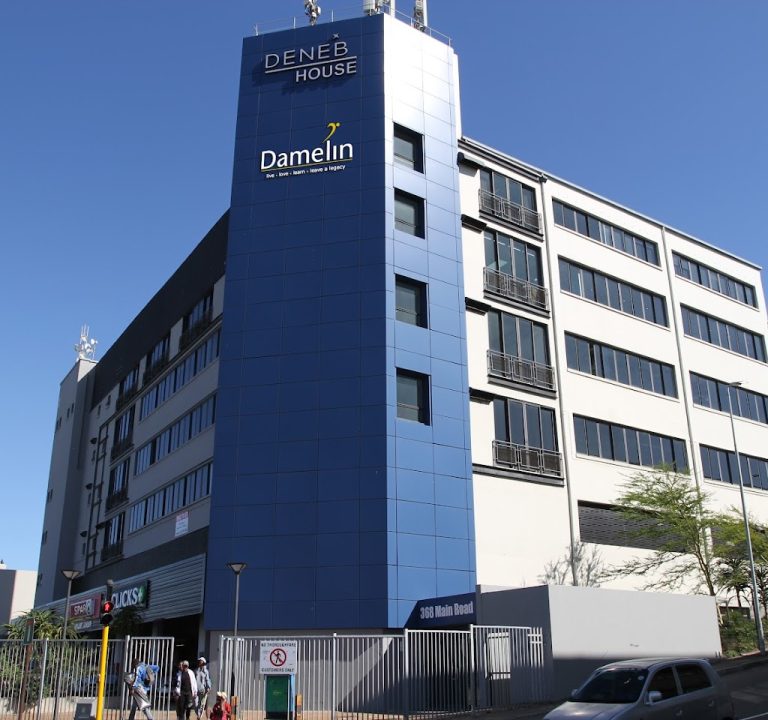

Damelin – Cape Town is a Private colleges establishment in Cape Town, Western Cape, South Africa
Cape Town
Western Cape
Observatory, Cape Town
South Africa
Curriculum
Damelin – Cape Town presents a broad spectrum of study options designed to align with South Africa’s evolving employment landscape. The institution emphasises career-focused qualifications across higher education and further education, with learners able to pursue diplomas, certificates, higher certificates, degrees, and short learning programmes. This diverse offering enables students to choose pathways that suit their academic interests and professional goals, whether commencing study at a traditional on-campus level or exploring lighter-touch, accelerated routes.
The Cape Town campus sits within a national framework that supports six campuses nationwide, each equipped with modern facilities intended to enhance the learning experience. Students at Damelin – Cape Town benefit from access to state-of-the-art resources designed to mirror industry environments, helping to bridge classroom study with practical application. The emphasis on industry-relevant content is reflected in the curriculum design, which aims to produce job-ready graduates equipped with applicable knowledge and skills.
A core feature of the curriculum approach is flexibility in study mode. Learners can choose between traditional face-to-face learning, blended study, or other arrangements that allow study from varied locations while still enjoying the campus environment and associated services. This blend of delivery methods supports learners who require adaptability due to work commitments or personal circumstances, without compromising the quality of education.
Within the curriculum, there is a clear focus on areas of study aligned to Commerce, Science and Technology, Humanities, and Education. The faculties emphasise practical knowledge, ethical leadership, and critical thinking, with programmes designed to develop both foundational understanding and applied competencies. While specific courses and modules are not itemised in this overview, the range includes professional and vocational qualifications that are recognised within South Africa’s further and higher education sectors.
In addition to degree, diploma, and certificate offerings, Damelin – Cape Town provides short learning programmes and skills-based courses designed for immediate workplace impact. Short courses and professional training opportunities are positioned to help learners upskill quickly, respond to industry demand, and enhance career progression. The emphasis on practical outcomes is complemented by access to learning resources and academic support that accompany the curriculum.
Extracurricular and student support features form part of the broader curriculum experience. The Damelin community highlights the value of guidance and mentoring through student advisory support, with campus staff assisting learners to navigate programme choices and personal development. Alumni testimonials underscore the lasting value of Damelin’s career-oriented education, illustrating how study experiences can translate into real-world opportunities and ongoing professional networks.
Distinctive resources and partnerships are suggested by the institution’s emphasis on expert instruction. The curriculum benefits from input by industry-aware academic professionals who prepare graduates for current and future job markets. Additionally, the link to a national alumni community signals ongoing professional engagement beyond graduation, enriching the learning journey with networking and real-world insight.
For prospective students seeking clarity on curriculum pathways, Damelin – Cape Town directs learners to explore the wider Damelin portfolio of programmes, which includes electives in digital fields, postgraduates, degrees, diplomas, and certificates across diverse disciplines. The campus environment and delivery options are designed to support accessible, career-ready education that stays relevant in a rapidly changing world.
More information on programmes and study options is available through the Damelin website, where prospective students can review the range of offerings and determine how to align study choices with personal circumstances and career aims.
Faculties and Branches
Damelin – Cape Town sits within a national network of campuses that together provide a broad framework for higher education and career-focused learning. The institution emphasises a premium experience built around industry-informed programmes and flexible study options, allowing students to pursue qualifications that align with workforce needs. The Cape Town campus forms part of a countrywide structure designed to offer accessible higher education across several urban centres.
The organisation recognises four primary faculties, each housing programmes across a range of disciplines. These faculties are positioned to support students in developing practical skills, professional knowledge, and ethical leadership. The faculties include:
- Commerce – Encompassing study in business-related disciplines, this faculty aims to prepare graduates for roles in commerce, science, technology, humanities and education. Programmes within this faculty are designed to equip learners with business acumen, financial literacy and strategic thinking relevant to diverse sectors.
- Education – Focused on cultivating capabilities in pedagogy, curriculum understanding, and educational leadership. This faculty supports programmes that foster informed practice and contribution to learning communities, reinforcing Damelin’s commitment to career-oriented education.
- Science & Technology – This area emphasises business applications of science and technology, including information systems and related disciplines. The faculty aims to integrate analytical and technical competencies with ethical considerations and leadership qualities for industry contexts.
- Humanities – Concentrating on the human-centric aspects of study, this faculty underpins programmes that develop critical thinking, communication and cultural awareness, aligned with professional pathways and societal needs.
Across these faculties, Damelin offers a spectrum of qualifications, including diplomas, certificates, higher certificates, and degrees, designed to be delivered through traditional face-to-face formats, blended learning, or distance-friendly arrangements. The structure supports flexible access while maintaining a focus on career readiness and practical application.
Within Cape Town, as with other Damelin campuses, the learning environment is complemented by facilities and services that support academic progress and student life. The Cape Town campus is positioned to provide small-class experiences and proximity to the city’s intellectual and cultural amenities, enhancing study and engagement with peers and industry connections. While specific departmental layouts may differ by campus, the overarching framework connects the faculties to campus-based programmes, student services, and access to resources that help learners progress toward their qualifications.
For prospective students seeking more detail, the Damelin site provides programme pathways that link faculty areas to particular study tracks, including diplomas, degrees and certificates. Prospective learners can explore the wider national campus network to understand the scale of Damelin’s offerings and how a Cape Town enrolment interacts with other campus locations, facilities, and support services. The site also highlights the range of study modes, enabling learners to balance on-campus engagement with online or hybrid options where available.
In summary, Damelin – Cape Town operates within a multi-faculty framework that guides programme development while offering a campus experience aligned with industry requirements. The combination of Commerce, Education, Science & Technology, and Humanities faculties underpins a diverse programme mix, with Cape Town acting as a regional hub that integrates campus life, student services and academic progression within the broader Damelin network. For further information on specific programmes, faculties and campus offerings, visitors may consult the official Damelin pages describing each faculty and the Campuses section outlining local facilities and connections.
Further information about faculties and programmes can be found at: Faculty of Commerce, Faculty of Science & Technology, Faculty of Education, Faculty of Humanities, and the Campuses overview at Damelin Campuses.
Registration Details
Damelin – Cape Town in Cape Town, Western Cape, South Africa, presents a clear pathway for prospective students to begin their studies through a public-facing registration process. The institution emphasises its long-standing commitment to career-focused education and offers a range of higher and further education qualifications across its campuses. While specific timelines or fee details are not provided on the visible pages, the site guides potential applicants to the practical entry routes used to initiate study.
Overview of the application/registration process is presented through provision of programme options and a direct route to mid-year intake registration. Visitors can explore Damelin’s wide range of qualifications, including degrees, diplomas, certificates, and short learning programmes, to identify a suitable study option. The site aggregates programme categories under the sections branded as “Study with us” and “Browse our range of programmes,” making it straightforward to locate the appropriate entry pathway for the desired field of study.
Where to apply is indicated by the visible call-to-action that invites prospective students to register for mid-year offerings. This is presented via a dedicated link labeled “REGISTER FOR MID-YEAR,” which directs applicants to an external bit.ly short link for the registration process. The presence of this link on the Damelin pages suggests a centralised or streamlined registration pathway for mid-year cohorts, while still enabling applicants to navigate Damelin’s broader programme ecosystem on the official site.
Eligibility and entry requirements are not itemised in detail on the accessible pages provided. Where general guidance is possible, the text stresses Damelin’s role as a provider of private higher education with a long history of offering industry-relevant qualifications. In the absence of explicit criteria on the public-facing pages, prospective applicants are encouraged to review programme-specific information through the site’s programme sections and campus pages to determine suitability, ensuring any region- and qualification-specific requirements are understood before submission.
Documents typically required for registration are not listed in the pasted content. Consequently, no definitive checklist is included here. For prospective applicants planning to engage with Damelin – Cape Town, it is advisable to consult the official campus and programme pages for any documented documentation expectations, and to prepare common institutional materials such as identity verification, prior qualification records, and proof of any required assessments as indicated by the programme chosen. The site’s general emphasis remains on providing access to information about available qualifications and the routes to commence study.
Contact and support channels for prospective students are reflected through campus-specific navigation, with a dedicated Damelin campus network across South Africa. The Cape Town campus page serves as a portal for further information, including links to campus resources and more detailed contact options. While direct telephone numbers or email addresses are not included in the present content, the site offers a pathway to reach Damelin via the official campus pages and the main site navigation. For more information, visitors can explore the Damelin campuses section on the main site to locate the Cape Town campus page and related contact options:
Overall, the Registration Details section presents a consumer-friendly overview of how prospective students in Cape Town can begin their academic journey with Damelin. It points to practical entry points (notably the mid-year registration link) and to the broader infrastructure of Damelin’s programme offerings and campus network, enabling applicants to navigate from programme discovery to registration with relative ease, while avoiding unstated deadlines, fees, or forms on the public pages.
Sorry, no records were found. Please adjust your search criteria and try again.
Sorry, unable to load the Maps API.
Education and Educational Resources in Cape Town, Western Cape
Cape Town sits within a region rich in educational provision, spanning schools, further education and training, higher education, and a diverse array of specialised learning centres. The city’s landscape accommodates learners from early years through to postgraduate study, with options that reflect South Africa’s bilingual and multicultural environment. Across public and independent sectors, families can expect a mix of traditional and modern approaches to teaching, assessment, and learner support.
Types of institutions commonly found in the area include primary and secondary schools that cater to a range of curricula and examination frameworks. These institutions often provide a broad core offering alongside elective subjects, language development, and opportunities for creative, technical, and physical education. Independent schools may offer enriched programmes, consolidated curricula, and additional learning activities designed to extend academic achievement and personal growth.
Further education and training facilities provide vocational, technical, and career-oriented routes. These centres typically offer diplomas, certificates, and courses linked to industries such as construction, hospitality, information technology, health sciences, and business administration. Flexible delivery modes, including part-time study and evening classes, are common to support learners who balance work or family commitments with education.
Higher education institutions in the region offer undergraduate, honours, masters, and doctoral study across multiple disciplines. Provision often covers professional programmes, science and engineering, humanities, social sciences, and arts. Collaboration with industry, research institutes, and international partners contributes to opportunities for practical learning, internships, and projects that reflect real-world applications.
Learning support and student services play a significant role in helping learners succeed. Local institutions typically provide academic tutoring centres, study skills programmes, and language support for learners navigating English or other languages of instruction. Counselling and mental health services, career guidance, and financial literacy assistance are commonly available, alongside support for learners with disabilities. Arrangements for transport assistance, scholarships, bursaries, and accommodation options may be provided or signposted, depending on the institution and programme.
Facilities and resources commonly encountered include well-stocked libraries with quiet study zones, group work spaces, computer labs, and reliable internet access. Science laboratories, workshops, and studios support practical learning across science, technology, engineering, arts, and humanities. Sports facilities, fitness centres, and recreational spaces contribute to holistic development, while residential halls or partner accommodation options support learners relocating for study. Access to robust IT infrastructure, learning management systems, and digital resources forms an integral part of the learning environment.
Typical pathways for learners involve entering through a registration or admissions process, followed by programme selection and assessment milestones. Prospective students are generally advised to review entry requirements, application timelines, and available support services. Orientation programmes, early assessment feedback, and academic advising help to establish a clear trajectory for study. For learners changing institutions or returning to study, credit transfer procedures and recognition of prior learning may facilitate smoother progression.
In summary, Cape Town offers a diverse educational ecosystem with options for schooling, vocational training, and higher education, supported by a range of learner services and facilities designed to assist students at every stage. The breadth of programmes and the accessibility of supportive resources make the region a practical gateway for pursuing academic and developmental goals within the Western Cape and beyond.
- Common programmes span primary and secondary curricula, vocational certificates, diplomas, undergraduate degrees, and postgraduate studies.
- Support services typically include tutoring, counselling, career guidance, and accessibility provisions.
- Facilities frequently feature libraries, laboratories, studios, sports venues, and accommodation options.
- Admission and registration processes generally require review of entry requirements, submission of applications, and participation in orientation activities.
For updated information and specific details, prospective learners and families can consult official education portals and local university or college pages accessible through reputable education websites.