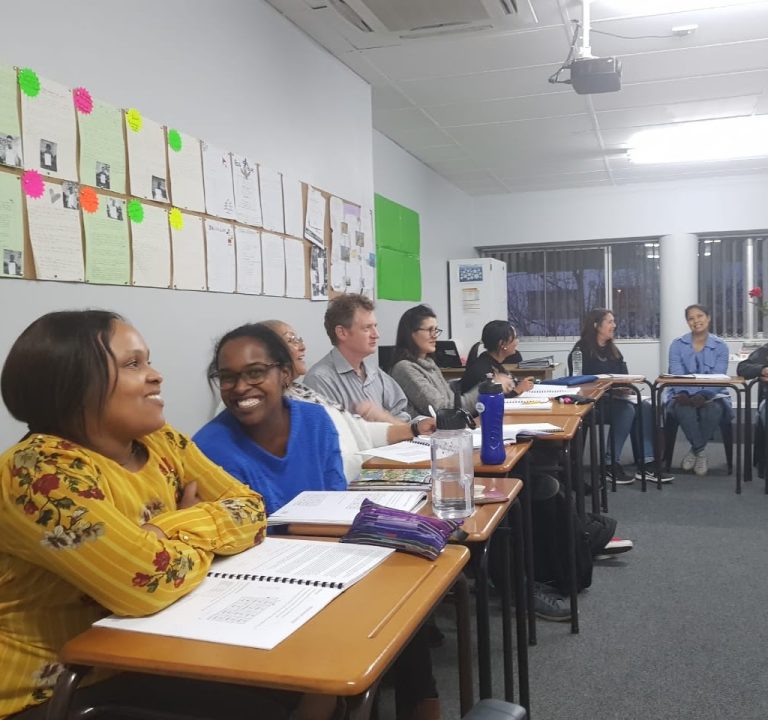
Tesol SA is a Language school establishment in Cape Town, Western Cape, South Africa
Cape Town
Western Cape
7708
South Africa
Curriculum
TESOL South Africa (TESOLSA) in Cape Town presents a structured progression designed for aspiring TEFL/TESOL professionals and teaching practitioners. The organisation combines its long-standing EFL context with teacher-training expertise, emphasising practical application alongside theoretical underpinning. The curriculum emphasises hands-on teaching experience, structured observation, and reflective assessment to equip participants for real-world classroom contexts.
Programmes and levels in focus include a comprehensive 120-hour TESOL course that follows the completion of a prior 50-hour TEFL module. The TESOL course is delivered through a blend of intensive classroom-based work, observed teaching practice, and an at-home assignment, culminating in a certified outcome. The delivery model integrates three core components:
- Intensive classroom-based sessions, designed to introduce and reinforce language teaching concepts and classroom management strategies.
- Observation and teaching practice, carried out in authentic teaching environments to produce practical teaching experience and real-time feedback from course facilitators.
- An at-home assignment, used to consolidate learning and demonstrate professional competence across theoretical and practical elements.
Several specialised routes accompany the core TESOL pathway to broaden professional horizons. These include:
- TBE — Teaching Business English, addressing terminology, communication styles, and workplace contexts relevant to professional environments.
- TEYLT — Teaching Young Learners & Teenagers, focusing on developmental considerations, age-appropriate pedagogy, and engaging activity design for younger students.
- Distance Learning — TEFL options delivered remotely to accommodate learners who cannot attend in person, with modules that can be completed online.
In addition to the main courses, the programme portfolio includes a 120-hour Online TEFL course designed for remote study. This online pathway follows a structured sequence of modules, beginning with an introductory module and language awareness emphasis, and progressing through further modules that build teaching knowledge and practice. The online format supports flexible learning while retaining a framework that mirrors the in-person course in its emphasis on language awareness, planning, and teaching activities.
The curriculum also recognises the importance of complementing theoretical knowledge with practical output. Course participants engage in observed teaching, formatively assessed activities, and feedback cycles aimed at developing confidence and professional capability in real teaching settings. The assessment framework combines participation, planning projects, and teaching observations, with additional home-based work contributing to overall performance ratings. Successful candidates receive a certificate that reflects performance across the theoretical, practical, and evaluative elements, along with a facilitator’s reference detailing the individual’s skills and progress.
Course content spanning the TESOL curriculum covers a broad spectrum of essential topics. Core areas typically include:
- Introductory language teaching concepts and approaches to effective classroom management
- Strategies for contextualising meaning and conveying language effectively
- Lesson planning, materials design, and activities that develop receptive and productive language skills
- Practicals in teaching conversation, language awareness, and integrating varied formats into lessons
- Practical teaching techniques, observation methodologies, and feedback loops for continuous improvement
Materials and resources form a distinctive part of the curriculum experience. Participants receive a course manual that consolidates concepts, alongside recommended English grammar and teaching texts discussed during sessions. Information packages also provide a curated list of books and TESOL resource materials; participants are encouraged to bring a USB drive to store digital resources and materials. This emphasis on tangible teaching aids aligns with the programme’s practical orientation and helps to support ongoing reference after course completion.
Accessibility and delivery formats are important considerations within the curriculum. Where in-class learning is feasible, emphasis is placed on immersive teaching practice and direct feedback. When in-person attendance is not possible, online and distance-learning options are available to preserve continuity of study while maintaining a consistent standards framework. The institution communicates dates and costs for courses regularly, inviting prospective participants to contact the office for up-to-date information about start dates and programme offerings.
Beyond formal assessment, TESOLSA emphasises employability through a recognised transitional pathway that combines theory, practical teaching experience, and professional references. This integrated approach aims to prepare graduates for teaching roles worldwide, reflecting the institute’s longstanding ties to the ESL and TEFL communities and its role as a bridge between language study and language instruction.
For further information about course availability, entry criteria, and delivery modes, prospective learners may consult the official course pages and contact details available on the TESOLSA website.
Faculties and Branches
Tesol South Africa (TESOLSA) in Cape Town operates as a joint TEFL/TESOL training institute and English language school. Established in 1991, the organisation integrates teacher training with English studies, presenting a structured pathway from language learning to teacher preparation. The enterprise combines the Cape Town TEFL / TESOL Training Institute with the Cape Town School of English, an EFL school specialising in English as a Foreign Language. This collaboration between an EFL environment and a dedicated TEFL/TESOL training arm has long underpinned the practical, real-world focus of the courses offered.
Within the framework of TESOLSA, the key offerings span a sequence of certificated programmes designed to develop both language proficiency and instructional expertise. The core TESOL courses include the 120-hour TESOL course and the 120-hour online TEFL option, each balancing theoretical knowledge with practical teaching components. In addition, specialised courses such as Teaching Young Learners and Teenagers (TEYLT) and Teaching Business English (TBE) broaden the scope of professional preparation, enabling trainees to tailor their qualifications to particular sectors or student demographics. Where online learning supplements on-site options, distance learning is presented as a flexible route to TESOL qualification, reflecting the organisation’s commitment to accessible professional development.
From the student services perspective, the EFL school operates as a direct language-learning environment that informs the training Institute. Prospective teachers benefit from immersion in an authentic ESL setting during training, while language learners gain access to programmes offered by the same extended community. The synergy between the EFL school and the TEFL/TESOL training arm is described as a cornerstone of the institution’s long-standing approach, ensuring that teacher candidates observe contemporary classroom practices and participate in teaching practice within a live language-learning context.
In terms of faculties and departmental structure, the organisation appears to function through two interlinked domains rather than a conventional multi-faculty university layout. The first domain is the TESOL/TESOLSA training division, which houses the professional courses and programme design. The second domain comprises the EFL language school, functioning as the practical hub for language study and the classroom experiences that reinforce training. This arrangement supports a cohesive student journey from initial language exposure to hands-on teaching practise, aligning course content with authentic classroom realities.
Regarding campuses and locations, the primary physical setting is in Cape Town, with Claremont identified as a key address for TESOLSA operations. The Claremont area is presented as the site hosting the language school and the accompanying training activities, situating learners and trainee teachers within a Cape Town urban context known for its international student presence and educational networks. While other branch locations are not detailed, the available information emphasises the Claremont campus as the central hub for courses and supervised practice, complemented by the online and distance-learning options that extend reach beyond the city limits.
For prospective students and educators seeking programmes or engagement with TESOLSA, the website provides direct access to course pages outlining the 120-hour TESOL course, the 120-hour online TEFL course, TEYLT, TBE, and distance learning. The interconnected arrangement of a dedicated TEFL/TESOL training institute alongside a functioning EFL school illustrates a distinctive model in which teacher preparation is closely linked to authentic English language provision, thereby supporting both professional development and language education within a shared academic community. More information and course details can be explored through the official TESOLSA site.
Registration Details
TESOL South Africa (TESOLSA), based in Cape Town, offers entry to its TEFL/TESOL programmes through a structured registration process designed for international and local applicants. Prospective students are advised to review the course information available on the TESOLSA website to understand the scope, delivery mode and practical components of each programme prior to applying.
Overview of the application pathway is provided through the institute’s course pages. Interested individuals can begin by exploring the available options and selecting a course to view its specific details. The main course listings include the TESOL course, Teaching Young Learners & Teenagers (TEYLT), Teaching Business English (TBE), and the option for distance learning. Each course page presents an outline of content, delivery format and assessment aspects, enabling applicants to make an informed choice. See the following pages for course information and concrete steps to apply:
- TESOL Course
- TEYLT – Teaching Young Learners & Teenagers
- TBE – Teaching Business English
- TEFL Distance Learning
Where to apply: Applications and registrations are managed via the TESOLSA website. Prospective students are encouraged to use the “Contact Us” or course-specific pages to initiate the registration process and obtain further guidance. The site provides direct access to course information and the official contact channels for assistance:
Eligibility and entry requirements: The institute states that acceptance is not automatic. Applicants are typically required to meet certain criteria to be considered suitable for the programme. Specifically, the TESOLSA course pages note that applicants should have English as a first language, in addition to tertiary education or relevant work experience. An age minimum is indicated (at least 18 years old). An interview (face-to-face or telephonic) and a pre-course task may also be required as part of the registration process. These general eligibility criteria apply across the TESOLSA offerings and should be confirmed during the application discussion with the institute:
- English language proficiency (first language or demonstrable equivalent)
- At least 18 years of age
- Tertiary education or relevant work experience
- An interview (face-to-face or telephone) and a pre-course task may be required
Documents: The provided content does not specify exact documents required for registration. Prospective applicants are advised to refer to the relevant course pages and the “Contact Us” channel for precise guidance on required documentation as part of the registration process.
Support channels: For registration questions, deadlines, and guidance on course selection, the TESOLSA site directs applicants to use the official contact options. Support is available through the site’s contact page, and through the individual course pages which link to further details and communications with the admissions team:
Additional notes: The institute emphasises the value of practical teaching experience within the courses and provides detailed information on course structure, assessments, and duration on its course pages. Prospective registrants should review the programme components (such as theoretical and practical components, teaching practice, and assignments) as part of the decision-making and registration process.
Sorry, no records were found. Please adjust your search criteria and try again.
Sorry, unable to load the Maps API.
Education and Resources in Cape Town, Western Cape
Cape Town, situated in the Western Cape, offers a broad spectrum of educational opportunities for learners and families. The city supports a diverse range of institutions, from primary and secondary schools to higher education establishments, vocational training centres and specialised programmes. Across these providers, the emphasis is often on accessible learning, practical application and pathways that connect school life with further study or employment.
Types of institutions commonly found in the area include public and independent schools serving diverse communities, as well as further education and training (FET) colleges that deliver career-focused programmes. Local universities, known for their wide breadth of disciplines, complement polytechnic-style offerings and research institutes. For learners seeking short courses or applied training, numerous providers offer industry-relevant programmes in fields such as information technology, business, design, health sciences and hospitality. Distance or blended learning options are also available from certain institutions, providing flexibility alongside on-campus study.
Typical programmes span from school-level curricula through to undergraduate, postgraduate and professional qualifications. In high schools, learners commonly pursue national or state-recognised matriculation programmes, with a focus on core subjects and elective options tailored to future interests. For post-secondary study, programmes may cover arts, humanities, natural sciences, engineering, education and social sciences, alongside dedicated vocational and professional pathways. Short courses, diplomas and certificates, often offered by FET colleges or specialist centres, provide entry routes into specific trades or industries and can serve as stepping stones to further study.
Learning support and student services play a crucial role in Cape Town’s educational landscape. Access to academic advising, counselling, language support for multilingual learners and specialised services for students with disabilities are commonly available. These resources assist with transition, study skills development, and mental health and wellbeing, contributing to a more confident and capable student body.
Facilities across institutions generally include comprehensive libraries with study spaces, digital resources and study aids; modern laboratories for science, engineering and technology programmes; computer suites and media labs; and facilities for sport, arts and culture. Student accommodation is available in certain areas, with housing options that range from on-campus residences to nearby private or university-affiliated housing. Transport networks, including convenient public transport links, support access to campuses throughout the region.
Typical pathways after secondary schooling or when pursuing higher education often involve formal admissions or registration processes. This generally includes submitting academic records, meeting programme-specific entry requirements, and completing deadlines set by the institution. Prospective students are advised to explore application portals, required documents, and the sequence of steps from application to enrolment. Once enrolled, students can expect access to timetables, learning resources, and dedicated support services designed to foster academic progress and personal development.
For families and learners considering options in Cape Town, it is helpful to review a range of providers to compare offerings, campus environments, and the balance between theoretical study and practical experience. Workshops, open days and information sessions commonly assist with making informed choices about which pathway best aligns with academic goals and future plans.
Further information about education in the region can be found through official local authorities and national education portals. Prospective learners may wish to consult institution websites for admission timelines, programme details, and available learner support services.