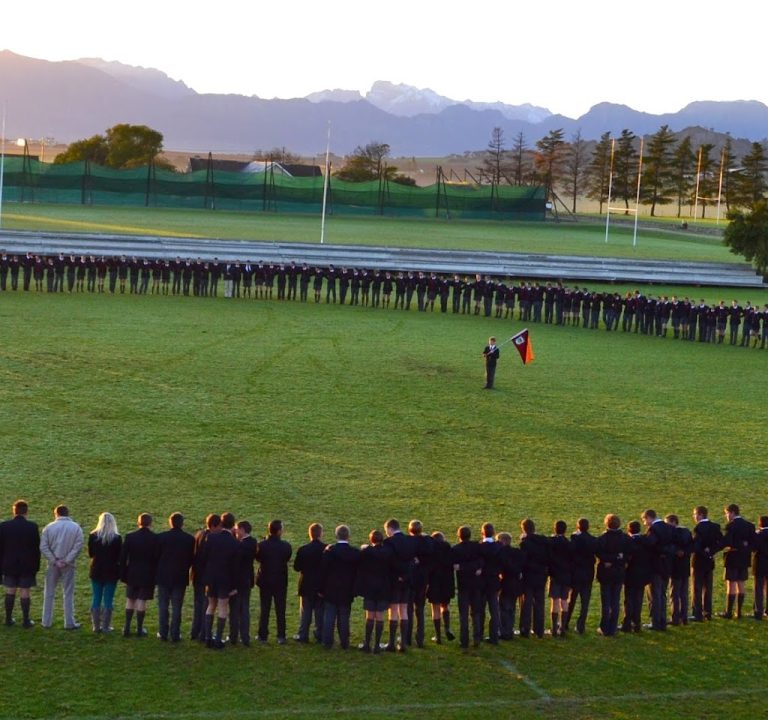
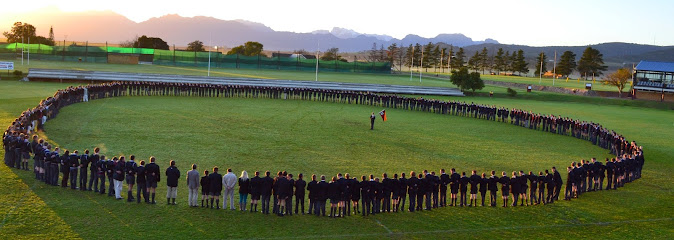
Hoër Landbouskool Boland is a Educational institutions establishment in Paarl, Western Cape, South Africa
Paarl
Western Cape
Paarl
South Africa
Curriculum
Hoër Landbouskool Boland in Paarl, Western Cape, provides a curriculum that integrates the standard academic programme with specialised agricultural training. The approach centres on delivering a balanced education that prepares learners for further study or immediate involvement in the agricultural sector, while maintaining rigorous academic standards across core subjects.
The institution emphasises a holistic learning experience, where classroom instruction is complemented by a robust extra-curricular programme. This combination supports the development of practical skills, leadership qualities and preparedness for the demands of contemporary farming and rural industries. The school operates alongside a distinctive agricultural focus, positioning learners to engage with agricultural concepts in real-world settings through connected facilities and resources on campus.
Curriculum design at Boland integrates opportunities for applied learning that reflect the school’s agricultural heritage. While specific course lists and durations are not disclosed, the school’s identity as a leading agricultural high school suggests attention to livestock management, crop production, agro-science and related disciplines within the academic framework. The aim is to enable learners to progress to higher education or vocational routes with a solid grounding in agricultural theory and practice.
Distinctive resources and facilities enhance the curriculum, including on-site agricultural infrastructure and dedicated spaces for practical exploration. The campus features specialised venues that support experiential learning and community engagement, reinforcing the theoretical knowledge gained in the classroom. These facilities contribute to a learning environment where inquiry, experimentation and field-based study are encouraged as part of the standard curriculum experience.
Beyond academic study, the school places emphasis on professional training and short courses related to agriculture. While exact programme details are not listed, the provision of professional training opportunities is highlighted as part of the overall educational offering. This complements the core curriculum by enabling learners to acquire practical competencies that are valued in agricultural careers and related sectors.
Additional elements of the curriculum development at Boland include involvement in cultural and academic academies. The institution hosts an Academy and Culture programme, with structured activities and assessment frameworks that align with the broader curriculum. This facet of the curriculum supports learner development in areas such as performance, leadership and teamwork, enriching the educational experience beyond classroom instruction.
Support for learners is an integral part of the curriculum framework. The school provides access to information about examinations and timetables through its academic and cultural programmes, facilitating organised progression through terms and assessment periods. While entry requirements, fees and specific assessment timelines are not detailed in the available information, the structure appears designed to guide pupils through a coherent progression within Boland’s educational model.
In addition to traditional schooling, there is a strong emphasis on community and campus facilities that underpin the learning journey. The Agri-Expo Centre and other on-site venues serve as venues for events, training, exhibitions and practical demonstrations. These resources offer learners opportunities to observe industry practices, participate in demonstrations and engage with agricultural stakeholders, thereby enriching the curriculum with real-world relevance.
Overall, the Curriculum at Hoër Landbouskool Boland presents a blend of conventional secondary education with targeted agricultural training and experiential learning. The integrated approach aims to nurture well-rounded graduates who can navigate higher education, professional pathways or leadership roles within agricultural communities, while benefiting from a supportive campus environment and access to distinctive agricultural facilities.
Faculties and Branches
Hoër Landbouskool Boland in Paarl, Western Cape, operates as a flagship South African institution offrant a refined blend of standard academic curriculum and specialised land-based education. The school frame is organised around core strands rather than distinct, externally branded faculties. Central to the offering is a structured academic programme complemented by targeted agricultural training and associated disciplines, designed to develop well-rounded learners prepared for leadership in rural and agricultural communities.
Within the institutional structure, an emphasis is placed on two interlinked domains: academic excellence and cultural development. The Akademie & Kultuur section consolidates scholastic and cultural activities, ensuring students benefit from formal assessment arrangements (including examination rosters) while engaging in co-curricular programmes that foster skill and character development. This alignment supports a cohesive educational journey where subject learning is reinforced by practical and cultural experiences.
Student services are organised to reinforce both study and daily life on campus. The Koshuis (residential facilities) provides housing and associated support, while the broader school infrastructure supports sport, recreation, and academic pursuits. The campus framework emphasises a balanced approach to education, with facilities and programmes designed to cater for learners’ academic needs alongside sport and cultural interests.
Several dedicated facilities and centres function as a concrete extension of programmes and student services. The AGRI-EXPO SENTRUM (Buitelugsentrum) and the BOLAND-SENTRUM (Klubhuis) are notable anchors for industry-aligned experiences, exhibitions, and collaborative activities that connect learners with agricultural practice, innovation, and community engagement. In addition, the LOUBSERSAAL (the school hall) and the Tennis Clubhouse and courts provide venues for major school events and sport, contributing to the holistic development of students.
These facilities collectively support the school’s aim of delivering a well-rounded, value-driven education. While explicit departmental names beyond the Akademie & Kultuur framework are not enumerated on the site, the arrangement indicates a structure prioritising integrated learning across academics, culture, sport, and practical agricultural exposure. The campus network—comprising the main school, residential spaces, and specialised centres—serves to streamline access to programmes, examinations, and campus services for learners and staff alike.
In practical terms, prospective students engage with a streamlined admissions process, while current students benefit from coordinated access to classrooms, residence, and the agricultural-centred facilities that characterise Hoër Landbouskool Boland. The combined structure supports the institution’s commitment to leading, values-based education tailored to the needs of the Western Cape’s agricultural sector.
Registration Details
Hoër Landbouskool Boland in Paarl, Western Cape, offers a straightforward admissions pathway designed to introduce prospective learners to the school and its distinctive agricultural programme. The process begins with obtaining and completing the official application forms, followed by submission to the school’s admissions team. The sequence is presented in a clear, step-by-step format to help families understand what to expect during the registration period.
The initial step involves downloading the application form, completing it in full, and sending it to the designated address for applications. The school communicates that completion of the forms and their submission are the essential starting points for consideration of enrolment. The stated method for submission is via email to [email protected], which serves as the central channel for all application documents and correspondence.
Following the submission of the completed application, the admissions team will liaise with the applicant to arrange a visit to the school. An appointment for a site visit and an interview with the prospective learner and their parent or guardian is arranged as part of the ongoing assessment. This on-site visit and interview are described as a key component of the process, enabling families to learn more about the school’s environment, facilities, and educational approach while the school assesses fit and interest.
Completion of the application process leads to the assessment stage, wherein the learner’s application is reviewed in full. If the learner is accepted, the school provides the necessary admissions documentation. This includes the list of required items for the academic year, and details pertaining to provisions for academics, sport, and boarding, along with any other documents deemed necessary. The emphasis is on ensuring that families receive all relevant information in a timely manner to facilitate smooth enrolment.
For contacting the school or seeking further guidance on registration, the institution provides a direct point of contact. Prospective enquiries can be directed to the main telephone line at +27 (0)21 869 8143 or by email at [email protected]. Additional avenues for information about the school and its facilities are available through the Boland Landbou website, and the school may offer correspondence through its online channels and associated pages.
In summary, the Registration Details for Hoër Landbouskool Boland highlight a concise A-to-Z process: download and complete the application form, email it to [email protected], expect a school visit and interview arranged by campus staff, and anticipate receipt of a comprehensive set of admission documents if the learner is accepted. The approach emphasises clarity, personal engagement, and a well-defined progression from application to enrolment, ensuring families understand what to expect at every stage.
For further information, potential applicants may contact the school directly via the general inquiries line or email, or consult the school’s external channels listed on the Boland Landbou platform when seeking additional context or scheduling details.
Contact details:
- Phone: +27 (0)21 869 8143
- Email: [email protected]
- Admissions email: [email protected]
Sorry, no records were found. Please adjust your search criteria and try again.
Sorry, unable to load the Maps API.
Education in Paarl: Resources and Pathways
Paarl, a historic centre in the Western Cape, offers a broad spectrum of educational opportunities for learners and families. The town sits within reach of rural communities and is well connected to nearby towns, providing access to a range of institutions and support services designed to foster academic and vocational development. The local landscape typically combines school education, further education and training options, higher education pathways, and specialised training facilities, all within a family-friendly environment.
Types of institutions commonly found in the area include public and private schools that cater to primary and secondary education, alongside dedicated further education and training (FET) centres. These institutions frequently provide a variety of learning programmes aligned with the national curriculum, subject to local oversight, and capable of supporting learners with diverse interests and abilities. In addition, specialised training centres offer programmes focused on technical and hospitality skills, information and communication technology, business studies, and health-related disciplines, often with flexible study formats to accommodate work and family commitments.
Higher education access is typically facilitated by nearby universities and universities of technology within reasonable travelling distance. Learners commonly pursue a mix of undergraduate and postgraduate programmes, including bachelor’s degrees, diplomas, and postgraduate certificates, with articulation options to support progression across levels. Distance learning and blended formats may also be available through collaborating institutions, expanding opportunities for mature students and those balancing responsibilities outside traditional campus settings.
Learning support is a prominent feature across many establishments. Schools often offer learner support services such as specialist teachers, language assistance, and programmes for learners with additional needs. Guidance counsellors and career advice services help students explore subject choices, study pathways, and potential career trajectories. Libraries and media centres are common, providing access to study spaces, reference materials, digital resources, and quiet areas for independent study. Some institutions also run tutoring schemes, study skills workshops, and peer mentoring to build confidence and academic resilience.
Facilities and resources typically present in the Paarl educational landscape include well-equipped libraries, science laboratories, computer laboratories, and audiovisual learning aids. Sports and recreation facilities such as sports fields, courts, and gymnasia support a holistic approach to education, while arts and culture spaces nurture creative ambitions. Accommodation options may be available for students from outside the immediate area, including campus residences or approved housing arrangements, subject to the policies of individual institutions.
Pathways for admission and registration are generally straightforward but depend on the level and type of study. High school learners usually follow the national or provincial assessment processes for progression to further study, with guidance on subject choices aligned to future goals. Prospective higher education students typically complete an application during a recognised intake period, provide required documentation, and meet admission criteria such as prior study records or competences. For FET and training programmes, registration often involves selecting a suitable programme, meeting any prerequisites, and arranging any necessary assessments or portfolios. In many cases, there are supports to assist with fee planning, concession schemes, and language accessibility, helping families navigate entry routes and funding options.
Overall, Paarl presents a resilient educational ecosystem characterised by accessible schools, supportive learning services, and pathways that link foundational schooling to higher study and skilled employment. The combination of local campuses, nearby tertiary institutions, and a diverse range of vocational training centres enables learners and families to plan practical routes that align with abilities, interests, and long-term aspirations.
Typical learning resources and services at a glance
- Public and private schools offering primary and secondary education with learner support services
- Further education and training centres delivering vocational programmes and certificates
- Nearby higher education options with undergraduate and postgraduate pathways
- Libraries, computer labs, science and language laboratories
- Career guidance, counselling, and study skills workshops
- Sports facilities, arts venues, and cultural programmes
- Accommodation and student services for eligible learners
- Flexible learning formats, including blended and distance options