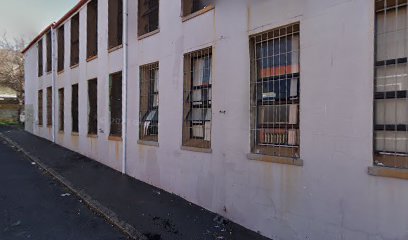
Focus College is a Educational institutions establishment in Cape Town, Western Cape, South Africa
Cape Town
Western Cape
7925
South Africa
Curriculum
Focus College presents a curriculum that spans from early secondary to senior secondary levels, with programmes designed to support learners across two campuses in Wynberg and a growing presence in Mamre. The school emphasises accessible, inclusive education within smaller class sizes, a structure that underpins a consistent approach to learning and progression. The curriculum aims to equip learners with the knowledge, skills and dispositions needed to pursue a wide range of future career paths, while fostering independence, motivation and discipline.
Across Grades 8 and 9, the curriculum covers core subjects that establish a broad academic foundation. These subjects include English Home Language, Afrikaans First Additional Language, IsiXhosa First Additional Language, Mathematics, Life Orientation, Economic Management Sciences, Social Sciences, Creative Arts, Natural Science, and Technology. In Grades 10 to 12, the offering remains aligned with the same broad categories, with continued emphasis on English Home Language, Afrikaans First Additional Language, IsiXhosa First Additional Language, Mathematics, Life Orientation, Economic Management Sciences, Social Sciences, Creative Arts, Natural Science, and Technology. This continuity supports a coherent learning journey through the pivotal senior phase, while allowing for emphasis on individual interests and strengths as learners advance.
The school positions itself as a pathway to a wide range of career possibilities. While the exact subject combinations and stream choices are not itemised on the public pages, the listed subjects indicate a curriculum designed to prepare learners for further study and vocational pathways. The universal availability of core subjects at all campuses ensures consistency in learning outcomes and helps to maintain equity of access as learners transition between campuses or engage in different learning environments within the Focus College network.
Curriculum delivery at Focus College is underpinned by a distinctive instructional philosophy. The mission statement highlights the adoption of a combination of Core Knowledge, the CAPS Curriculum, and Direct Instruction. This blend is presented as central to the school’s approach to achieving higher order thinking, disciplined study habits and robust knowledge acquisition. The Core Knowledge framework emphasises a shared base of essential content, while the CAPS (Curriculum and Assessment Policy Statements) framework provides national guidance on what learners should know and be able to do at each grade level. Direct Instruction contributes a structured, explicit teaching method designed to promote rapid mastery of foundational skills and concepts. Together, these elements are intended to foster independent thinking, problem-solving abilities and leadership skills within an environment that values non-violence, equality and unity.
In addition to academic rigour, the curriculum is complemented by a commitment to an inclusive, student-centred learning experience. The focus on smaller classes is described as a cornerstone of the school’s strategy to make quality education more affordable and achievable for a broader cohort of learners. This approach supports personalised feedback, closer teacher–learner engagement and greater opportunities for formative assessment, all of which contribute to ongoing development of learners’ confidence and critical thinking abilities.
The institution also recognises the importance of equipping learners with practical, real-world competencies. While the public-facing pages do not provide a detailed catalogue of short courses or professional training programmes, the emphasis on a diverse core curriculum and a structured instructional framework suggests a curriculum designed to support practical application of knowledge, effective communication, and collaborative skills. As such, learners are likely to benefit from a learning environment that integrates theory with practice, enabling them to translate classroom learning into real-world contexts.
Online or blended learning options are not explicitly stated on the site. The available information focuses on on-site delivery across the campuses and the overarching instructional philosophy that guides all teaching and learning. The inclusive model emphasises ongoing support, disciplined study routines and a learning atmosphere that extends beyond subject content to character development, study skills and leadership capacity. For prospective families, Focus College presents itself as a place where learners are nurtured to actualise their potential within a structured, supportive framework that integrates core content with a values-based education.
In terms of additional resources and student support, the institution highlights smaller class sizes, an inclusive education approach, and a mission to develop higher-order thinking, peacemaking and leadership abilities. These elements are framed as part of a holistic learning environment in which learners grow academically, emotionally and socially. While specific extracurricular programmes and support services are not itemised in detail on the public pages, the emphasis on guided learning, motivation and disciplined study implies a supportive framework designed to sustain learner engagement and success across the secondary years.
Faculties and Branches
Focus College operates across multiple campuses within the Cape Town area, delivering a structured programme framework designed to support learners from early secondary years through to the end of matriculation. The institution presents itself as a family-oriented school that values smaller class sizes, inclusive education, and a mix of curricula intended to foster motivation, focus and discipline among pupils.
The academic framework at Focus College is organised to accommodate a broad range of subjects that are available at Grades 8–9 and Grades 10–12. All listed core disciplines, including English Home Language, Afrikaans First Additional Language, IsiXhosa First Additional Language, Mathematics, Life Orientation, Economic Management Sciences, Social Sciences, Creative Arts, Natural Science, and Technology, form the backbone of the learning offer. In Grades 10–12, the same subject offerings are retained with minor curriculum refinements. These subjects are structured to support learners’ progression towards a variety of career paths, with emphasis on developing higher order thinking skills and independent thinking.
The college has expanded its presence beyond its Wynberg base to include additional campuses, reflecting growth driven by demand and community partnerships. The Wynberg campus, located on Belfast Road, has historically served as a central hub for administration and teaching. The expansion has subsequently added a second campus in Ysterplaat in 2018 and a third campus in District Six in January 2020, both aimed at extending access to focused secondary education within the region. The organisation describes its campuses as integral components of its mission to provide quality education in a supportive, disciplined environment.
Where specific branch details are publicised, the site notes a Mamre-adjacent dimension to the admissions information, indicating additional outreach or liaison activities connected with the Mamre area. While explicit programme distinctions by campus are not itemised, the overall structure demonstrates a coherent, campus-based delivery of the same core academic programme, aligned with Focus College’s stated mission to render inclusive, non-violent education in smaller classes. The emphasis remains on guiding learners through a curriculum that combines Core Knowledge, the CAPS Curriculum, and Direct Instruction, with a commitment to values-based education that emphasises respect, unity, and personal development.
Student services and engagement are framed around accessible admissions processes and clear policies, with dedicated contact details for admissions, administration, and campus secretaries across the Wynberg and District Six sites. This indicates a decentralised support system designed to assist families through the application, orientation and ongoing school life across campuses. The site also highlights the availability of downloadable policies and codes of conduct, alongside fees information, to assist prospective and current families in making informed decisions.
In summary, Focus College presents a multi-campus model in the Western Cape, with a central Wynberg campus and additional sites in Ysterplaat and District Six. The approach centres on a stable, student-centred learning environment, offering a uniform set of subjects and a shared educational philosophy across campuses, geared toward enabling learners to realise their potential within a framework of motivation, focus and discipline.
Registration Details
Focus College presents a straightforward admissions process designed to be accessible to families seeking place for learners across its Wynberg and Mamre campuses. Prospective applicants are encouraged to become familiar with the school’s policies, code of conduct and admission requirements before submitting an application. These documents and related information can be downloaded from the school’s resources and admissions pages to ensure a clear understanding of the expectations, values and learning environment offered.
The admission process at Focus College combines a practical set of steps with an emphasis on transparency. After reviewing the applicable policies and requirements, families submit an application along with the requested supporting documents. Once received, the admissions team reviews the submission and communicates the next steps in due course. The process is accessible via an online portal or through downloadable application materials, enabling applicants to engage with the school in the manner that suits them best.
Where to apply and how to begin:
- APPLY ONLINE!
- Admission Form
- Code of Conduct
- Uniform Policy
- Fees information (Grade 12)
- Fees information (Grades 1–11)
- Anti-Bullying Policy
For families interested in the Mamre campus, dedicated admissions information and forms are available via the Mamre admissions resources. The page provides links to the Mamre Admission Form and Mamре Fees Structure to assist families in planning their application and anticipated costs.
Typical documents requested with an application are not listed in explicit detail on the public pages provided in this material. When applying, applicants should refer to the admission materials and the online portal for the most current requirements. The school’s approach emphasises smaller class sizes, inclusive education, and a learning environment built on shared values of respect, non-violence, equality and unity. These principles shape the information requested during the application process.
Contact and support channels are available to assist with admissions questions. The main contact details for Focus College are listed below, including channels for general inquiries, finance and campus-specific support:
Head office and campus contacts:
- 16 Belfast Road, Wynberg, Cape Town
- Phone: +27 21 762 2929
- Email: [email protected]
- Admissions queries: [email protected]
Additional contact points include finance, Wynberg campus administration and District Six administration to support enquiries related to fees, administration and campus-specific matters. Details for these channels can be found on the general contact page.
Overall, Focus College presents a clearly structured pathway for registration, supported by formal application forms, an online application option, and straightforward access to school policies and contact points. Prospective learners and their families are encouraged to initiate the process with the online application and to consult the downloadable resources to gain a comprehensive understanding of the school’s expectations and environment.
Sorry, no records were found. Please adjust your search criteria and try again.
Sorry, unable to load the Maps API.
Education and Resources in Cape Town, Western Cape
Cape Town offers a diverse educational landscape that serves learners across different stages of schooling and study. The city sits within the Western Cape, an area known for a range of institutions that cater to local and international students as well as residents seeking continuous education and skills development. Educational resources balance formal qualifications with practical instruction, helping learners move toward higher studies, professional careers, or personal enrichment.
Types of institutions commonly encountered include schools that provide primary and secondary education, as well as further education and training (FET) colleges that focus on practical, career-oriented programmes. There are universities and specialised research centres that support undergraduate and postgraduate study, along with private and public training centres offering short courses, professional development, and vocational programmes. The diversity of providers enables pathways across disciplines such as the sciences, humanities, business, information technology, arts, and design.
Typical programmes span across levels suitable for different learners. Core subjects at schools form the basis for matriculation and alternative senior certificates, while further education colleges often deliver national certificates and diplomas geared toward specific trades or fields of study. Higher education institutions commonly present bachelor’s degrees, honours degrees, master’s programmes, and doctoral studies. Short courses and professional qualifications cover areas such as business management, tourism, healthcare support, information technology, and language studies, among others. Flexible modes of learning may include full-time, part-time, online, and blended formats to accommodate working students and family commitments.
Learning support and student services play a central role in Cape Town’s educational ecosystem. Many institutions provide academic assistance through tutoring centres, writing labs, and study skills workshops. Access to mentoring programmes, counselling, career guidance, and financial aid information is typically available to help learners navigate choices and balance finances with study demands. Disability services and inclusive education are generally prioritised to enable equitable participation, offering adjusted assessments, accessible facilities, and assistive technology where appropriate.
Facilities and resources across the city commonly include well-equipped libraries with local and digital collections, computer laboratories, laboratories for the sciences and engineering, and dedicated spaces for arts, media, and performing arts. Sports facilities, cultural centres, and student unions are present to support extracurricular activities, placement opportunities, and community engagement. Accommodation options may be available through student residences, college hostels, or private rentals, with some institutions providing guidance on safe and affordable choices for students relocating to the area.
Typical pathways for learners and families usually involve enquiry and application processes coordinated by education providers. General steps may include researching suitable programmes, meeting entry requirements (where applicable), submitting academic records, and arranging accommodation or transport considerations. Registration and orientation periods commonly follow offer acceptance, with ongoing support services designed to assist with course planning, time management, and progression tracking. Scholarships, bursaries, and financial planning advice are often accessible, though specifics vary by institution and programme.
For families exploring options in Cape Town, a practical approach involves mapping out preferred fields of study, identifying programmes that align with long-term goals, and visiting campuses or open days when possible. Local education authorities and information centres frequently provide guides on admissions timelines, language of instruction, and available resources. The combination of formal programmes, practical training, and extensive student services contributes to a supportive environment for learners at multiple entry points in Cape Town’s vibrant educational landscape.
- Schools offering comprehensive primary and secondary curricula with examination preparation.
- Colleges providing national certificates, diplomas, and practical training across trades and professions.
- Universities offering undergraduate and postgraduate study, research opportunities, and scholarly resources.
- Private training centres delivering short courses, professional qualifications, and industry-relevant skills.
- Libraries, laboratories, and digital resources supporting independent study and collaborative projects.
- Support services including academic help, counselling, career guidance, and accommodation advice.