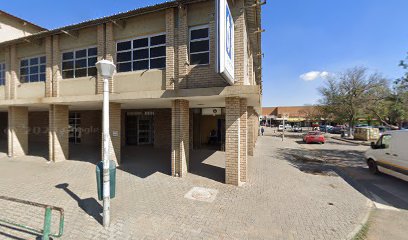
Flavious Mareka TVET College- Central Office is a Government college establishment in Sasolburg, Free State, South Africa
Sasolburg
Free State
1947
South Africa
Sorry, no records were found. Please adjust your search criteria and try again.
Sorry, unable to load the Maps API.
Education and Educational Resources in Sasolburg, Free State
Located within the Free State province, Sasolburg offers a range of educational opportunities that serve diverse learners and families. The town acts as a hub for primary and secondary education, as well as post‑compulsory options that support further study, skills development, and personal achievement. Across Sasolburg, learners typically encounter a mix of public schools, independent institutions, and nearby colleges that provide pathways into higher education, vocational training, and professional careers.
Senior schools in the area commonly provide a broad spectrum of syllabuses and subjects, with a focus on core requirements such as languages, mathematics, and sciences. In addition to standard academic programmes, many schools offer additional support through remedial classes, after‑school mentoring, and resource centres aimed at helping learners prepare for examinations. These supports can extend to guidance on study techniques, time management, and transitional readiness for post‑school options.
Further education and training pathways are typically available through local colleges and regional training centres. These institutions tend to emphasise practical and technical qualifications, including national certificates, diplomas, and artisan‑style programmes. Such centres frequently collaborate with industry partners to align training with labour market needs, offering hands‑on learning in specialised workshops and laboratories. The emphasis is often on applying theory to real‑world tasks, with a view to supporting employability and entry into trades, services, and manufacturing sectors that are prevalent in the region.
Higher education access within reasonable reach includes universities and university‑level institutions that may be located in larger urban areas nearby. Prospective students usually encounter a straightforward admissions process, guided by recognised qualification frameworks. General entry routes commonly encompass completion of senior secondary schooling, with options for bridging or preparation programmes where required. While specific requirements vary, learners can expect information on course prerequisites, application timelines, and possible credential evaluations from official portals or educational councils.
Learning support in Sasolburg and the surrounding district often focuses on creating inclusive access for a wide range of learners. Support services may include academic counselling, career guidance, and assistance for learners with specialised needs. Libraries in educational facilities commonly provide lending of books and digital resources, study spaces, and access to research databases. Laboratories and workshops equipped for science, technology, engineering, and mathematics subjects enable practical experimentation and project work, while computer facilities support digital literacy and online learning platforms.
Student services commonly address accommodation options for learners relocating to study, wellness and safeguarding services, and opportunities for involvement in student life. Sporting facilities and programmes frequently accompany academic provision, encouraging participation in physical education, team sports, and recreational activities. Cultural and community engagement opportunities may also feature, supporting well‑rounded development and social connection within the wider Sasolburg area.
Typical pathways begin with a sound foundation in secondary education, followed by transitions into vocational or academic routes. Learners might progress from senior high school to college‑level certificates or diplomas, then consider further studies at a university or through specialised training centres. Guidance often includes information on selection of courses aligned with interests and career goals, application or registration timelines, and the steps required to access financial aid or bursaries where available. Even for families exploring options, the emphasis remains on clear information, practical access, and local relevance.
- Types of institutions: public and independent schools, colleges, vocational and training centres, nearby universities or university‑colleges.
- Common programmes: senior secondary curricula, national certificates, diplomas, trades and technical qualifications, higher education access courses, and specialised short courses.
- Learning support and services: academic counselling, career guidance, remedial assistance, libraries, research databases, and inclusive learning resources.
- Facilities and resources: libraries, laboratories and workshops, computer suites, sports and recreational facilities, and accommodation options for learners relocating to study.
- Typical pathways: broad progression from schooling to vocational or academic qualifications, with guidance on admissions, registration, and progression to higher study or employment.
Overall, Sasolburg presents a balanced educational ecosystem that supports learners across age groups and stages. Access to well‑equipped facilities, diverse programmes, and practical learning opportunities helps families plan educational journeys that reflect local strengths and future opportunities.