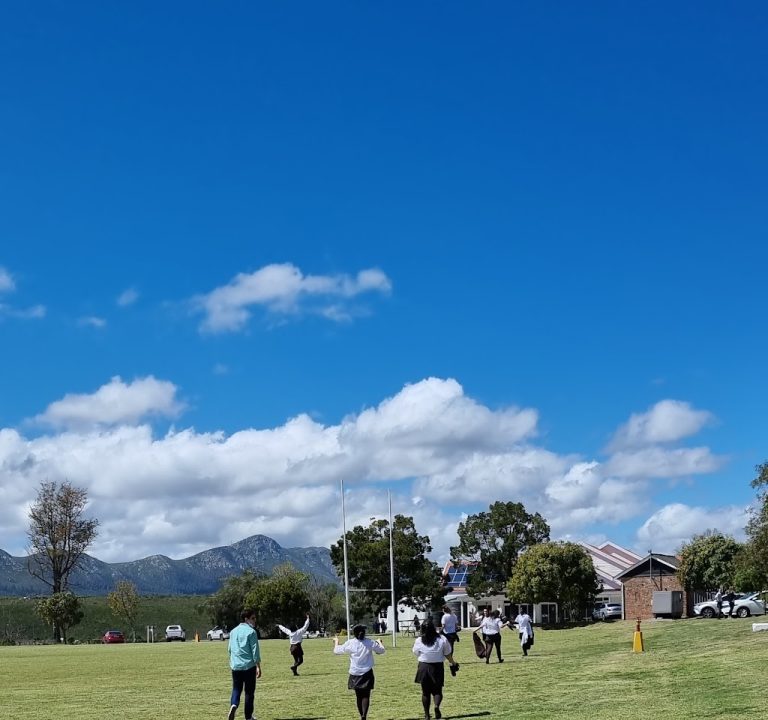
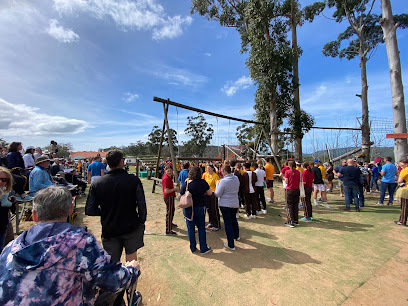
Woodridge College and Preparatory School is a Private educational institutions establishment in Thornhill, Eastern Cape, South Africa
Thornhill
Eastern Cape
Thornhill
South Africa
Curriculum
Woodridge College and Preparatory School offers an integrated curriculum that emphasises experiential learning, personal growth and academic rigour within a supportive, close-knit environment. The school outlines a clear progression from Preparatory through College, with programmes designed to develop confident, curious and capable learners who can contribute positively to society. Across all phases, the emphasis is on small classes, practical enquiry and real‑world application, underpinned by strong values such as discipline, accountability and mutual respect.
In the Preparatory phase, Woodridge adopts a child‑centred, thematic approach to teaching. The curriculum is designed to foster critical thinking, collaboration and independent learning. Outdoor education and experiential activities lie at the heart of the learning process, using the surrounding environment as a stimulus for discovery and understanding. The Foundation Phase (Grades 1–3) focuses on core literacy and numeracy skills—reading, writing, speaking and listening, spelling and mathematics—within a cross‑curricular context that makes learning meaningful and engaging. Specialist input in ICT, Art and cultural subjects complements everyday lessons, supporting the development of a well‑rounded, globally aware child. A dedicated learning support team, including remedial therapists, a Speech & Language therapist, an Occupational Therapist, a Physiotherapist and Kumon, assists pupils with diverse learning needs, ensuring inclusive access to the curriculum.
The Preparatory curriculum continues into the Intermediate and Senior Phases, expanding subject depth while maintaining the school’s commitments to holistic development. The programme includes a broad range of subjects offered by subject specialists, with a recognised emphasis on Mathematics and STEM-related learning. Regular assessment is a cornerstone, with a combination of continuous assessment, termly tasks, examinations and presentations designed to monitor progress and guide instruction. The school also places substantial value on drama, music and visual arts as essential components of a rich educational experience, thereby nurturing creativity and cultural participation alongside academic achievement.
Woodridge follows the Independent Examinations Board (IEB) framework for the matric year, aligning with global standards while retaining a local South African context. The IEB is valued for its emphasis on problem‑solving, analytical thinking and a challenging assessment style, which pupils undertake alongside the school’s ongoing internal reporting. Reports are electronically delivered to parents three times a year, providing detailed feedback on each pupil’s progress. The college also emphasises the importance of communication between teachers and families to support learners’ growth throughout their schooling.
Beyond the classroom, the curriculum is enriched through a wide array of experiential opportunities, including extensive sporting, cultural, and outdoor education programmes. These elements are designed to develop resilience, teamwork and leadership, complementing academic study and preparing pupils for further education and life beyond school. The school’s environment—characterised by a picturesque 365‑acre estate and access to diverse outdoor activities—enhances the practical learning experience and supports a lifelong love of learning.
In terms of delivery models, the content and approach are geared towards preparing pupils for both local and international higher education pathways. While the core curriculum remains firmly rooted in the IEB framework, the school’s emphasis on experiential and interdisciplinary learning provides a distinctive contrast to more traditional curricula. The combination of solid academic foundations, regular reporting, and access to additional support resources helps pupils build a comparative edge when applying to universities and other tertiary institutions.
In addition to standard classroom instruction, Woodridge offers short courses and professional‑level training opportunities as part of its broader educational philosophy. While specific coursed lists are not itemised in public materials, the school highlights its commitment to nurturing problem‑solvers and innovative thinkers through targeted teaching practices, specialised subject input and an emphasis on critical inquiry. Online or blended learning options are not explicitly described on the site, but the school’s focus on regular assessment, formative feedback and accessible teacher support indicates a strong framework for continued learning outside traditional lessons.
Support for students extends beyond academics to personal development and wellbeing. The Preparatory and College phases provide dedicated support structures, including learning support teams and access to speech, occupational and therapeutic services as needed. The school’s holistic approach aims to equip pupils with the knowledge, attitudes and practical skills necessary to navigate an ever‑changing world, while fostering a healthy, caring community that underpins successful academic outcomes.
Prospective families can explore further details about curriculum philosophy and educational offerings through the school’s online resources and information pages. The institution’s commitment to high standards, personalised learning and a broad spectrum of learning experiences positions Woodridge as a comprehensive option for families seeking a well‑rounded, values‑driven education in Thornhill, Eastern Cape.
Faculties and Branches
Woodridge College & Preparatory School operates as a single, ISASA-accredited independent school situated on a sizeable estate between Gqeberha (formerly Port Elizabeth) and Jeffreys Bay in the Eastern Cape. The campus combines a college–prep structure with a focus on holistic education, supporting both day pupils and boarders from across South Africa and abroad. The school emphasises experiential and outdoor learning, with extensive facilities spread across the 365‑acre site. The organisation is organised to support a continuum of schooling from pre-primary through to college level, enabling a coherent progression of programmes and services.
Academically, the institution is divided into two main divisions: Woodridge Preparatory and Woodridge College. Preparatory education focuses on the Foundation Phase (Grade 1–3) and Intermediate/Senior Phases, delivering a child-centred curriculum that blends thematic teaching with real-life skill development. The College offers a full senior programme (Grades 10–12) designed to prepare pupils for the IEB examinations, with attention to discipline, accountability and high standards of achievement. In both divisions, the emphasis is on balanced development—academic rigour alongside effective personal and social growth.
Within the Preparatory division, the Foundation Phase concentrates on early literacy, numeracy, speaking and listening, with a cross-curricular approach that uses the surrounding environment as an active learning backdrop. The Intermediate and Senior Phases extend these foundations into more complex subjects and independent inquiry. A dedicated learning support team operates on campus to meet a range of needs, including remedial therapy, auditory and speech-language support, occupational therapy, and physiotherapy; additionally, Kumon services are available to augment learning beyond standard class time.
In the College, the academic programme maintains a strong emphasis on regular assessment and feedback, with weekly tests and two formal exam sessions each year. Subject specialists contribute to the curriculum, and English is offered as Home Language while First Additional Languages include Afrikaans and Xhosa. Although the model follows a government-compatible framework, the examinations are conducted under the Independent Examinations Board (IEB) auspices, with results ratified by Umalusi. The school’s IEB orientation supports continued progression to universities and tertiary study, including international recognition of the matric results.
The physical layout and facilities of Woodridge support its curricular aims. The estate hosts both preparatory and collegiate campuses in close proximity, with dedicated spaces for arts, sciences, sports, and outdoor education. Where explicit departmental names are not itemised on the external pages, the described structure indicates faculties and subject areas are delivered by subject specialists within the respective divisions. The school’s programmes thus connect academic subjects with practical experience, sports, cultural activities and outdoor education as integral components of student services.
For prospective families exploring locations and contacts, the school’s main site provides access to virtual tours, open days, and admissions information, alongside a Parents’ Association that supports community involvement. Details of the campuses and admission processes are available through the school’s pages and linked resources.
- Preparatory: Foundation Phase; Intermediate & Senior Phases; dedicated learning support team (Remedial Therapists, Speech & Language, Occupational Therapy, Physiotherapy; Kumon).
- College: IEB accreditation; English Home Language; Afrikaans and Xhosa First Additional Languages; subject specialist teaching; examination and progression framework.
- Campus structure: 365-acre estate serving both preparatory and college programmes; blends academic, sports, cultural and outdoor education.
- Student services: regular formative and summative assessments; two exam sessions per year; electronic progress reporting; support services on campus.
Further information, including admissions and fee schedules, is accessible via the school’s official website: Woodridge College and Preparatory School.
Registration Details
Woodridge College & Preparatory School accepts applications on a rolling basis, with no fixed opening or closing dates. Applications are welcomed throughout the year, subject to availability. The school operates across three sections – pre-primary, preparatory, and college – each serviced by its own admissions information and processes. Prospective families are advised to review the process carefully to ensure a smooth submission and prompt consideration.
The admissions process generally follows these steps: submission of an online application supported by mandatory documentation; receipt and verification of current school information (including a declarational form completed by the pupil’s current school); financial clearance and a preliminary credit check; and, where applicable, an assessment or interview. Successful applicants receive an acceptance letter outlining the enrolment terms and the enrolment fee, with final acceptance subject to payment and a signed enrolment contract.
Where to apply: the school provides an online application portal for prospective pupils. The “APPLY NOW” option directs applicants to the online form, which collects the required information and uploads supporting documents. A direct entry point to the application form is available via the following link:
CLICK TO COMPLETE YOUR APPLICATION FORM
Required documentation is emphasised to ensure a complete application and timely processing. Applicants should prepare digital copies in the specified formats before starting the online submission. Incomplete applications are not processed. Where relevant, documents are to be uploaded as part of the application and named clearly (for example, Birth Certificate, Parent IDs, School Report, etc.).
The typical documentation highlighted by the admissions information includes, but is not limited to:
- A recent head-and-shoulders photograph of the child (JPEG, under 200kb) – mandatory
- A certified copy of the child’s birth certificate or identity document (PDF) – mandatory
- A certified copy of the child’s passport for foreign nationals (PDF)
- Copy of the latest school report from the current school (PDF) – mandatory if transferring
- Copy of any relevant professional assessment reports (PDF)
- A certified copy of identity documents for each parent/guardian (PDF) – mandatory
- Front and back copy of medical aid card (all in one PDF)
- Proof of payment of the administration fee (PDF) – mandatory
- Copy of the school fee account for the last six months (PDF) – mandatory
- Most recent payslips (three, in one PDF) – mandatory
- Latest Income Tax Assessment or IRP5 (PDF) – mandatory
Declaration from the current school is required to proceed with the application. The relevant declaration form should be completed by the pupil’s current school and returned directly to Woodridge. The school provides specific declaration forms for different segments of the cohort, which can be downloaded from the admissions resources:
pre-primary declaration and prep & college declaration.
For international pupils, additional documentation concerns medical insurance coverage while in South Africa and valid study visas prior to enrolment. The admissions information includes reference to international medical insurance and an international student health form. Details and downloadable forms are available via the admissions section:
international student health form and international medical insurance information.
What happens next after the online application is submitted with the mandatory documents: a credit check and financial clearance are conducted, including a credit check at the current school. The current school provides the completed declaration form, and, once received, the application proceeds to the next stages. For successful applicants, an assessment may be required for Grade 1 to 7, and a formal offer is issued. The offer details the enrolment fee and terms and conditions, and final acceptance requires payment of the enrolment fee and the signed parent contract. The enrolment process concludes with the provision of new pupil information ahead of the start date.
Additional information and relevant resources for prospective families can be found in the school's admissions and information-for-parents sections. These include pre-primary, preparatory, and college information pages, which provide tailored details for each phase of Woodridge’s education offering.
Contact or support channels for admissions are typically accessed through the main site, with pathways to “Visit the School” or to the online enquiry tools. All website links are provided to assist applicants in locating the correct forms and information throughout the registration journey.
Sorry, no records were found. Please adjust your search criteria and try again.
Sorry, unable to load the Maps API.
Education and Educational Resources in Thornhill, Eastern Cape
Thornhill, situated in the Eastern Cape, sits within a network of learning opportunities that extend beyond the village itself. The local landscape typically includes a mix of government schools, independent provision, and access to further education and training networks in the wider region. Families and learners often navigate a combination of primary and secondary schooling, complemented by nearby colleges, training centres, and university campuses located in adjacent towns and cities.
Types of institutions commonly available in or near Thornhill include main-stream public schools offering the national curriculum framework, with age-appropriate programmes from foundation phase through to senior phase. Private schools and specialised institutions may provide additional options, including larger school campuses with diversified timetables and facilities. For post-secondary education, learners can explore opportunities at further education and training (FET) colleges and technical institutes in the surrounding district, which typically offer a range of practical and professional programmes designed to support direct entry into the workforce or progression to higher studies.
Typical programmes and levels cater to diverse needs and interests. Learners might encounter offerings in areas such as general education and training, which align with matriculation and accompanying certificates, as well as vocational subjects that emphasise hands-on skills in trades, ICT, business studies, and hospitality. In addition, pathways commonly include access to higher education options through articulation routes that connect diploma or applied qualifications with bachelor-level study where available in the region. Guidance on subject choice, career interests, and entrance requirements is often provided through school career services and regional education offices.
Learning support and student services are an important feature of the local education ecosystem. Where available, schools and colleges may offer assistance such as learning support for learners with diverse educational needs, libraries with study materials and multimedia resources, and computer laboratories to foster digital literacy. Some institutions also provide access to tutoring, mentorship programmes, and guidance on examinations and assessment preparation. Support for learners from rural or marginalised backgrounds is frequently complemented by community outreach programmes and partnerships with local service organisations.
Facilities and resources commonly associated with Thornhill’s educational landscape include well-equipped classrooms, science laboratories, ICT suites, and sports facilities. Libraries, whether on campus or within schools, play a central role in supporting independent study, research, and quiet study spaces. Where residential options exist nearby, accommodation for students can be part of the broader campus environment in the region, helping learners to focus on their studies and participate in campus life and organised activities.
Typical pathways for admissions and registration are guided by national and provincial education policies. Prospective learners generally complete school-based assessments for matriculation eligibility or school-leaving certificates, followed by registration at a post-school institution when appropriate. Information about admission windows, required documents, and eligibility is usually offered through school guidance offices, district education offices, and the administrative sections of colleges and universities in the surrounding districts. Prospective students are encouraged to explore official district and national education portals for up-to-date information on programmes, entry routes, and available support services.
- Consider public and private schools in the Thornhill area and nearby towns for foundational schooling.
- Explore FET colleges and training centres in the region for practical qualifications and apprenticeships.
- Investigate nearby universities for higher education programmes, including diplomas, degrees, and professional courses.
- Utilise learning support, libraries, and digital resources where available to strengthen study skills and research capabilities.
- Review admission and registration processes through official education portals and district offices to understand timelines and requirements.
For learners and families, the Thornhill region presents an approachable framework for education that blends local access with opportunities across the wider Eastern Cape. Accessible websites and regional education offices offer guidance on programmes, admissions, and support services to help navigate the early stages of academic and career development.