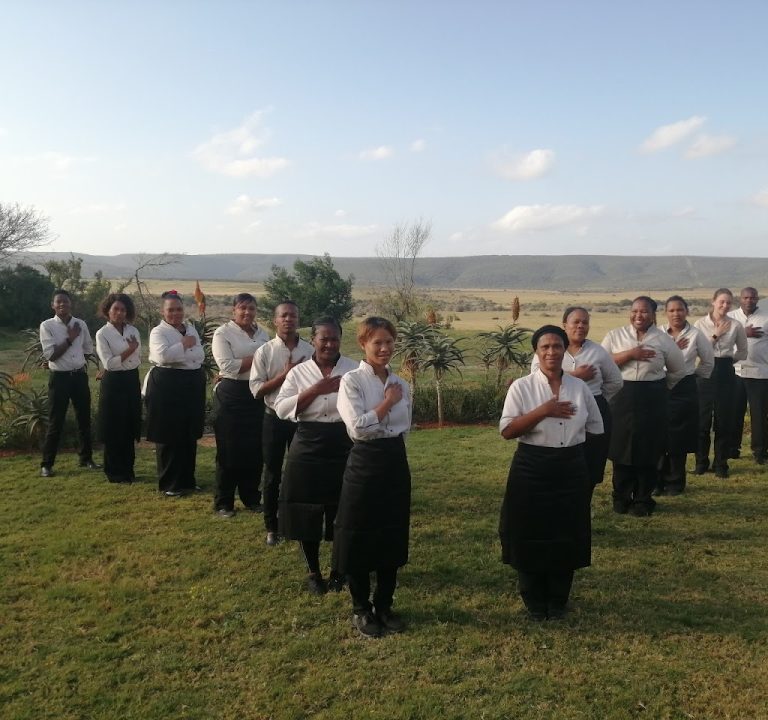
SAM HOSPITALITY TRAINING is a Training centres establishment in Benoni, Gauteng, South Africa
Benoni
Gauteng
Daveyton, Benoni
South Africa
Curriculum
SAM HOSPITALITY TRAINING in Benoni, Gauteng draws on a substantial collective experience in hospitality education, delivering a range of programmes and levels designed to equip learners with practical knowledge and industry-ready skills. The organisation operates a structured curriculum that spans frontline service, operational leadership and specialised support roles across lodging, dining and guest experiences. The emphasis is on real-world application, guided by a blend of theory and hands-on practice that aligns with the demands of South African hospitality venues.
The curriculum is organised around core operational streams commonly pursued within hotels, guest houses, lodges and related establishments. These streams provide foundational competence across essential service areas, while enabling progression through more advanced or specialised training. Learners may engage with front-line service disciplines, housekeeping and room hygiene, reception and front desk activities, as well as concierge and guest relations that underpin professional guest interactions. The programme structure supports the development of consistent service standards, cultural awareness, and the ability to manage guest arrivals, departures, and ongoing expectations in busy environments.
Across its offerings, the programme content highlights the importance of customer service excellence, team collaboration, and management-orientated skills. Specific curriculum threads focus on the customer-facing aspects of hospitality, including how to deliver service with attention to appearance, health and hygiene, and professional presentation. Learners also explore supervisory and co-ordination tasks within front office operations, ensuring coordinated guest support from arrival to departure, and the maintenance of service levels across multiple touchpoints within a property.
In addition to traditional hotel and lodge training, the curriculum accommodates specialised hospitality pathways. These include resort and butler-focused training, functionally aimed at roles that require high standards of service and guest-care expertise. There is a clear recognition of the value of practical, on-site application and customer-facing excellence, with curriculum elements designed to translate classroom learning into authentic workplace performance. The breadth of programmes reflects the diverse settings in which hospitality professionals operate, from boutique guest houses to larger properties offering a range of guest experiences.
Short courses and professional training form an integral part of the curriculum, offering opportunities for targeted upskilling in specific competencies. These options enable learners to pursue industry-relevant skills without long-term commitment, or to augment broader qualification pathways with focused, practical modules. The short-course approach supports continuous professional development for staff at various levels, from entry‑level team members to mid-career professionals seeking to refine particular capabilities.
Blended and onsite learning opportunities are a notable feature of the delivery model. The programme portfolio includes onsite training designed to mirror real-work environments and operational rhythms, enabling learners to observe, practise and internalise standard procedures within a familiar setting. Where applicable, supported by external resources and industry insights, the curriculum also aligns with the practical logistics of coordinating guest services, housekeeping operations and front-of-house management tasks. This approach helps learners connect theoretical knowledge with daily routines found in hospitality workplaces.
Support services and learning resources are acknowledged as critical to student success within the curriculum. While specific services are not itemised in detail here, the available content signals a commitment to structured guidance, industry-aligned materials and opportunities for practical exposure. The presence of established links to various hospitality functions—ranging from guest services and front office to housekeeping, catering, and specialised service roles—suggests a curriculum designed to foster confidence, reliability and professional growth in learners navigating the hospitality sector.
Overall, the curriculum offered by SAM HOSPITALITY TRAINING is characterised by a practical, outcome-focused approach that integrates core hospitality competencies with specialised pathways. By combining foundational training with industry-specific modules and the possibility of on-site delivery, the programme seeks to prepare learners for immediate contribution within competitive hospitality environments, while supporting ongoing professional development through a spectrum of learning opportunities.
- Foundational and advanced programmes across front office, housekeeping, guest services, and supervision
- Specialised pathways including resort, butler, and concierge-focused training
- Short courses and professional training for targeted skill development
- On-site training delivery to mirror real work settings
- Supportive learning resources and practical applications aligned with industry needs
Further information and details about specific courses, entry requirements, durations or fees are available through the provider’s website at https://www.hospitalitycourses.co.za/, which outlines the range of programmes and associated learning experiences offered within the South African hospitality sector.
Faculties and Branches
SAM Hospitality Training in Benoni, Gauteng, operates within a broader framework of hospitality education focused on practical, industry-ready skills. The organisation presents a suite of training streams that align with common hospitality departments, emphasising hands-on development across front-of-house, back-of-house, and guest services functions. While specific campus locations are not enumerated on the site, the offerings indicate a modular approach to learning, with programmes that can be delivered through various formats including on-site options and customised training arrangements for establishments.
Faculties and departments (as reflected in the site structure) include areas commonly associated with comprehensive hospitality programmes. The front office area highlights essential guest-facing competencies such as customer service provision, handling arrivals and departures, and managing a professional appearance and hygiene standards. Related modules extend into front office management, focusing on coordinating guest reception, guiding guests through arrival and departure processes, and sustaining a high level of service across the front desk as a whole.
The housekeeping sector is treated as a core component, with courses covering bed preparation, linen handling, room servicing, public areas upkeep, and the maintenance of housekeeping supplies. More advanced or specialised tracks within housekeeping include executive housekeeping training, illustrating an aspiration to prepare learners for leadership roles within accommodation operations. These offerings emphasise the routine, repeatable tasks that underpin quality guest accommodation and operational efficiency.
The restaurant and dining stream encompasses waiter training, fine dining service, wine service, and related hospitality skill sets. The site also references mystery shopping and other quality-control oriented activities, suggesting programmes that incorporate assessment and continuous improvement as part of the learning experience. This emphasis on service delivery at the table and in dining environments aligns with industry expectations for guest satisfaction and productivity in restaurant settings.
Additional strands of the curriculum address broader guest services and customer interaction, including dedicated customer service excellence training and specialised roles such as butler training and resort service provision. These modules reflect a philosophy of elevating personal service standards and expanding capabilities for staff who engage guests across diverse hospitality contexts, from lodges and resorts to more traditional hospitality establishments.
Within the site’s structure, several thematic training areas appear under parent categories that resemble faculties or schools of study. The presence of cross-cutting topics—such as team development, customer service, and management–leadership tracks—indicates an integrated approach designed to support learners who pursue progression from frontline roles to supervisory and management functions. By emphasising both practical skills and supervisory capabilities, the curriculum suggests a pathway for ongoing professional development within the industry.
In terms of delivery and student services, the site notes a range of offerings that can be customised to organisational needs, including onsite training options and specialised programmes for game lodges and other hospitality environments. Although explicit campus details for SAM Hospitality Training in Benoni are not provided within the available content, the structure points to a programme ecosystem that prioritises real-world applicability, operational readiness, and adaptability to varying hospitality contexts. For prospective students and employers, the site provides direct access to the various training streams and related services via the main navigation, helping to map competencies to job roles and service standards.
For those seeking further information, opportunities exist to explore the specific modules under each training area, as well as potential consulting and staff development services that accompany the educational offerings. This integration of learning with practical implementation reflects a holistic approach to preparing hospitality professionals for success across diverse environments.
Source material and programme outlines can be found on the site’s main sections, including the hotel training, game lodge training, restaurant training, and related consulting and onsite training pages. These resources collectively illustrate how faculties, departments, and service streams relate to student learning, career preparation, and industry engagement.
Registration Details
Registration for SAM HOSPITALITY TRAINING in Benoni, Gauteng, is presented through the broader Hospitality Courses platform, which showcases a range of hospitality training programmes and related services. The primary route for prospective learners to explore and initiate enrolment is via the website, which aggregates information on different training offerings and delivery options. While the specific page for SAM HOSPITALITY TRAINING is not enumerated in the provided content, the site features dedicated pages for various training streams that align with industry needs and regional delivery in South Africa.
Potential applicants are advised to begin by visiting the Hospitality Courses homepage and navigating to the programme most closely aligned with SAM HOSPITALITY TRAINING. For example, the platform hosts detailed pages such as Safari Lodge Staff Training, which exemplifies the structure and content of similar hospitality training tracks. This approach enables applicants to understand how programmes are organised, what the training may cover, and how to proceed with registration when options become available. The page for Safari Lodge Training 2026 provides an illustrative entry point for programme specifics and registration pathways that may be applicable to related South African hospitality training opportunities in Benoni and the Gauteng region.
Where to apply: registration and application processes are typically described on the individual programme pages within the Hospitality Courses site. Prospective learners should locate the most relevant training track and follow the stated steps to register. In the event that direct registration instructions are not explicitly listed on the SAM HOSPITALITY TRAINING page, the platform generally directs applicants to its programme pages and contact or support channels for further guidance. The Safari Lodge Training 2026 page is a visible example of how applications are routed and what information is sought during the enrolment process.
Eligibility and entry requirements: the supplied content does not enumerate specific entry criteria for SAM HOSPITALITY TRAINING. Where stated elsewhere on the platform, entry requirements are typically regionally appropriate and programme-specific, and may relate to prior hospitality experience, language proficiency, or basic literacy. Readers are advised to consult the individual programme details on the Hospitality Courses site for any stated prerequisites, ensuring alignment with the chosen training track in Gauteng.
Documents and materials: no explicit list of documents is provided in the available content. If documents are required for registration on a given programme, those details would normally appear on the programme page during the application process. In the absence of a stated list, applicants should expect the standard practice of preparing typical enrolment materials as requested by the chosen course page, such as proof of identity or prior qualification, should these be required by the specific programme.
Support channels: the site indicates contact and support options are available through its platform, including methods of reaching programme coordinators or support staff. While direct telephone numbers and email addresses are not included in this summary, users can rely on the Hospitality Courses site to provide appropriate contact avenues. Visitors should look for the “Apply” or “Contact” links on the programme pages to access registration assistance or to initiate enquiries about SAM HOSPITALITY TRAINING and related Gauteng offerings. The Safari Lodge Training 2026 page is a practical example of how such support information is structured and provided to applicants.
In summary, registration for SAM HOSPITALITY TRAINING, as presented through the Hospitality Courses platform, involves locating the most closely related training programme page, following the stated application steps on that page, and engaging with the site’s support options for any programme-specific questions. Interested individuals are encouraged to explore the linked programme pages, including the Safari Lodge Training 2026 page, to gain a clear understanding of how enrolment is managed and what information will be requested during the application process.
Sorry, no records were found. Please adjust your search criteria and try again.
Sorry, unable to load the Maps API.
Education and Educational Resources in Benoni, Gauteng
Benoni, situated in Gauteng, offers a diverse landscape of educational opportunities for learners of all ages. The town provides a mix of primary and secondary schools, further education and training options, higher education institutions within reachable distance, and a range of specialised training centres. This combination supports families seeking continuity from early schooling through to professional qualifications, all within a regional network of support services and facilities.
Primary and secondary education in Benoni typically covers a spectrum of public and independent schools, with curricula aligned to national standards and provincial guidelines. Pupils progress through elementary and middle stages before entering senior secondary levels, where matriculation examinations shape university and vocational pathways. Across the area, schools commonly offer languages, mathematics, sciences, and humanities, with elective subjects and enrichment activities designed to broaden learners’ academic and practical skill sets.
Beyond traditional schooling, Benoni and nearby townships benefit from access to further education and training providers. Technical and vocational education is represented by centres that focus on practical competencies in fields such as information technology, business administration, engineering-related studies, and healthcare support. These institutions are often well connected to local employers, offering hands-on learning, simulated work environments, and industry-relevant certificates that can serve as staircases to higher qualifications or direct employment.
Higher education options in the region include universities and colleges that offer undergraduate degrees, diplomas, and postgraduate programmes. Students may familiarise themselves with admissions routes that typically consider prior academic results, compulsory applications, and timelines aligned with the academic year. Articulation pathways commonly enable progression from classroom study to applied programmes, professional registrations, or research-oriented study, depending on the discipline and chosen field of study.
Learning support and student services are common features across Benoni’s educational facilities. Many institutions provide tutoring or mentoring, disability and accessibility services, counselling, and career guidance to assist learners in navigating coursework and future plans. Library resources form a central hub for study, offering borrowing services, study spaces, quiet rooms, and access to digital databases. Practical learning is supported by laboratory facilities, computer suites, and dedicated workshops that enable hands-on exploration of concepts and technologies.
Facilities in the area frequently include sporting and recreation options, cultural programmes, and safe accommodation on or near campus where applicable. Sports facilities and clubs support physical development and teamwork, while student unions or student life offices help learners to engage with campus culture, events, and leadership opportunities. Accommodation is typically aligned with the needs of students who relocate from other towns or regions, with considerations for safety, affordability, and accessibility to campuses and public transport.
Typical learning pathways in Benoni involve a progression from compulsory schooling to further study or training. Admissions processes usually require the submission of prior academic records and completion of relevant application forms within set deadlines. Registration often involves verification of qualifications, timetable allocations, and guidance on orientation programmes. Prospective learners are encouraged to explore course information, entry requirements, and the support services available to help plan a coherent academic journey.
For further information about education and resources in Benoni, interested readers can consult general guidance portals and local education authorities online. These sources typically provide overview material on programmes, application timelines, and support services, helping families to identify suitable options and plan next steps in a structured manner.
- Public and private schools offering primary and secondary education
- Technical and vocational training centres with diploma and certificate courses
- Nearby universities and higher education colleges with undergraduate and postgraduate programmes
- Learning support services, libraries, labs, and study facilities
- Sports, arts, cultural programmes, and student life services
Overall, the educational ecosystem around Benoni provides learners with a broad array of choices, enabling periods of study to be tailored to individual strengths, aspirations, and support needs. The emphasis across facilities tends to be on accessible learning, practical skills development, and pathways that connect classroom work with real-world opportunities.