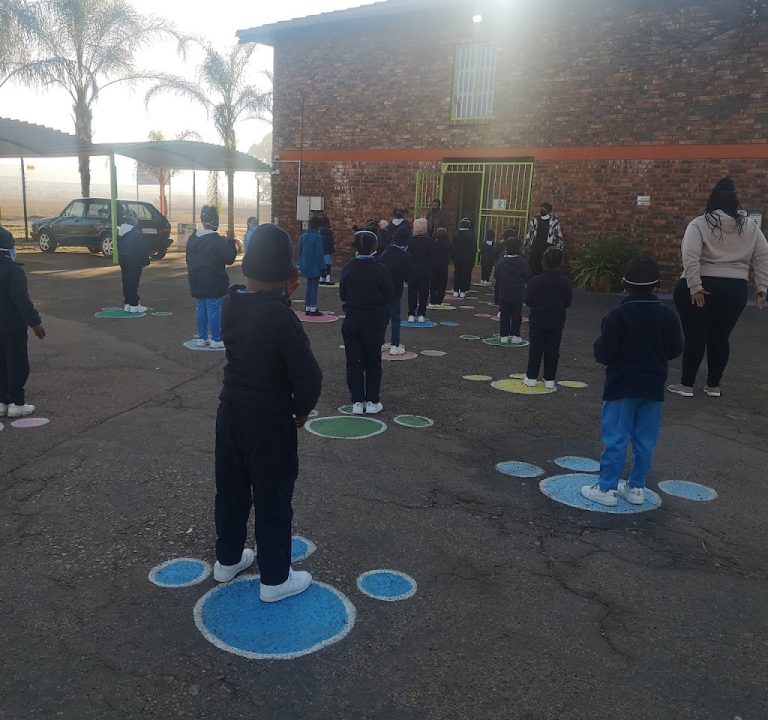
Landmark Academy is a Private educational institutions establishment in Akasia, Gauteng, South Africa
Akasia
Gauteng
0200
South Africa
Curriculum
Landmark Academy, located in Akasia, Gauteng, presents a distinctive approach to schooling that centres on both advanced achievement and targeted remediation. The curriculum is framed by the school’s mission to develop learners who are academically balanced, emotionally stable, and capable of progressing into mainstream education with confidence. The institution emphasises a holistic view of learning, recognising that different learners require varied supports to reach their highest potential.
From its beginnings as a mainstream independent school, Landmark Academy has expanded its offering to include remedial programmes designed to address cognitive gaps that can hinder achievement. The curriculum therefore integrates standard academic content with scaffolded instruction and supplemental information intended to bridge underperformance. This ensemble of elements aims to help pupils navigate difficult learning areas while retaining access to rich, engaging learning experiences.
In practice, the curriculum engages learners across core academic domains, with particular attention paid to those who encounter barriers to progress. The school emphasises strategies for identifying learning gaps early and providing timely interventions. Through these interventions, learners receive additional practice, guidance, and structured support that enable them to make steady progress alongside their peers. The remedial component is positioned as a complement to the main curriculum, helping to restore balance and create opportunities for advancement within a broader educational trajectory.
Key aspects of Landmark Academy’s curriculum include:
- An emphasis on academic balance, ensuring that learners can access and engage with essential subjects while receiving necessary support to overcome challenges.
- Scaffolded instruction that builds skills progressively, with adjustments made to suit individual learning needs and pace.
- Supplementary information and practice designed to reinforce understanding and close gaps in learning progress.
- A pathway intended to enable learners to re-enter or continue within mainstream education, supported by targeted interventions.
While detailed information about specific courses, levels, or durations is not enumerated in the available materials, the programme structure appears to be designed around adaptability and learner-centred support. The curriculum is described as striving for quality education that is both excellent and affordable, with an overarching objective of enabling learners to demonstrate growth across cognitive and non-cognitive dimensions. The focus on remedial classes indicates a commitment to personalised pacing, ongoing monitoring of progress, and a responsive approach to individual educational needs.
In terms of delivery and learning formats, the organisation’s publicly stated content highlights a blended approach to learning through scaffolded instruction and supplementary materials. Although explicit references to online or blended modes are not detailed in the available materials, the emphasis on structured interventions and accessible learning experiences suggests a readiness to support learners through diverse instructional methods where appropriate. The school’s operating ethos aligns with creating a learning environment that fosters resilience, self-confidence, and lifelong learning habits, which are cultivated through steady progression and constructive feedback within the curriculum framework.
Beyond the core curriculum, Landmark Academy places importance on student support services as part of its educational offering. The remedial programme is positioned as a vehicle for improving cognitive performance and bridging gaps, thereby contributing to a more balanced academic experience. This aligns with the institution’s mission to produce leaders who can navigate both academic and non-academic activities with effectiveness and dignity. The combination of targeted remediation, scaffolded instruction, and continuous progress tracking underscores a comprehensive approach to learning support that complements conventional schooling pathways.
For further information about curriculum details, assessment practices, or available programmes, prospective families are encouraged to explore the Academy’s official website and related pages. The site provides broader context on the school’s aims, values, and educational philosophy, which collectively illuminate the distinctive curricular approach employed at Landmark Academy.
Faculties and Branches
Landmark Academy operates as a Non Profit Company based in Akasia, Gauteng, South Africa. The institution originated as a mainstream independent school and has expanded to incorporate remedial programmes designed to support learners who may struggle academically. This combination aims to balance traditional academic offerings with targeted interventions that help pupils reach their highest potential.
Rather than presenting a finite list of separate faculties, the school emphasises a cohesive educational approach that integrates core academic studies with additional support services. The remedial framework is central to the institution’s offering, providing scaffolded instruction and supplementary information throughout the course of study. This structure is intended to bridge cognitive gaps and foster positive learning outcomes, enabling learners to engage more effectively with mainstream curricula and future learning opportunities.
In practice, the provision combines both advanced learning opportunities for capable pupils and targeted assistance for those who require additional help. The emphasis on academically balanced development is reflected in the institution’s mission to cultivate resilient, lifelong learners who can navigate academic and non-academic activities with confidence and dignity. The approach is delivered by professionals who implement interventions designed to improve performance and promote steady intellectual growth while maintaining affordability and accessibility for families.
As a single-campus entity described in available information, Landmark Academy concentrates its programmes and student services within a unified setting. While explicit details about separate departments or branches are not listed, the model centres on aligning academic programmes with remedial support, ensuring that learners progress through the curriculum with appropriate guidance and diagnostic assistance. Prospective students and families can find more information about programmes and services on the school’s website, which provides an overview of the organisation’s ethos and educational objectives.
For further information on admissions, enrolment processes, and programme details, potential applicants are encouraged to consult the school’s official site: Landmark Academy.
Registration Details
Landmark Academy, based in Akasia, Gauteng, operates as a Non Profit Company (NPC) with a focus on providing high-quality education alongside remedial programmes. The institution emphasises balancing academics with personal development, aiming to support learners who may require additional instructional scaffolds to access rich learning experiences. Admission processes are framed by the school’s desire to identify learners who can benefit from its specialised approach, including both standard curriculum provision and targeted interventions designed to bridge cognitive gaps.
As the website sets out the school’s mission and operational focus, prospective families are encouraged to undertake an initial enquiry to understand how Landmark Academy’s model could align with a learner’s needs. The institution communicates through its publicly available pages and contact channels, which guide interested parties to obtain further information about the school’s programmes, facilities and support services. Details on specific registration timelines, eligibility criteria, or fee structures are not published on the site, and it is recommended to refer directly to the official channels for the most accurate and up-to-date information.
The registration overview emphasises the school’s remedial offerings alongside mainstream education, underscoring a commitment to helping learners reach an academically balanced and emotionally supported progression. The approach suggests a process centred on assessment, alignment with the school’s remedial framework, and consideration of how individual learner needs can be met within Landmark Academy’s programme model. While the site does not itemise discrete steps or required documents, it conveys a general pathway through direct engagement with the school’s contact points and information resources.
For those seeking to begin the registration journey, the primary action is to initiate contact via the official channels provided by Landmark Academy. Potential applicants and guardians can use the school’s public-facing links to request information or arrange a conversation about enrolment. The site’s structure indicates that prospective families should start with an inquiry to learn about programme fit, capacity, and how interventions are integrated with regular schooling. Engaging with the school through its communication avenues supports the discovery of next steps in the process, subject to the school’s available spaces and policy considerations.
Where to apply and how to obtain information can be found through the following official pages:
- About Landmark Academy – provides context on the school’s purpose, values and remedial focus.
- Get in touch – the primary channel for enquiries, questions about programmes, and guidance on the registration process.
Notes for prospective applicants include:
- The site does not publish detailed application deadlines, required documents, or fees. Where such information is essential, it should be sought directly from the school via the contact page.
- Registration decisions take into account the learner's alignment with Landmark Academy’s educational model, including remedial support and capacity to participate in the offered programmes.
- Guidance on next steps, including potential assessments or placement discussions, is typically provided through an initial enquiry and subsequent communication with school staff.
In summary, interested families should initiate contact through the official Landmark Academy channels to obtain the most accurate and comprehensive information regarding registration. The school’s publicly available pages reflect its commitment to affordable, quality education and an environment designed to support learners through targeted interventions alongside mainstream coursework.
Sorry, no records were found. Please adjust your search criteria and try again.
Sorry, unable to load the Maps API.
Education and Educational Resources in Akasia, Gauteng
Akasia, situated in Gauteng, forms part of a broader urban region where learners and families commonly access a diverse mix of educational opportunities. The area benefits from proximity to a network of schools, further education and training institutions, and higher learning campuses within reach of Pretoria and Johannesburg. This landscape supports a continuum of learning from early years through to higher education and skilled vocational training.
Within Akasia and its neighbouring communities, primary and secondary schooling is typically provided through public and private institutions. Schools commonly offer curricula aligned with national and regional requirements, with opportunities to sit for standard examinations recognised across South Africa. Across age groups, learners can expect access to structured programmes in core subjects, alongside elective options that reflect local needs and interests. For families, this often includes support services aimed at guiding learners through compulsory schooling and early transitions to further study.
Beyond school leavers, the area is linked to a range of further education and training options. Technical and vocational education and training (TVET) colleges and private training centres commonly provide diploma and certificate programmes that emphasise practical skills and industry relevance. These offerings cover fields such as information and communications technology, engineering and artisan trades, hospitality, business administration, and health-related disciplines. Apprenticeships and workplace-integrated learning are typically available through partnerships with employers and industry bodies, helping learners bridge classroom study with real-world experience.
Higher education opportunities extend to universities and campuses within reasonable travel distance. Prospective students can explore undergraduate degrees, honours programmes, and postgraduate studies across faculties such as arts, sciences, engineering, business, education, and health sciences. In many cases, prospective entrants engage with institutional admissions portals to submit applications, access information on financial support, and learn about articulation pathways from diploma or certificate credentials to degree programmes. While detailed entry requirements and deadlines vary by institution, general pathways often involve meeting age criteria, academic qualifications, and language proficiency, followed by registration processes that may include placement assessments or interviews.
Learning support and student services play a central role in the educational ecosystem around Akasia. Libraries and study resources at schools and colleges provide access to books, journals, digital databases, and quiet study spaces. Counselling, guidance, and career advisory services help learners navigate academic planning, personal development, and transition to further study or the workforce. Accessibility provisions and inclusive education practices are commonly available to assist students with additional learning needs. Financial support options, such as bursaries and grants, may be offered through national programmes, institutions, or private foundations, subject to eligibility.
Facilities and resources typical of the area include well-equipped laboratories for science and engineering, computer laboratories with up-to-date software, sports and recreation facilities, and student accommodation or homestay options where offered by institutions. The local learning environment often emphasises a blend of academic, cultural, and sporting activities, contributing to a holistic educational experience and opportunities for both individual and collaborative learning.
Typical pathways in Akasia involve engaging with schools or tertiary providers to explore programmes, submit admissions or registration applications, and meet required documentation timelines. Learners are encouraged to research progression options—from completing a school matric or equivalent, through to entry-level certificates and diplomas, and onwards to degree studies or skilled apprenticeships. Information and guidance are frequently available through district or provincial education offices, individual institutions, and reputable online portals maintained by South African national agencies.
Useful resources for prospective learners and families include government and regional education sites, such as the Department of Basic Education and the Gauteng Department of Education, as well as national bodies overseeing quality assurance and frameworks for higher education and skills development. These platforms provide guidance on curricula, admissions, funding possibilities, and pathways across the education sector. For further information, see https://www.education.gov.za and https://www.education.gpg.gov.za.