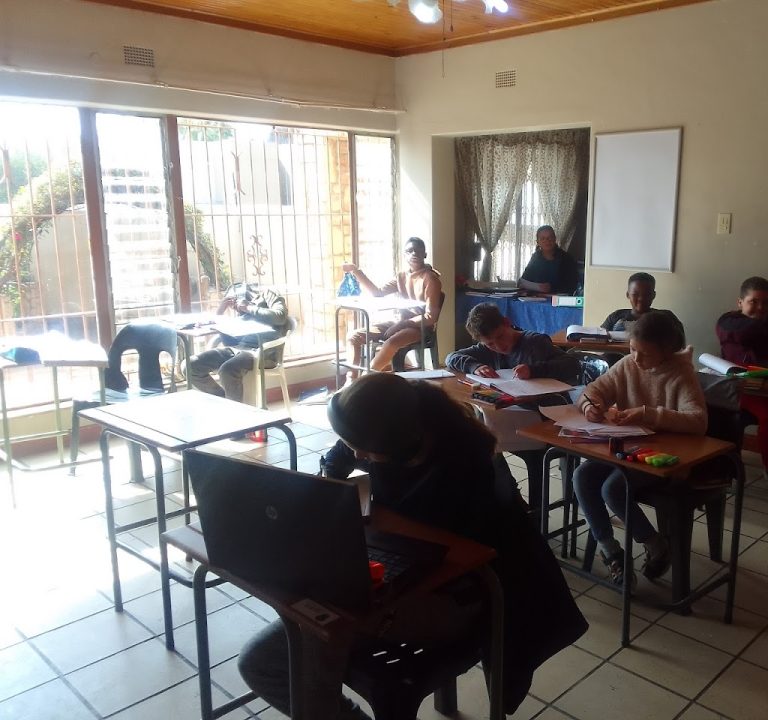
Alberton Private School T/A Striving Seekers Academy is a Educational institutions establishment in Alberton, Gauteng, South Africa
Alberton
Gauteng
1449
South Africa
Curriculum
Striving Seekers Academy in Alberton presents a distinctive tiered structure that spans early years through to senior schooling. The school organises its classes around clearly labelled groups: Grade R-3 housed under the Hufflepuff banner, Grade 4-6 operating as Ravenclaw, and Grade 7-12 encompassing Gryffindor. Each level is described through linked pages that emphasise the character and strengths associated with the group, suggesting a customised approach that recognises developmental difference while maintaining a shared framework across the school community.
The academy places emphasis on equipping learners with a strong academic foundation while simultaneously nurturing essential social competencies. This dual focus is reflected in the stated aim of Think Digital and Cambrilearn, platforms that provide extensive studying materials alongside the guidance of dynamic full-time teachers. In doing so, the curriculum is presented as capable of supporting robust academic progress while fostering skills such as collaboration, critical thinking, and adaptability—competencies regarded as pivotal for success in both local and international settings.
Curriculum delivery is described as flexible and learner-centred. The school promotes a day-to-day pace that can be tailored to a learner’s needs, which is framed as an “individualised learning journey.” This approach is presented as allowing development to proceed at a pace that suits the learner, while maintaining a coherent framework that aligns with the school’s broader educational objectives. The integration of digital platforms is highlighted as a means to facilitate study beyond traditional classroom confines, thereby enabling learning to occur at diverse times and locations as required.
A notable feature of the curriculum offering is the combination of engaging content with a structured, support-driven environment. The use of digital resources is positioned as a way to extend learning opportunities, supporting both local progression and the possibility of broader exposure, including international study pathways. While specific course lists, durations or accreditation details are not enumerated, the information provided emphasises a holistic model designed to balance depth of study with breadth of supporting experiences.
In addition to formal schooling, the academy signals an emphasis on transferable skills and personal development. The inclusion of social skills development alongside academic materials suggests an integrated approach to character and competency-building. The school’s mission and vision statements reinforce a commitment to exceeding expectations and pursuing excellence, a stance reflected in the digital learning resources and the way curricular materials are presented to learners and families alike.
For prospective families seeking information on access to the curriculum, the school notes online and blended possibilities via its digital platforms. While explicit details regarding entry requirements, fees beyond general terms, or accreditation are not provided in the available material, the mentions of “Think Digital” and “Cambrilearn” imply a layered learning experience that can be accessed with flexible scheduling and ongoing teacher support. This setup is positioned as suitable for local learners as well as those considering international study pathways, subject to further guidance from the school.
Parents and stakeholders are invited to explore further through the school’s online presence, including pages dedicated to the curriculum and class-specific information. The online footprint also points to a broader suite of resources and contact avenues for those seeking more detailed or personalised information about how the curriculum is implemented at each level. The overall presentation indicates a modern, digitally enriched educational model designed to complement traditional schooling with flexible, learner-directed elements.
- Key levels: Grade R-3 (Hufflepuff), Grade 4-6 (Ravenclaw), Grade 7-12 (Gryffindor)
- Digital platforms: Think Digital and Cambrilearn for learning materials and teacher support
- Learning approach: flexible, learner-paced, individualised journeys
- Learning environment: blend of on-site teaching with online resources and international study possibilities
Further information can be found on the school’s website at seekersacademy.co.za.
Faculties and Branches
Alberton Private School, trading as Striving Seekers Academy, situated in Alberton, Gauteng, South Africa, presents a structured yet flexible educational offering designed to support diverse learner pathways. The institution operates through clearly defined grade bands that function as distinct faculties or departments within a cohesive school community. Each segment focuses on age-appropriate curricula and aims to cultivate academic rigour alongside personal and social development.
The primary curricular divisions recognised by the school are aligned with the following grade groupings:
- Grade R–3 corresponds to the Hufflepuff class group, which emphasises foundational literacy and numeracy, social interaction, and early learner independence within a supportive environment.
- Grade 4–6 corresponds to the Ravenclaw class group, which concentrates on expanding subject knowledge, critical thinking, and academic skills while encouraging inquisitiveness and problem-solving.
- Grade 7–12 corresponds to the Gryffindor class group, which focuses on advanced study, leadership development, and preparation for higher education or vocational pathways, embedding resilience and collaborative learning.
Although the specific departmental branding references are drawn from the school’s character-driven naming, the structure represents a tiered progression through the key stages of primary and secondary education. The arrangement supports a continuum of learning where pedagogical approaches in each division build upon the outcomes and skills established in preceding years. This model enables a seamless transition as students advance through the grades, with attention to continuity in assessment, safeguarding, and pastoral support.
In addition to the traditional classroom faculties, the school emphasises digital learning platforms that augment the on-site experience. The Think Digital initiative integrates Cambrilearn and other online resources to provide high-quality materials and an expanded learning toolkit. These platforms enable students to access varied content, engage with instructional material beyond the physical classroom, and sustain study momentum irrespective of location or schedule. The emphasis on flexible delivery supports individualised learning paths and accommodates different paces of progress.
The combination of structured grade-based divisions with digital learning tools positions Striving Seekers Academy to support both local and international study ambitions. The school notes that its curriculum is designed to underpin a solid academic foundation while offering the potential for study opportunities beyond South Africa, including regions such as North America and Europe, through a well-rounded, internationally aware programme. This breadth of provision is balanced against the school’s commitment to affordable, teacher-led instruction, enabling access to holistic development for South African learners.
Parents and prospective learners can explore further details about the faculties, the curriculum, and the digital learning offerings through the school’s official pages. The online resources provide information on class groups, curriculum aims, and the integration of technology into daily teaching and learning, illustrating how the different divisions relate to overall student services, progression, and an inclusive educational journey.
Further information can be found at the school’s website: Striving Seekers Academy.
Registration Details
Striving Seekers Academy, operating as Alberton Private School T/A Striving Seekers Academy in Alberton, Gauteng, South Africa, presents a streamlined overview of its registration process for prospective families. The school emphasises its commitment to transformative education, with current information indicating that 2026 registration is open. A promotional note within the site highlights a benefit for early registration in the form of reduced forthcoming fees, reflecting the school’s aim to support families as they plan the new academic year.
Overview of the application/registration process
Registration is positioned as an ongoing, applicant-friendly process for families seeking admission to the academy’s various grade groups. The site outlines routes for engaging with the school and accessing further information, with an emphasis on clear points of contact and easy access to programme details. While detailed step-by-step instructions for formal registration are not enumerated on the pages provided, prospective applicants are encouraged to explore the school’s online resources and to initiate contact through official channels to obtain specific guidance tailored to their circumstances.
Where to apply or obtain information
Official information and application-related communication are accessible through the school’s primary online presence. The main homepage and linked sections provide pathways to learning programmes, curriculum details, and contact options. Relevant entries include:
Families are advised to begin by consulting these sections to understand the structure of the school’s offerings, the grade-specific options available (for example, grades grouped into early years and adolescent stages), and the core educational philosophy guiding the Striving Seekers Academy approach. Direct engagement via the linked contact page is recommended for admission-specific queries, application timelines, and any necessary documentation requirements.
Eligibility and entry requirements
The provided materials do not specify formal eligibility criteria or entry prerequisites in explicit terms. As such, prospective applicants should consult the official school communications and reach out through the contact page to obtain definitive information regarding age-appropriate placement, entry criteria, placement tests (if applicable), and any other admission considerations that might affect registration.
Documents and information typically requested
No explicit list of documents is stated in the accessible content. When contacting the school, prospective families should request a definitive checklist for applicants, which would commonly cover items such as proof of identity, prior school records or reports, and any assessment results relevant to placement. The school’s channels are the appropriate source for exact requirements and submission methods.
Support channels
Support for prospective families is available through the school’s official channels. The primary contact route is via the Contact Us page. Additional information about programmes and admissions can be explored through the Classes and Curriculums sections. Regular updates and announcements are featured on the main site, including the ongoing registration status for the upcoming academic year.
Overall, the Registration Details section presents a concise entry point for families to begin the admissions journey, with clear guidance to consult official pages and to initiate direct communication for personalised assistance. The school’s emphasis on accessible information and early-year admissions aligns with its broader objective of providing transformative educational opportunities in the Alberton area.
Sorry, no records were found. Please adjust your search criteria and try again.
Sorry, unable to load the Maps API.
Education and Resources in Alberton, Gauteng
Alberton, situated in the Gauteng province of South Africa, offers a diverse array of educational opportunities suitable for learners at various stages. The area hosts a range of institutions that cater to school leavers, adults seeking further training, and those pursuing higher education. Across primary and secondary schools, further education and training colleges, and tertiary institutions nearby, learners can access programmes designed to align with local needs and pathways into higher learning or skilled employment.
Types of institutions commonly found in and around Alberton include primary and secondary schools with preparatory and high school structures, as well as further education and training (FET) colleges that provide vocational and technical programmes. In addition, nearby urban centres host universities and campuses offering undergraduate and postgraduate studies, alongside specialised training centres focusing on fields such as information technology, business studies, health, engineering, and arts and sciences. The broader Gauteng region is known for a dense concentration of higher education providers, many of which offer flexible learning options to accommodate full-time study, part-time study, and blended learning.
Learners and families can typically access a wide range of programmes and levels. At secondary level, subjects commonly covered include mathematics, science, language studies, humanities, and practical subjects that prepare pupils for higher education or the world of work. For those pursuing further education, common pathways include diplomas, certificates, and national qualifications aligned with the South African Qualifications Framework. Tertiary study frequently encompasses undergraduate degrees, honours programmes, and postgraduate degrees, with options across arts, sciences, engineering, commerce, and health disciplines.
Learning support and student services are often available to assist diverse needs. Many institutions provide language and literacy assistance, tutoring services, and disability support to enable inclusive participation. Career guidance and counselling services help learners plan their study routes, explore occupational fields, and prepare for admissions tests or interviews. Financial aid information is typically available through institutional bursaries, government funding schemes, and external organisations, guiding families through the process of funding study where appropriate.
Facilities and resources commonly encountered include well-stocked libraries with study spaces, digital resources, and access to public or on-campus computers. Laboratory spaces for science and engineering programmes, practical workshops for vocational training, and dedicated IT labs support hands-on learning. Sports facilities and recreational spaces are frequently part of campus life, providing opportunities for physical education, team sports, and intramural activities. Accommodation options vary by institution and may include student residences or housing recommendations for commuting students, along with on-site meal services or dining facilities at larger campuses.
Typical pathways in Alberton and the surrounding area begin with school completion or a recognised qualification, followed by research into suitable programmes offered by nearby institutions. Registration or admissions processes commonly require the submission of school transcripts, proof of language proficiency where applicable, and adherence to application deadlines. Many providers offer intake periods aligned with the academic calendar and may provide information sessions, campus tours, and foundational or bridging courses to prepare entrants for their chosen field.
For prospective learners and families, practical considerations include evaluating travel arrangements, timetable flexibility, and support services that foster academic progression. Prospective students can explore general information about local and regional institutions through official websites and education portals, ensuring that choices reflect personal interests, career goals, and financial circumstances. Alberton’s educational landscape thus presents a supportive environment for learners seeking a pathway into higher learning, vocational training, or skill development aligned with Gauteng’s dynamic economy.
- General admissions information and programme outlines are typically available on institutional websites.
- Library and study resources, computer labs, and science or engineering laboratories are common features.
- Student services may include counselling, academic support, and disability services.
- Accommodation and meal facilities are offered by some tertiary institutions or partner housing providers.
Further information and guidance can be sought through official educational portals and the websites of nearby institutions, which provide detailed descriptions of programmes, entry requirements, and key dates.