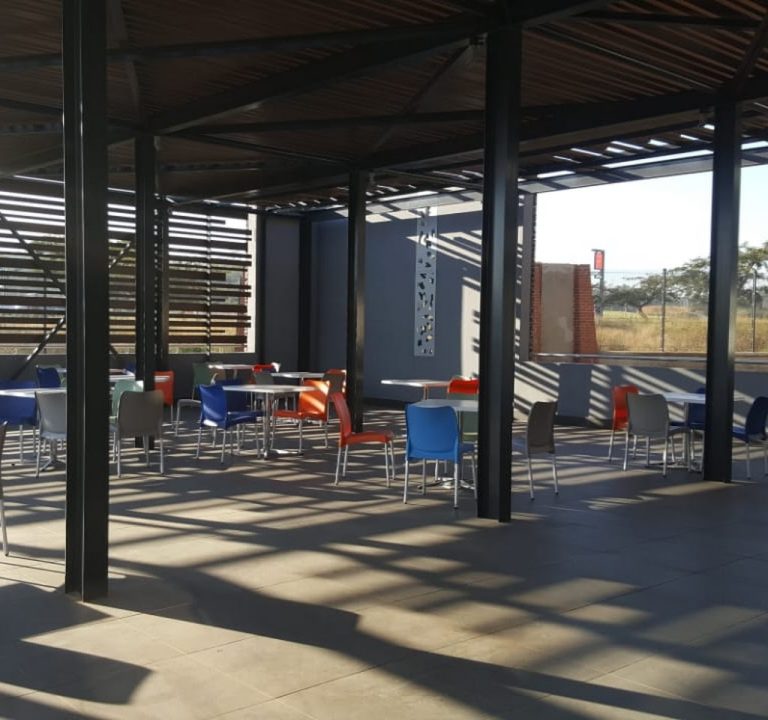
DesignTech Training Academy is a Educational institutions establishment in Midrand, Gauteng, South Africa
Midrand
Gauteng
1685
South Africa
Curriculum
DesignTech Training Academy presents a structured and outcomes‑driven approach to learning, designed to meet current industry demands in Design, Technology and Business disciplines. The curriculum emphasises practical application, enabling learners to translate theory into real‑world results. Programmes are designed to suit diverse audiences, ranging from individuals seeking new professional pathways to organisations pursuing upskilling for teams and leaders.
The academy offers QCTO‑accredited qualifications alongside short online courses, enabling both formal progression and targeted, time‑efficient professional development. This combination allows learners to select pathways that align with career goals while benefiting from recognised credentials within the South African educational landscape. The curriculum positioning reflects a focus on relevance and applicability across a broad spectrum of industries, supported by flexible delivery options.
Programme and level coverage is complemented by a suite of short courses and professional training opportunities. While specific modules are not itemised in public materials, the emphasis remains on practical mastery in core areas of design, technology and business management. The offerings are integrated with contemporary workplace needs, ensuring that learners can immediately translate newly acquired skills into everyday professional practice.
Instruction is delivered through a combination of live online sessions and onsite learning experiences. The academy highlights accessibility through nationwide and global access, allowing participants to engage in interactive, instructor‑led learning regardless of location. For organisations, live online and face‑to‑face formats provide flexibility to accommodate varied schedules and working arrangements. In‑person sessions are supported by practical provisions such as laptops, which underpin hands‑on team learning and collaborative activities during sessions.
Distinctive elements of the curriculum include exposure to practical tools and methodologies that have repeatedly received positive feedback from participants. Testimonials highlight gains in leadership, strategic human resources practices, project management, data analytics and operational excellence. Such outcomes underscore a curriculum design that blends theory with actionable frameworks, enabling learners to implement improvements in areas such as people management, process optimisation and data‑driven decision making.
Beyond formal qualifications, DesignTech Academy emphasises continuous professional development through its range of “spotlight” and long‑term leadership programmes. The inclusion of master trainers—seasoned professionals with extensive experience in HR, consulting and coaching—suggests a teaching approach that prioritises practical insight and real‑world applicability. This emphasis on practitioner expertise aims to equip learners with techniques and mindsets that translate into tangible workplace change.
Support structures and learning resources appear to be a characteristic strength of the curriculum. The online and offline delivery model is designed to maximise interaction and engagement, with sessions tailored to be highly practical and results‑oriented. The blend of live engagement, diverse course formats and accessible delivery channels aligns with contemporary expectations for flexible, workplace‑relevant continuing education.
For organisations seeking to advance workforce capability, the academy foregrounds scalable solutions that can be implemented across teams and departments. Short courses provide rapid upskilling in essential topics, while accredited qualifications offer formal recognition of achievement. The curriculum’s design supports both individual career progression and organisational development objectives, enabling a cohesive approach to learning and improvement.
In summary, the Curriculum at DesignTech Training Academy in Midrand focuses on practical, industry‑aligned learning with accredited pathways and flexible delivery. Learners engage in programmes across design, technology and business, supported by expert facilitators, real‑world case work, and accessible formats that accommodate diverse professional needs. For further information on specific courses and entry requirements, prospective students and organisations are encouraged to explore the academy’s official pages and contact channels via the main website.
- QCTO‑accredited qualifications and short online courses in Design, Technology, and Business
- Flexible delivery: live online, onsite, and face‑to‑face sessions
- Laptops provided for hands‑on in‑person learning
- Nationwide and global access to training
- Practitioner‑led teaching by Master Trainers with extensive HR, consulting and coaching experience
Website: DesignTech Academy
Faculties and Branches
DesignTech Training Academy, located in Midrand, Gauteng, operates as a rmpowered hub for professional development across Design, Technology and Business disciplines. While specific faculties are not enumerated on the public site, the academy structures its offering around clearly defined domains that align with industry practice and accredited qualifications. The emphasis is on practical, outcome‑driven learning delivered by experienced practitioners, with courses designed to equip learners with the skills required to perform effectively in contemporary workplaces.
Across its programme portfolio, the academy highlights several thematic areas that function as de facto faculties or streams. Among the widely promoted subjects are Risk Management, General Management, Human Resource Management, Occupational Health and Safety, Project Management, and the broader field of Supply Chain & Logistics Management. These areas reflect a cross‑cutting approach to management, operations and compliance, enabling students to specialise or build a robust foundation for managerial or operational roles. The emphasis on applied content supports learners who are reskilling teams or preparing for leadership responsibilities in diverse sectors.
The academy’s approach to delivery invites a range of study experiences. Courses are offered as part of QCTO‑accredited qualifications and short online programmes, underscoring a commitment to nationally recognised, industry‑relevant credentials. The site also promotes practical learning in live settings, with the option for online engagement or onsite sessions at client premises or designated training venues. This flexibility supports organisations seeking workforce upskilling as well as individual learners pursuing ongoing professional development.
In terms of locations and access, the academy positions itself as a nationwide provider with global reach. The campus or teaching venue in Midrand serves as a central anchor, while the broader model accommodates training at various venues to suit client needs. The stated capabilities include face‑to‑face sessions at multiple venues, live online courses, and onsite delivery, reflecting a blended learning architecture that can adapt to different environments. Laptops are provided for hands‑on, collaborative learning during in‑person sessions, reinforcing the practical emphasis of the curricula.
Student services and programme relationships are oriented around real‑world outcomes. The curriculum is designed to intersect with workplace application, supporting clients who require actionable leadership and management competencies. The academy also promotes flexibility in learning formats to ensure accessibility—whether learners participate remotely, at a designated site, or within an organisation’s own facilities. This structure supports teams pursuing coordinated development plans as well as individual learners seeking targeted professional growth.
For further information on programmes, delivery options and venue availability, prospective students and organisations can consult the official website. The site highlights the organisation’s commitment to practical leadership development, accredited training, and accessible delivery models that accommodate learners wherever they are. More details about course offerings and delivery can be found at the official site: DesignTech Academy.
- Key course themes: Risk Management, General Management, Human Resource Management, Occupational Health and Safety, Project Management, Supply Chain & Logistics Management
- Delivery modes: live online, onsite at client venues, and face‑to‑face sessions at designated training venues
- Accreditation: QCTO‑accredited qualifications and short online courses
- Geographic reach: nationwide with a central Midrand campus and flexible venue access
Registration Details
DesignTech Training Academy, located in Midrand, Gauteng, South Africa, presents a range of QCTO-accredited qualifications and short online courses focused on Design, Technology and Business. While the site outlines the available training offerings, it does not publish a detailed, step-by-step enrolment timetable within its public pages. Prospective learners should begin by perusing the programme options and the general information provided on the academy’s website.
The application and registration process is presented in a broad, non-site-specific manner. Interested individuals are encouraged to navigate to the academy’s homepage to view current courses and determine suitability. The site provides a pathway to apply through its online presence, with an explicit Apply option available on the site. This ensures that applicants can initiate enrolment directly via the academy’s digital platform.
Where to apply: the primary entry point for applications is the DesignTech Academy website. An Apply link or equivalent call-to-action is provided on the site, directing prospective students to begin the registration process online. For those seeking information, the home page and the course listings are the best starting places to identify appropriate programmes and access the application pathway.
Because specific eligibility criteria, required documentation, and deadlines are not itemised on the public pages provided, no definitive statements can be made about entry requirements or supplementary materials. In such cases, it is advisable to consult the online course descriptions, inquiry sections, or any forthcoming admissions notices posted on the site. Where details are updated, they will typically address programme prerequisites, language requirements, and any formal selection steps linked to particular qualifications.
Communication and support channels for applicants appear to be managed through the academy’s online platform. Visitors should rely on the site’s internal guidance and contact mechanisms as published, rather than external sources. Since no direct telephone numbers or email addresses are listed in the publicly available content, the recommended route is to use the website’s native contact or help features to obtain personalised assistance or to request additional information.
In summary, prospects aiming to register should start by exploring the DesignTech Academy website to identify suitable programmes and access the online application route. The site emphasises its capacity to deliver both live online and face-to-face training, and it highlights that courses are designed to deliver practical, real-world results. For those seeking clarity on eligibility, required documentation, or timelines, engaging with the site’s application pathway or help pages is the appropriate next step.
Sorry, no records were found. Please adjust your search criteria and try again.
Sorry, unable to load the Maps API.
Education in Midrand: Resources and Pathways
Midrand, situated in Gauteng, offers a diverse array of educational options for learners and families. The area supports a continuum of learning from early years through to higher education and professional training, with institutions clustered along well-connected transport routes and business corridors. Local provision emphasises accessible learning environments, practical skills development, and transitions that align with evolving career opportunities.
Across the locality, learners can find a range of institutions, including primary and secondary schools, further education colleges, vocational training centres, and higher education campuses within reasonable reach. Schools typically provide core curricula, subject specialisms, and a mix of curricular and extra-curricular activities designed to support holistic development. Colleges and training centres often offer short courses, diploma programmes, and professional qualifications intended to enhance employability in sectors such as business administration, information technology, engineering, hospitality, and health sciences. Nearby universities in the Gauteng region provide undergraduate and postgraduate routes, broadening access to large-scale research facilities and specialist research centres.
Within the learning landscape, common programmes and levels reflect national and provincial frameworks. Typical offerings include:
- Schooling at primary and secondary levels, with subjects spanning languages, mathematics, science, arts, and physical education.
- National Certificate (Vocational) and diploma programmes at Further Education and Training (FET) colleges, focused on applied learning and industry-grade competencies.
- Undergraduate bachelor’s degrees and honours programmes at nearby universities, complemented by general education requirements and elective courses.
- Professional qualifications and vocational training in areas such as information technology, business services, engineering trades, hospitality, and healthcare support.
Learning support and student services form a critical part of the Midrand education ecosystem. Local institutions commonly provide learners with access to libraries and study spaces, computer laboratories, language support, academic advising, and career guidance. Support structures may also include tutoring, disability services, and mental health and wellbeing programmes, aimed at enabling all learners to progress despite barriers. Schools and colleges frequently organise transition guidance for learners moving from school to further study or work, including information about work-based learning opportunities and apprenticeships.
Facilities and resources in the area underpin a practical, skills-focused approach to education. Libraries provide quiet study areas, borrowing services, and access to digital resources. Laboratories and workshops support science, technology, engineering, and mathematics (STEM) learning, while computer suites and high-speed connectivity enable contemporary digital coursework. Sports facilities and recreational spaces support physical education and team activities, contributing to well-rounded development. Accommodation is available in some institutions for those pursuing higher education or distance programmes, with varying levels of provision that cater to different budgets and preferences.
Typical pathways into and through the system typically begin with equitable admissions or registration processes at schools and colleges, followed by programme selection aligned with interests, academic results, and career aims. Prospective students can usually access guidance on application timelines, required documentation, and available funding or scholarships through student services or admissions offices. In many instances, articulation routes exist between different levels of study, enabling a smooth progression from college certificates to bachelor’s degrees or from school-based qualifications to higher education and professional accreditation.
Overall, Midrand provides a broad spectrum of educational resources designed to support learners at every stage. The area’s mix of schools, vocational centres, and higher education partners creates opportunities for practical study, personal growth, and informed progression, with services that help families navigate choices and plan meaningful educational journeys.