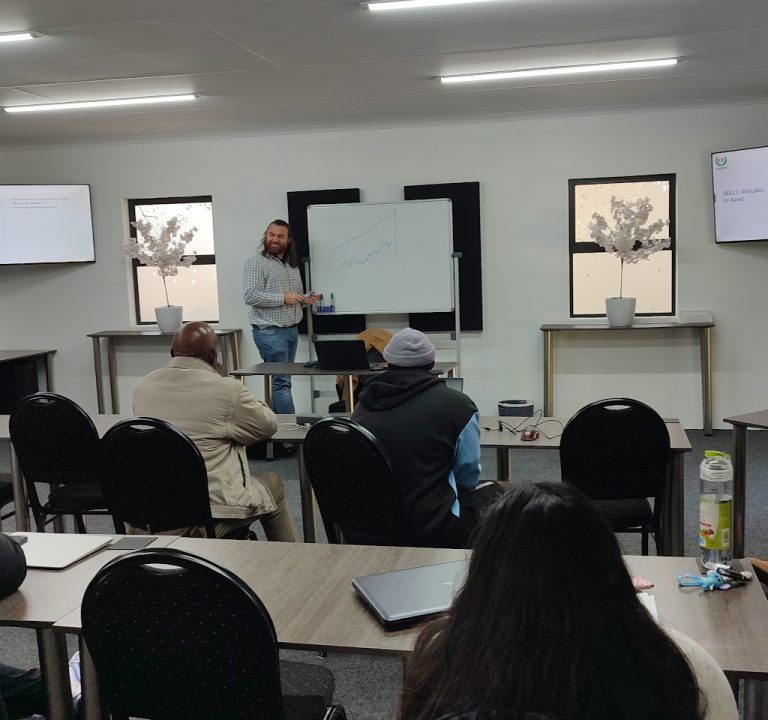
Forex Academy – The Best Forex Trading Courses is a Educational institutions establishment in Germiston, Gauteng, South Africa
Germiston
Gauteng
1401
South Africa
Curriculum
Forex Academy – The Best Forex Trading Courses in Germiston, Gauteng, South Africa presents a structured, practice‑forward curriculum designed to build competence in forex trading through a blend of theory, hands‑on practice and performance testing. The programme emphasis centres on a holistic grasp of essential concepts, the application of disciplined trading rules and the utilisation of proprietary tools to reduce screen time and enhance decision making.
Programme structure is tiered to accommodate both newcomers and those seeking advanced proficiency. The core training comprises a thorough introduction to forex theory alongside practical work with the MT4 platform, enabling students to translate concepts into chart analysis and live trading practice. The curriculum highlights four foundational success factors and concentrates further on two guaranteed‑to‑be‑profitable trading systems. Each system is complemented by an Expert Advisor (EA) to assist with automated execution in line with the prescribed rules, aiming to streamline trading activity and reinforce disciplined routines.
A distinctive feature of the curriculum is the progression from theory to applied evaluation. Students begin by studying concepts, then identify chart examples and complete homework for instructor feedback. This is followed by simulated trading, designed to compress the learning curve and provide rapid, practical experience. The learning pathway culminates in demo trading, mirroring live trading conditions but using simulated funds. The approach accommodates individual pacing while maintaining commitment to practical outcomes, with ongoing support to ensure steady progress.
In addition to the core material, the programme offers a combination of live and self‑paced elements. Interactive online classes are delivered regularly, with sessions conducted in the evenings and supplemented by accessible recordings for later review. The curriculum is reinforced by options for in‑person or online delivery depending on the module, enabling flexibility for students in the Gauteng region and beyond. All sessions are accompanied by comprehensive manuals and video resources that remain available to students for lifetime access, ensuring continued reference and practice after formal completion.
Short courses and professional training elements form a meaningful part of the curriculum. The 10 Week Interactive Forex Training Course provides a concise, intensive route into the core trading concepts, including how to operate MT4, the four key success factors, and the two systems that students learn to trade with the support of two Expert Advisors. The course is designed to deliver a substantial knowledge base within a structured timeframe, supported by practical exercises, homework submissions and a supervised progression toward live trading once readiness is established.
Support and enrichment features are emphasised throughout the curriculum. Mentoring and ongoing assistance are integral components, with free post‑course mentoring and support extending for as long as a student requires. The programme also incorporates prize‑driven trading competitions at the end of quarterly cycles, providing an opportunity to test skills in a competitive but controlled environment. A world‑class personality assessment is included as a bonus, aimed at assisting students not only in trading but also in personal development that can influence trading behaviour and decision making.
Distinctive learning resources accompany the curriculum. In addition to the two profitable systems and their associated EAs, the course materials include proprietary manuals and trading tools designed to enhance understanding and reduce screen time. The structure prioritises practical application alongside theory, ensuring that learners can translate classroom insights into repeatable trading practices. While the exact course lists, durations and entry requirements are not itemised in every instance, the programme consistently frames education as an actionable journey from foundational knowledge to profitable trading execution.
Course accessibility and transparency are reinforced through ongoing updates and refresher opportunities. Refresher courses are offered both in classroom and online formats, supporting continued competence and the correct application of trading rules. The curriculum philosophy centres on demonstrated profitability and accountable teaching, underpinned by a policy of a money‑back guarantee should a student provide adequate evidence that the systems are not profitable when applied as instructed. This approach highlights the emphasis on measurable outcomes and sustained student support beyond initial instruction.
For prospective students seeking a clear pathway into forex trading within South Africa, the curriculum presented by Forex Academy combines structured theory, practical tools, online flexibility, and extended mentoring to foster confident, disciplined trading practices while maintaining a focus on real‑world profitability and personal development.
Further information on specific modules, delivery formats and enrolment options can be explored via the programme pages and the dedicated course details sections on the official website: Forex Academy.
Faculties and Branches
Forex Academy presents a streamlined, practitioner‑focused educational structure designed to accommodate both remote and on‑site learners. The organisation does not explicitly publish traditional faculties in the sense of separate academic departments; instead, it centres its offerings around two core pathways that together form the programme architecture for aspiring forex traders. This structure is complemented by ongoing student support and practical trading components that reinforce classroom learning with real‑world application.
Educational pathways are delivered through two primary modalities: an Interactive Online Course and an in‑person/online hybrid format located within the Gauteng region. The online route is openly accessible to students who require flexible scheduling while maintaining a robust schedule of live sessions, recordings, and interactive engagement with instructors. The hybrid path combines scheduled in‑person sessions in the Ekurhuleni region with online participation, enabling learners to choose the mode that best fits their circumstances. This dual‑delivery model ensures that the programme remains accessible to a diverse cohort, including those who prefer traditional classroom environments and those who prioritise remote learning.
Across both delivery formats, the curriculum emphasises practical competence alongside foundational theory. Core components include training on the MT4 trading platform, an emphasis on the four critical success factors, and in‑depth instruction on two guaranteed‑to‑be profitable trading systems. The programme is reinforced by Expert Advisors (bots) supplied to students to assist in applying the systems, thereby reducing screen time and facilitating semi‑automatic trading. Such tools are integrated within a broader framework that includes homework, chart analysis, simulator trading, and a structured progression from demo to live evaluation, under the supervision of experienced instructors who demonstrate profitability through live trading accounts.
Beyond the main courses, the institution emphasises long‑term student support. Free mentorship and ongoing access to materials are highlighted as key differentiators, with regular refresher courses offered in both classroom and online formats. A notable feature of the programme is the inclusion of a performance‑based community element, wherein students can participate in periodic trading competitions and benefit from a learning environment that blends instruction with practical assessment and peer comparison. This approach mirrors the organisation’s commitment to tangible outcomes and proven trading methodologies.
Campus presence is primarily represented by the Germiston location, which situates the organisation within the Gauteng province and reinforces its regional access point for learners seeking in‑person engagement. The Germiston hub is complemented by an emphasis on online delivery that extends nationwide, allowing individuals to participate from anywhere while still aligning with local market contexts and opportunities. Prospective students may explore course details through the site’s program pages and may join open course sessions or sign‑up for the next intake to observe how the structure works in practice.
For prospective learners seeking clarity on how the faculties or departments map onto specific programmes, the information reflects a cohesive instructional design rather than distinct academic divisions. The overall arrangement connects teaching staff, course content, practical trading components, and student services into a single, navigable framework aimed at developing consistently profitable trading capabilities. Further information about programmes, access arrangements, and support services is available via the institution’s main website, with opportunities to review course outlines and enrolment details at the provided web‑links.
Registration Details
Forex Academy – The Best Forex Trading Courses in Germiston, Gauteng, South Africa presents a structured entry path for prospective students seeking to join its interactive forex education programmes. The registration details summarise the process for enrolling in the flagship 10 Week Interactive Forex Training Course, including how to access course information, the steps to secure a place, and where to obtain assistance if needed. The information reflects the institution’s published guidance and the online registration options available to applicants.
Registration process overview: applicants are typically guided to explore course content and prerequisites through the course detail pages, then proceed to a dedicated sign‑up portal to commence enrolment. The organisation emphasises that the course is a paid programme and outlines payment options and incentives designed to secure a place. Detailed step‑by‑step instructions for registration are provided through the online sign‑up form and related payment guidance. Where specific dates are noted (such as the next course start), these are announced on the course pages and sign‑up notes to help prospective students plan accordingly.
Where to apply and key links: the primary route to enrolment is via the dedicated online course registration pages. Prospective students should consult the following links for essential information and enrollment actions:
Eligibility and entry requirements: the published materials do not specify formal academic prerequisites for participation. The emphasis is placed on commitment, determination, and adherence to the course rules. Prospective entrants are advised to review the course content and the system rules to assess suitability. Where stated, successful completion depends on applying the principles and maintaining active engagement throughout the course, including practical and demo trading components.
Documents typically required: the available content does not delineate a fixed set of documents for registration. General guidance indicates that enrolment involves completing an online form and providing proof of payment for deposit or tuition as part of the sign‑up process. Applicants should follow the on‑screen prompts during registration and submit any requested confirmation of payment via the specified channels on the sign‑up page.
Payment and deposits: prospective participants are informed that the course is a paid programme with a stated total price. Enrolment often involves a non‑refundable deposit deducted from the total course fee, with options for full payment before the course or staged payments. Special offers, such as a discounted rate for full pre‑payment or a split payment, are highlighted where applicable on the online pages.
Course start dates and scheduling: the materials reference a concrete start date (for example, the next course commencing on a specified date). Applicants should verify current start dates on the course page and plan registration accordingly. All sessions are described as interactive online classes with live presentations, recordings available for later access, and a blend of online and in‑person or online delivery depending on the course format.
Contact and support channels: for additional information or personalised assistance, the site provides a dedicated Contact page. Prospective students may use the portal to ask questions or request further clarification about the enrolment process, course content, and support options. The site also directs readers to the FAQ page for commonly asked questions and practical guidance related to registration and course delivery.
Sorry, no records were found. Please adjust your search criteria and try again.
Sorry, unable to load the Maps API.
Education and Resources in Germiston, Gauteng
Germiston, situated in Gauteng, South Africa, offers a diverse tapestry of educational options that serve learners across different stages of life. The area features a mix of public and private institutions, spanning primary and secondary schools, further education and training colleges, technical and vocational education, as well as higher education facilities in adjacent suburbs. This breadth supports local families aiming to align academic pathways with individual needs, interests, and career aspirations.
Primary and secondary schooling in Germiston typically includes a variety of school types and approaches. Some schools emphasise foundational literacy and numeracy skills, while others focus on enriched curricula in science, technology, arts, and languages. Educators frequently integrate inclusive practices and learner support services to assist students with diverse learning requirements. Extracurricular programmes, arts and culture activities, and sport are commonly available to encourage well-rounded development alongside academic achievement.
Further education and training forms a core part of the local landscape. Technical and vocational education providers in the area commonly offer certificate, diploma, and higher certificate programmes across disciplines such as information technology, engineering studies, business administration, hospitality, and creative arts. These establishments are designed to deliver practical skills, hands-on training, and industry-relevant qualifications that facilitate entry into the workforce or progression to higher-level studies.
Higher education access is supported by nearby universities and campus-based providers that offer undergraduate and postgraduate studies, often with flexible learning options and articulation opportunities. Students may encounter a range of study modes, including full-time, part-time, distance learning, or blended formats, designed to accommodate financial planning, work commitments, or family responsibilities. Academic support services—such as tutoring, study skills sessions, libraries, and writing support—are typically available to assist learners in achieving their targets.
For learners pursuing non-formal education or personal development, a variety of training centres and adult education classes can be found in the area. These resources are frequently geared towards foundational skills, language development, computer literacy, and practical trades. They provide accessible routes for adults seeking career advancement, a change of direction, or new qualifications outside the traditional school system.
Facilities and resources commonly encountered include well-stocked libraries with quiet study spaces and digital resources, science and language laboratories, computer labs, and dedicated study areas. Sports grounds, gymnasia, and fitness facilities often accompany schools and colleges, supporting physical education and team participation. Student accommodation is generally accessed through university or college provisions, with housing offices offering guidance on eligibility, allocations, and safety considerations. Local libraries and community hubs frequently host study clubs, tutoring sessions, and information sessions on admissions processes and funding opportunities.
Admissions and registration typically follow standard educational pathways: families and learners prepare documents in advance, select appropriate programmes or schools, and complete registration through school or institution offices or online portals. Entrance assessments or interviews may be common for certain courses, particularly at higher levels, and there is usually guidance available on bursaries, scholarships, and financial aid, where applicable. Prospective learners are encouraged to review official guidance from education authorities and individual institutions for accurate timelines and requirements.
For families seeking further information, official resources and district education departments provide overviews of available options, enrolment windows, and support services. Useful starting points include national and provincial education portals, local council educational programmes, and institution websites which typically publish details about curricula, facilities, and student services. In Germiston, the ecosystem of schools, colleges, and higher education venues aims to support learners at every stage, helping them to build skills, pursue qualifications, and progress along constructive and aspirational educational pathways.