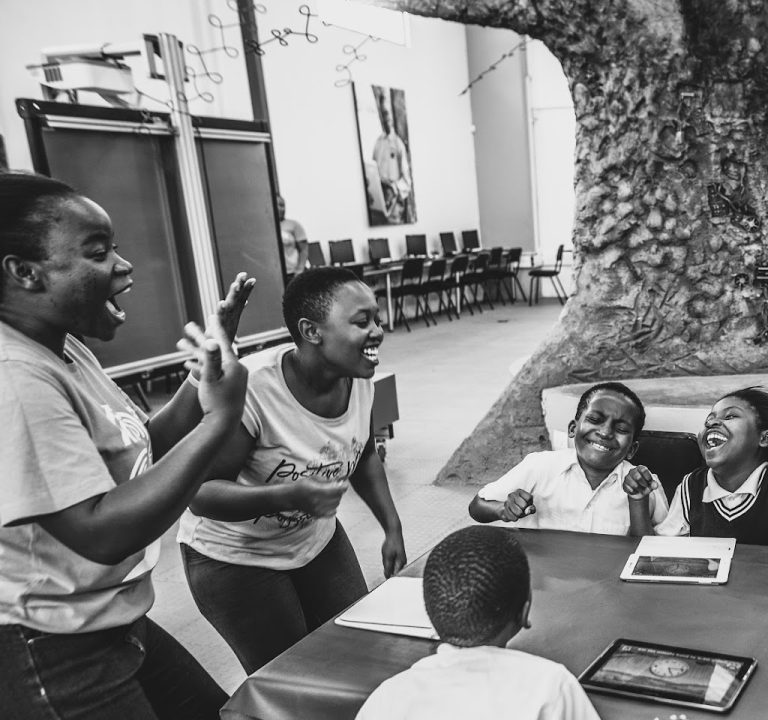
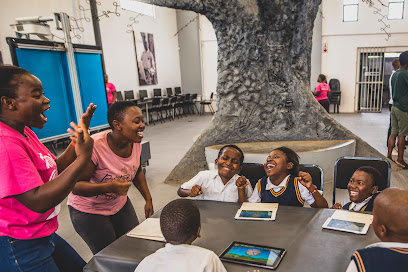
Good Work Foundation is a Education centers establishment in Shabalala, Mpumalanga, South Africa
Shabalala
Mpumalanga
1242
South Africa
Curriculum
Good Work Foundation’s work in Shabalala, Mpumalanga, centres on a holistic approach to education designed to broaden access to 21st‑century skills while addressing the realities of rural South African communities. The organisation emphasises engaging, nurturing learning environments where learners are introduced to digital tools and practical problem‑solving, with the aim of narrowing the digital divide and preparing young people for a diverse range of futures.
The curriculum in GWF settings is shaped around a progressive model that seeks to move learners from foundational digital literacy through to applied, work‑relevant learning. While specific programme listings, durations, entry requirements and fees are not detailed here, the overall emphasis is on programmes and levels that build competence in digital fluency, critical thinking and practical applications. The curriculum is designed to be responsive to rural contexts, ensuring that learning is meaningful and connected to local opportunities and challenges.
Areas of study commonly reflected in GWF’s educational framework include digital and information literacy, science, technology, engineering and mathematics (STEM) concepts, and hands‑on project work. The approach prioritises active engagement, curiosity, and experiential learning, with a focus on enabling learners to see the relevance of their studies to real‑world situations. This aligns with the organisation’s broader objective of providing wonder‑filled learning that contributes to future‑ready competencies.
Curriculum delivery is underpinned by a commitment to inclusive access and equitable learning experiences. The learning environments are described as nurturing and engaging, designed to stimulate joy in discovery and to foster sustained participation among rural youths and marginalised communities. The model places importance on building confidence in digital tools and the ability to collaborate, research, and communicate effectively.
In addition to longer programme tracks, Good Work Foundation offers short courses and professional training intended to broaden employability and entrepreneurship. While specifics about course names and lengths are not provided in this overview, the inclusion of short courses signals a component of the curriculum aimed at rapid upskilling or diversification of skills for immediate workplace or enterprise needs.
Where online or blended learning options are pertinent, the organisation’s philosophy of addressing the digital divide suggests that blended approaches may be incorporated to extend reach and flexibility. However, precise details about online platforms, synchronous versus asynchronous learning, or blended delivery models are not explicitly stated in the available material. The emphasis remains on accessible and engaging learning experiences that can be scaled to rural environments.
Support structures and distinctive resources are implied as integral to the curriculum. The focus on creating wonder‑filled learning and nurturing environments points to a learning ecosystem that includes guided instruction, access to digital resources, and mentorship opportunities. The broader GWF model highlights impact through prepared graduates who progress to employment or further training, indicating that the curriculum is connected to pathways that support transition into the job market or further education.
For prospective students and partners seeking more concrete information about current offerings in Shabalala, Mpumalanga, and the surrounding region, the Good Work Foundation site provides broader context on its educational philosophy and its attempted scale across rural South Africa. Details such as specific courses, level progressions, and entry requirements are not enumerated in the available materials, but the emphasis remains on adaptable, learner‑centred programmes that combine digital literacy with practical, locally meaningful learning experiences. Additional information is accessible via the organisation’s official site at goodworkfoundation.org.
Faculties and Branches
Good Work Foundation operates across rural communities in South Africa with a distinctive approach to education that emphasises practical, future-facing learning. The organisation is positioned to widen access to digital and skills-based education, particularly in marginalised settings such as Mpumalanga’s Shabalala region. Rather than presenting a conventional, single-campus faculty model, GWF frames learning through a network of campuses and learning environments designed to nurture curiosity, collaboration and digital literacy among learners of varied ages.
Across its campuses, the organisation centres on creating nurturing, engaging environments where learners are exposed to “wonder-filled” learning experiences. The philosophy focuses on narrowing the digital divide by integrating technology and hands-on activities into daily learning, with the overarching aim of preparing rural South African communities for 21st-century opportunities. The setup supports broad access to education by prioritising inclusive teaching methods, community partnerships and scalable programmes that can extend to other rural settings if successful.
Although specific faculty or department names are not detailed in publicly available materials, the structure is described at a high level as combining core educational programmes with student services that help young people progress from learning to employment. The model emphasises not only academic content but also practical competencies, digital fluency and entrepreneurial skills, aligning with GWF’s broader mission to deliver learning opportunities that can translate into real-world outcomes for graduates.
In terms of programme alignment, the organisation highlights its impact through learner numbers and job-ready graduates. The emphasis on “21st-century learning opportunities” suggests a continuum that covers foundational education, digital literacy, project-based learning, and employability support. Students may access a combination of classroom-based instruction, hands-on activities and digitally-enabled learning experiences designed to bridge gaps in access to quality education in rural communities.
The relationship between campuses and student services is described in general terms as an integrated experience. Learners engage with programmes that are designed to be engaging and enjoyable, with a focus on creating environments where learning is accessible and relevant. While specific departmental nomenclature is not disclosed in the available material, the approach indicates a cohesive network where instructional activities, digital infrastructure, and support services work in concert to foster successful transitions from education into employment.
Good Work Foundation’s approach is underpinned by a philosophy of scalable rural education. The organisation envisions its model as exportable, offering a blueprint that could be adapted to other parts of South Africa and sub-Saharan Africa. For prospective students and partners, the emphasis is on learning environments that are immersive, inclusive and capable of delivering practical skills alongside digital competencies. Details about individual campus offerings in Shabalala, or named branches, are not enumerated in the current overview; nonetheless, the publicly stated aim remains clear: to provide vibrant, future-oriented education accessible to rural youths and adults alike.
For more information on the Good Work Foundation and its programmes, campuses and partnerships, visit the official website: Good Work Foundation.
Registration Details
Good Work Foundation (GWF) sits in Shabalala, Mpumalanga, South Africa, delivering digital-age learning designed to broaden access to education in rural communities. The organisation’s public content emphasises a commitment to expanding learning opportunities and narrowing the digital divide, though specific registration steps are not stated in the readily available materials.
Application or registration processes are described in general terms on the site, with no explicit deadlines, fees, or forms listed. Prospective learners and partners are advised to consult the main site for the most current information and any stated requirements before initiating any application or enrolment steps.
Where to apply: applicants should navigate to the official Good Work Foundation website for guidance and any application links that may be provided. A direct route to the home page is available at the following link, which may serve as a starting point for interested individuals: Good Work Foundation.
Process overview (as suggested by the public content):
- Identify available learning opportunities or programmes promoted by Good Work Foundation.
- Access the official site for the latest information on registration or application steps.
- Follow any stated instructions on the site to commence enrolment or express interest.
Eligibility and entry requirements are not detailed in the accessible materials. No specific documents, deadlines, or fees are currently published in the public content provided. Prospective participants are encouraged to review the site for any formal criteria or updates that may be published subsequently.
Contact and support channels: explicit contact details are not included in the available content. For assistance or further information, the official Good Work Foundation site should be consulted, with any contact or support options presented there. The site URL again is: http://goodworkfoundation.org/.
Notes for readers: this section relies on information presented on the Good Work Foundation website. Because specific registration steps, eligibility requirements, and required documents are not enumerated in the accessible content, readers should verify any updates directly on the organisation’s site to ensure accuracy and currency.
Sorry, no records were found. Please adjust your search criteria and try again.
Sorry, unable to load the Maps API.
Education and Resources in Shabalala, Mpumalanga
Shabalala sits within a region of Mpumalanga that blends rural communities with growing educational infrastructure. Learners and families commonly encounter a range of options designed to support schooling, skills development, and higher education ambitions. The landscape typically includes local primary schools serving early years and foundation phases, alongside secondary schools offering continuation through adolescence. These institutions often emphasise access to a broad curriculum, literacy support, and programmes aligned with national education standards.
Beyond traditional school settings, the area may be served by Further Education and Training (FET) or Technical and Vocational Education and Training (TVET) centres. Such facilities focus on practical, career-oriented learning and provide routes into trades, occupational certificates, and national diplomas. Higher education access is supported by nearby universities and colleges within Mpumalanga or adjacent districts, creating pathways for learners to pursue undergraduate study or specialised programmes after completing secondary schooling.
Typical programmes and levels found in the Shabalala region may include:
- National curricula for primary and secondary schooling, with assessment and progression in line with national standards.
- Additional language, numeracy, science, and technology courses designed to strengthen foundational skills.
- Vocational and technical qualifications, including certificates and diplomas linked to in-demand sectors such as engineering, information technology, agriculture, hospitality, and health sciences.
- Bridging and access programmes intended to broaden participation for students transitioning from school to further study or training.
- Adult education and continuing education options aimed at enhancing literacy, numeracy, and employability.
Learning support and student services play a vital role in the local education ecosystem. Schools and colleges commonly provide tutoring, study skills workshops, and access to guidance on subject choices and career planning. Where available, learning support may address language barriers, provide enrichment for learners who require additional challenge, and offer accommodations for students with special educational needs. Counselling and advisory services frequently accompany academic offerings, helping learners navigate registration, examinations, and transitions between academic levels.
Facilities and resources in the area typically complement educational programmes. Libraries or learning resource centres are often equipped with books, periodicals, and study spaces, while science and computer laboratories enable hands-on investigations and practical understanding. Sports facilities, outdoor recreation grounds, and arts and performance spaces commonly exist to encourage holistic development and teamwork. Domestic and academic accommodation may be available for students relocating from more distant areas, with consideration given to safety, affordability, and proximity to learning sites.
Open and flexible pathways characterise the admissions and registration landscape. Prospective students usually undertake an application or enrolment process through individual institutions, with guidance provided by school counsellors or college staff. Requirements commonly include prior qualification records, proof of residence, and completion of required assessments or auditions where relevant. Financial aid, scholarships, and bursaries may be available through government programmes, institutions, or local organisations, subject to eligibility and application timelines.
Families exploring education in Shabalala are encouraged to visit local schools and colleges to observe facilities, talk with staff, and gain a sense of the environmental fit for learners. Community centres and education hubs often offer schedules of开放 days, information evenings, and resources to help families understand subject options, timetables, and potential career trajectories. While exact offerings differ between institutions, the overarching goal remains clear: to provide access to broad learning opportunities, relevant skills, and pathways that support sustained personal and professional development.
For more information about programmes and enrolment in the Mpumalanga region, residents may consult official education portals and local authority pages, which outline available services, indicative timelines, and guidance tailored to prospective students and families.